Aluminum extrusion is a manufacturing process in which aluminum alloy billet is plastically deformed and forced through a shaped die to produce profiles with a constant cross-section. The quality of the final extruded profile depends on strict control of billet quality, temperature, tooling design, and process parameters.
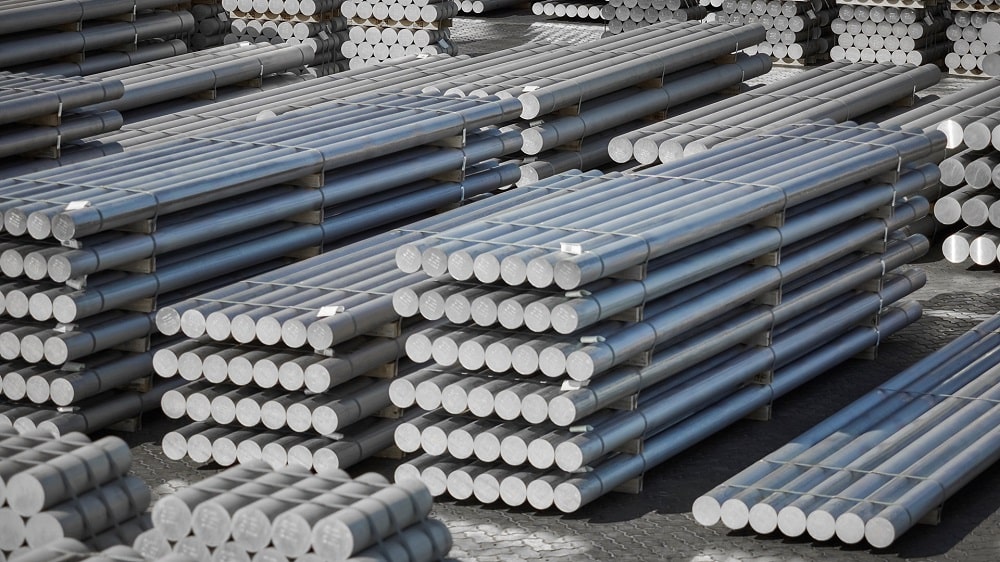
Step 1: Aluminum Billet Production and Preparation
Aluminum billet is classified as unwrought aluminum and is typically produced by Direct Chill (DC) casting. Billets used for extrusion are solid cylindrical products intended exclusively as extrusion feedstock.
Key technical parameters of billet include:
- Alloy designation (e.g. AA6063, AA6061, AA6005)
- Chemical composition within alloy specification limits
- Grain structure and internal soundness
- Billet diameter and length compatible with extrusion press capacity
Before extrusion, billets are homogenized (if applicable) and then preheated, typically to 430–500°C, depending on alloy and press conditions, to achieve suitable flow stress for extrusion.
Step 2: Extrusion Die Design and Conditioning
The extrusion die determines the geometry, dimensional tolerance, and surface quality of the aluminum profile.
Critical die design considerations:
- Balanced metal flow across the profile section
- Uniform wall thickness to minimize distortion
- Bearing length optimization
- Allowable dimensional tolerances
Prior to extrusion, dies are preheated to reduce thermal shock and ensure stable metal flow during startup.
Step 3: Aluminum Extrusion Operation
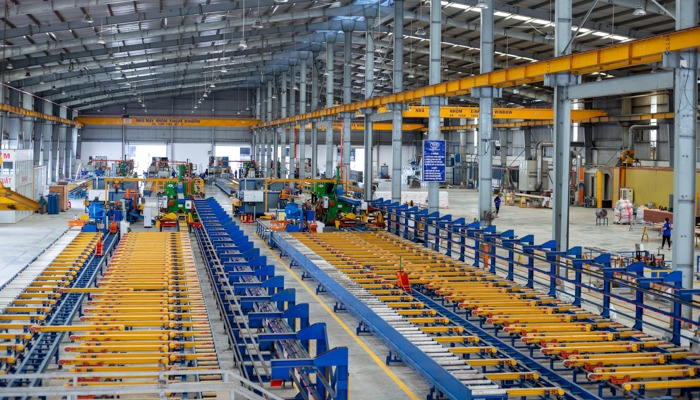
The heated billet is loaded into the extrusion container and forced through the die by a hydraulic ram. During extrusion, the billet undergoes severe plastic deformation and exits the die as a continuous profile with a constant cross-section.
This stage defines the fundamental geometry and surface condition of the aluminum profile.
Step 4: Quenching and Cooling
Immediately after exiting the die, the extruded profile is cooled using Air quenching, or Water-based quenching systems (spray or mist).
Quenching is a critical metallurgical step, especially for heat-treatable alloys, as it influences final mechanical properties and dimensional stability.
Step 5: Stretching and Stress Relief
After cooling, profiles are stretched longitudinally to:
- Remove residual internal stresses
- Improve straightness
- Achieve dimensional stability prior to aging or finishing
Stretching parameters are carefully controlled to avoid surface damage or permanent deformation.
Step 6: Heat Treatment and Aging (T5 / T6)
Heat treatment is applied to achieve the required mechanical properties.
- T5 temper: Profile is cooled from extrusion temperature and artificially aged without solution heat treatment.
- T6 temper: Profile undergoes solution heat treatment, quenching, and artificial aging.
The selection of temper depends on mechanical strength requirements and end-use application.
Step 7: Cutting, Finishing, and Quality Inspection
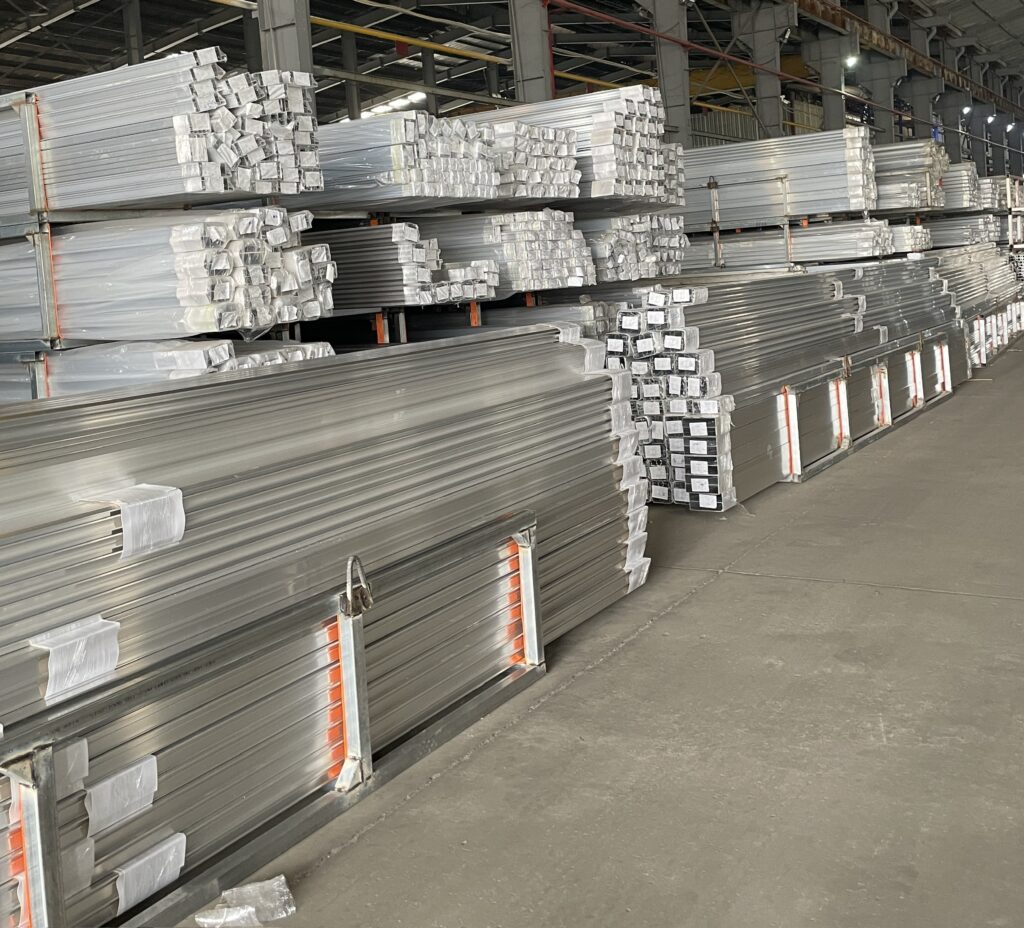
Extruded profiles are cut to specified lengths and may undergo surface treatments such as anodizing or powder coating.
Quality control typically includes: Dimensional inspection, Surface quality assessment, Mechanical property verification (where required)
Only profiles meeting technical specifications are released for delivery.
Conclusion
The aluminum extrusion process is a technically controlled transformation of aluminum billet into precision-engineered profiles. Understanding each process step is essential for ensuring consistent quality, reliable performance, and correct alloy selection for downstream applications.
With solid technical expertise and strict quality control, Minh Dung Holdings supplies both aluminum billet and extruded aluminum profiles that meet international standards for industrial and manufacturing applications.
For technical details or export inquiries, please contact:
Lily Miller
Export Specialist, MD Holdings
Tel/WhatsApp: +84 867 767 310