Definitions — What Are Anodizing and Powder Coating?
In aluminum profiles, surface finishing largely determines aesthetics, durability, and environmental resistance. To begin with, anodizing is an electrochemical process that forms a protective aluminum-oxide layer on the surface of the aluminum itself, thereby delivering a clean “metal look” and improved protection. In contrast, powder coating applies a dry powder to the surface and then cures it to form a durable polymer film on top of the aluminum, which means it offers broad color options and strong design consistency.
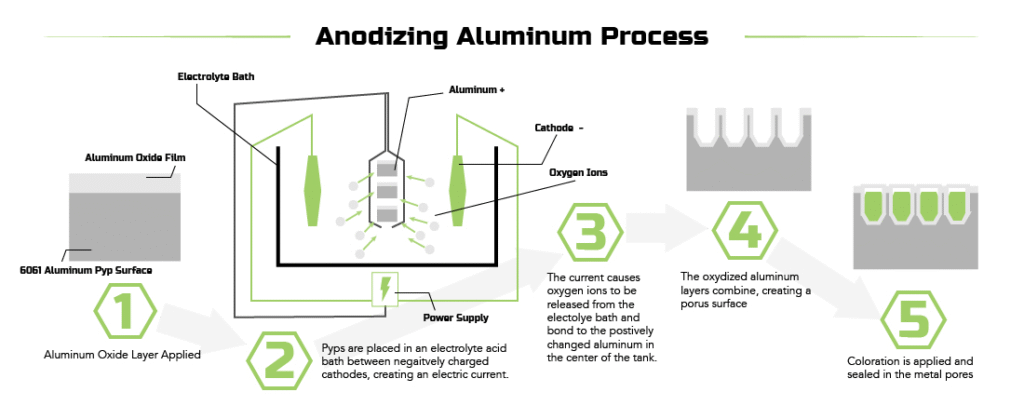
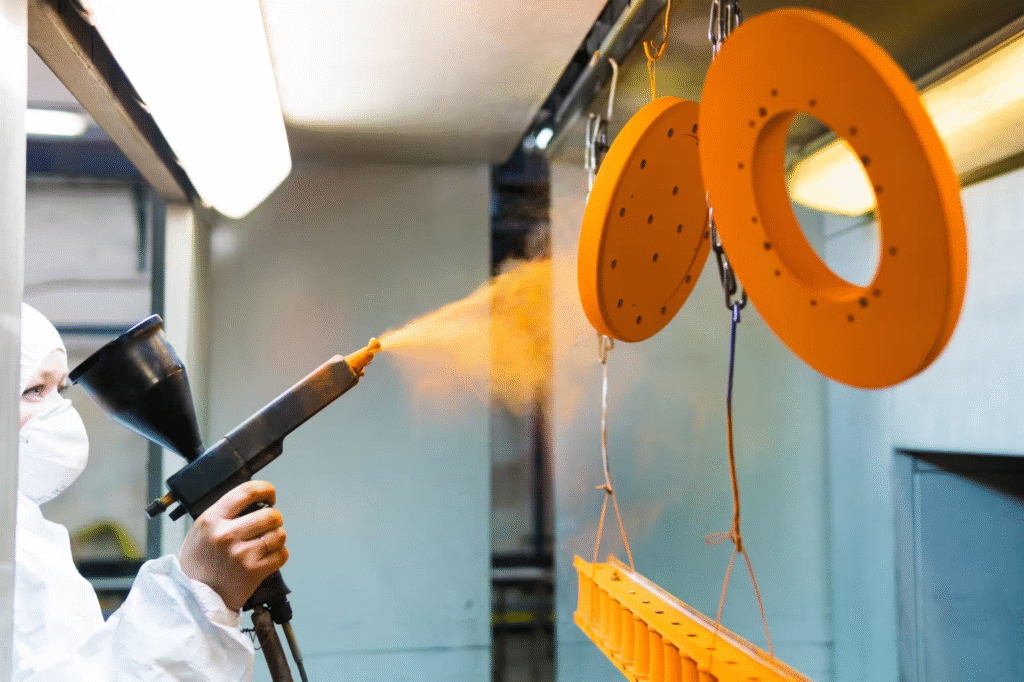
In short, the key difference is simple: anodizing is a protective layer “built from the metal,” while powder coating is a protective “outer film.” As a result, that difference drives performance in color stability, corrosion resistance, scratch resistance, and life-cycle cost—exactly the trade-offs Minh Dung Holdings helps customers balance during specification and sourcing.
Anodized vs Powder Coating — Simple Differences
Anodizing is often preferred when a project wants a premium, natural metallic appearance and a neat, clean surface. Powder coating stands out for color flexibility, matching architectural designs (matte/gloss/textured finishes, wood-look effects), and keeping colors consistent across multiple components.
Quick Comparison Table
| Criteria | Anodizing | Powder Coating |
| Layer type | Oxide layer on aluminum | Polymer film on top |
| Aesthetics | Natural metallic “metal look” | Wide colors, many textures |
| Color consistency | Depends on line/batch control | Easier to match by color code |
| Scratch resistance | Good (depends on anodic layer) | Depends on film thickness & pretreatment |
| Corrosion resistance | Good with proper process | Excellent with proper pretreatment + coating |
| Maintenance | Easy to clean, low dirt pickup | Easy to clean; avoid harsh solvents |
| Typical risks | Tone variation, spots/streaks | Peeling/blistering/chalking if poorly processed |
In practice, many projects combine both: anodizing for a premium metallic look, powder coating for color-driven design consistency.
Choosing by Environment — Practical Guidance
1) Indoor applications (interior)
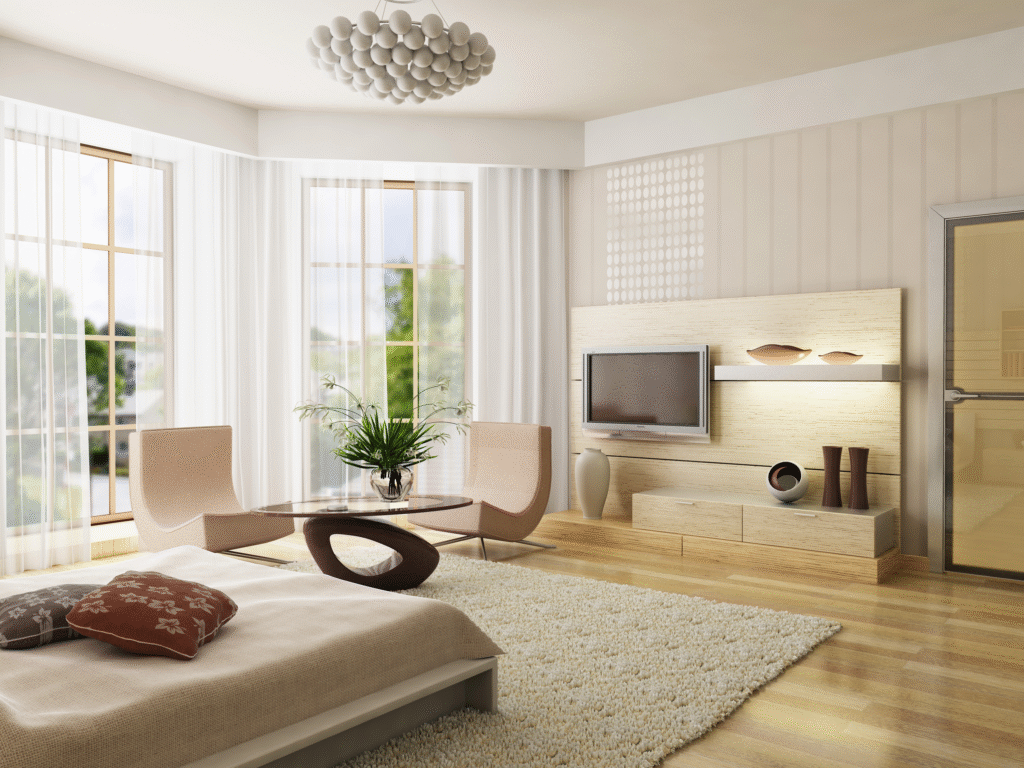
Firstly, for indoor use with limited UV and weather exposure, both finishes work well. The decision usually comes down to design and budget. Anodizing provides a clean metallic look. Powder coating is ideal when you need specific colors—especially matte black/white/grey or wood-look finishes.
2) Outdoor urban environments (exterior – urban)
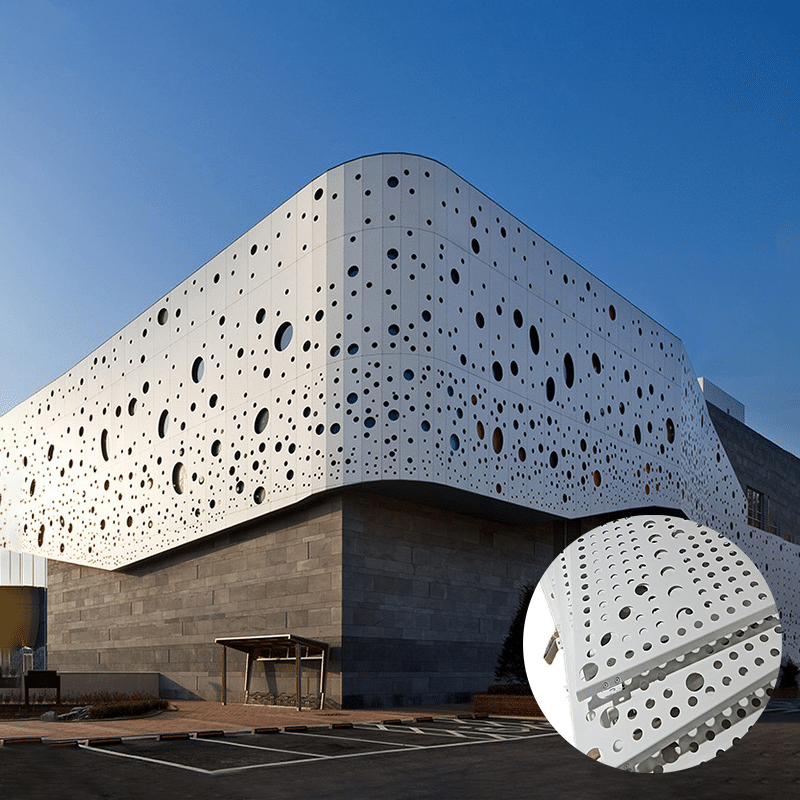
Secondly, outdoor profiles must resist UV, rain, and dust. Powder coating is widely used for façade and window/door systems because it supports consistent color schemes and offers coating systems designed for weathering. Anodizing remains a strong option when a natural metallic appearance is preferred.

3) Coastal environments (high salinity)
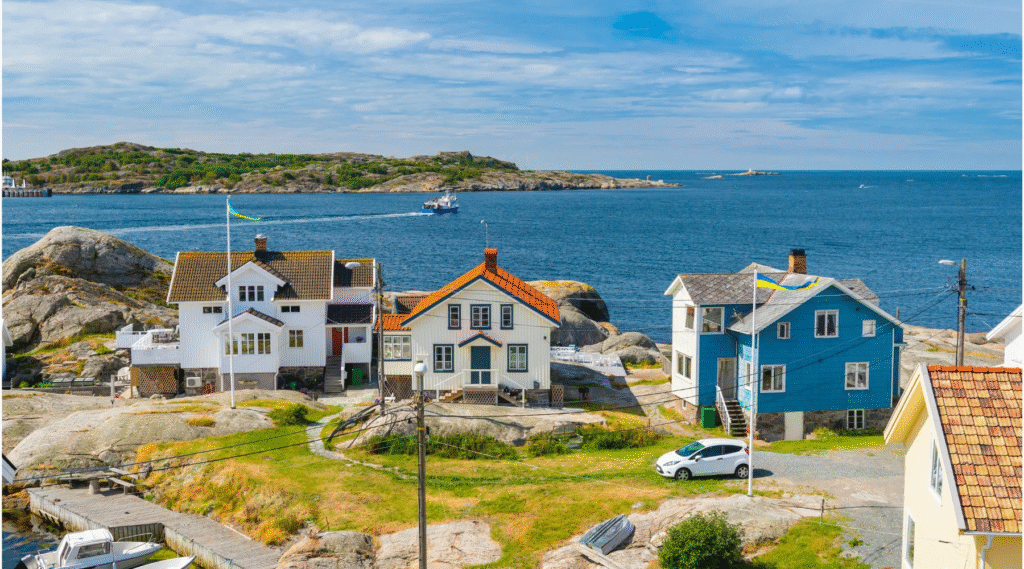
Thirdly, coastal conditions are demanding due to salt and humidity. Here, the deciding factor is not just “anodized vs coated,” but the specification and process quality. Powder coating performs extremely well with correct pretreatment and sufficient film thickness; anodizing also performs well when the anodic layer specification is appropriate and quality control is consistent. A “thin” or poorly controlled finish will fail early regardless of type.
4) Industrial environments (chemicals, dust, abrasion)
Besides, Industrial settings add risks from chemicals, cleaners, and physical impacts. Powder coating can be selected for specific chemical resistance and is easier to refresh or re-color during maintenance. Anodizing bonds into the surface and does not peel like paint, but it still must be specified correctly and cleaned appropriately to maintain appearance.
Color Durability and Aesthetics — Choose Based on Priority
Meanwhile, if your priority is design color consistency across doors, façade, trims, and accessories, powder coating is often the most practical choice due to its broad palette and color-code control. If you want a premium natural metallic finish—especially silver, champagne, stainless-like looks—anodizing typically delivers a more authentic “metal” appearance.
From a sales perspective, customers are not only buying “anodized” or “powder coated”—they are buying batch-to-batch color consistency. That is why sampling, color approval, and acceptance criteria should be defined from the start.
Corrosion Resistance — It’s About the Specification and Process
Above all, anodizing forms a stable oxide layer that protects the aluminum surface. Powder coating creates a strong barrier film when pretreatment and coating thickness meet specification. In many real-world applications, powder coating provides excellent corrosion resistance with the right coating system and pretreatment, while anodizing offers long-term stability when the anodic layer is correctly specified and uniformly produced.
A strong sales message is: you are not simply supplying “anodized/powder coated profiles,” but a surface solution matched to the environment and controlled by lot/batch QA.
Life-Cycle Cost — A Practical Way to Compare
Last but not least, upfront price is only part of the total cost. A correct finishing choice reduces rework, cosmetic claims, early maintenance, replacement due to peeling/chalking, and project delays.
- If your project is color-driven and needs design consistency, powder coating can reduce life-cycle cost by minimizing mismatch risk and simplifying design coordination.
- If your project wants a durable premium metallic appearance with stable surface character, anodizing often offers strong long-term value.
| Customer’s main priority | Recommendation |
| Wide color options, design consistency | Powder coating |
| Natural metallic premium look | Anodizing |
| Harsh environments (coastal/industrial) | Choose by specification + testing, not by habit |
| Lower long-term maintenance risk | Evaluate by real use-case and QA controls |
Conclusion — Which One Should You Choose?
Indeed, there is no single best answer for every project. Powder coating is ideal when you need broad color options and consistent design matching. Anodizing is ideal when you want a premium natural metallic look and stable surface character. For harsh environments, the right decision depends on coating/anodic specification, process quality, and lot-based quality control to ensure corrosion resistance and reduce post-delivery claims.
Minh Dũng Holdings — what we offer
Minh Dung Holdings supplies standard and drawing-based aluminum profiles, and we advise customers on choosing anodizing or powder coating based on environment, aesthetic requirements, and life-cycle budget. We can support lot-based technical documentation (CO/CQ, coating parameters, and test reports when required) and help control color and surface consistency to reduce spec deviation, returns, and hidden costs. Send us your drawings, finishing requirements, and target quantity, and we will respond with a quotation and the most suitable configuration recommendation.