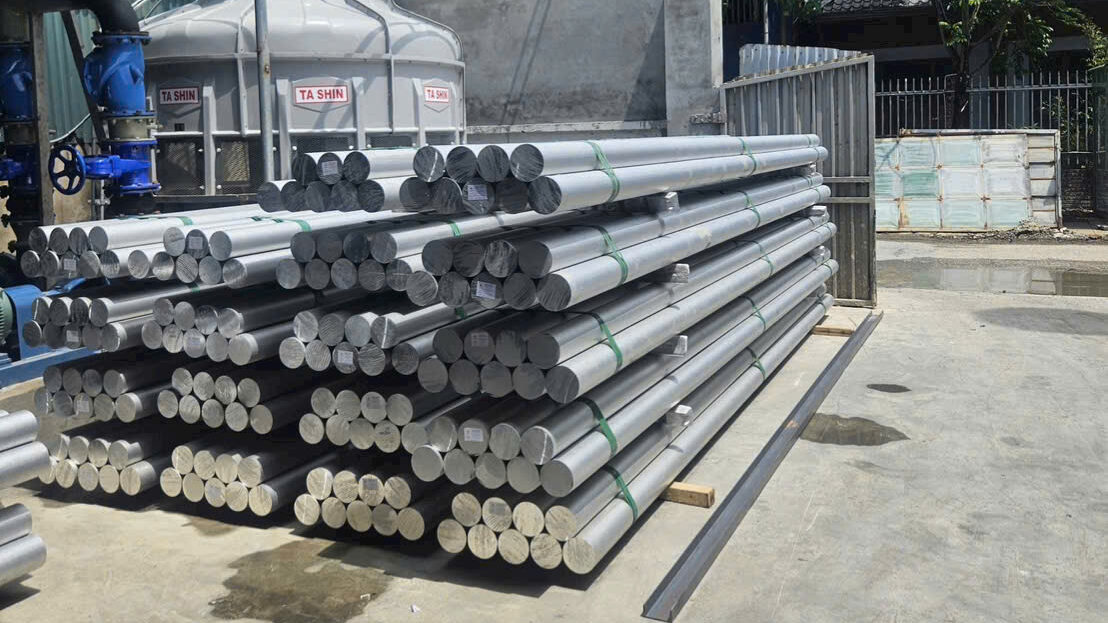
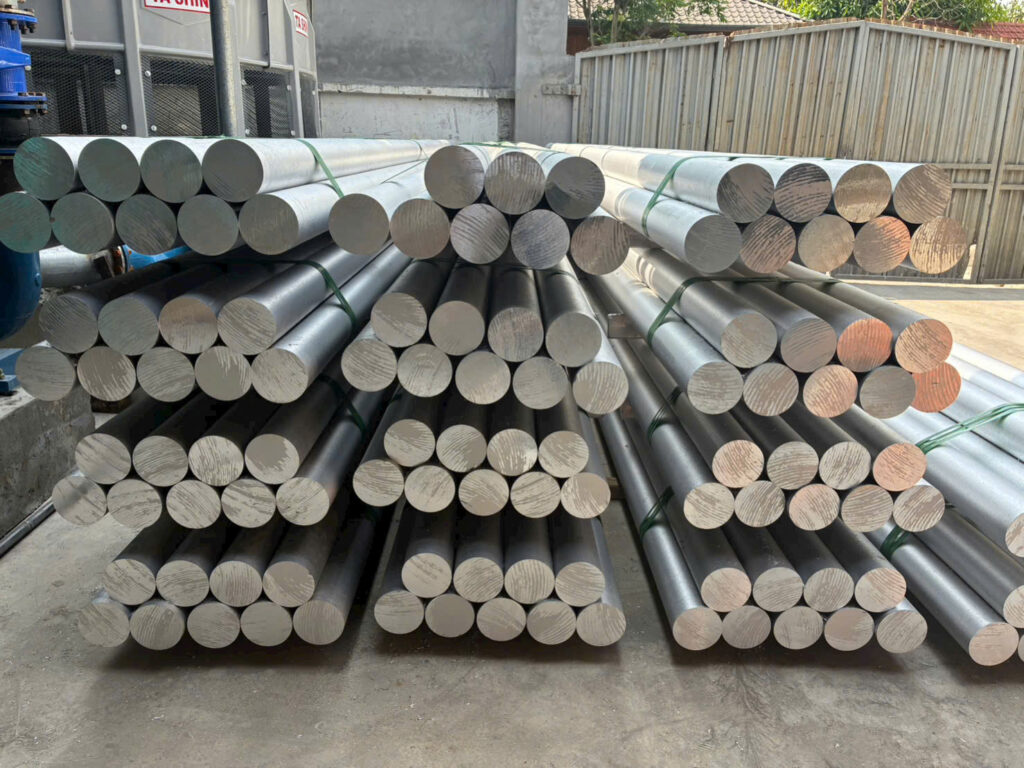
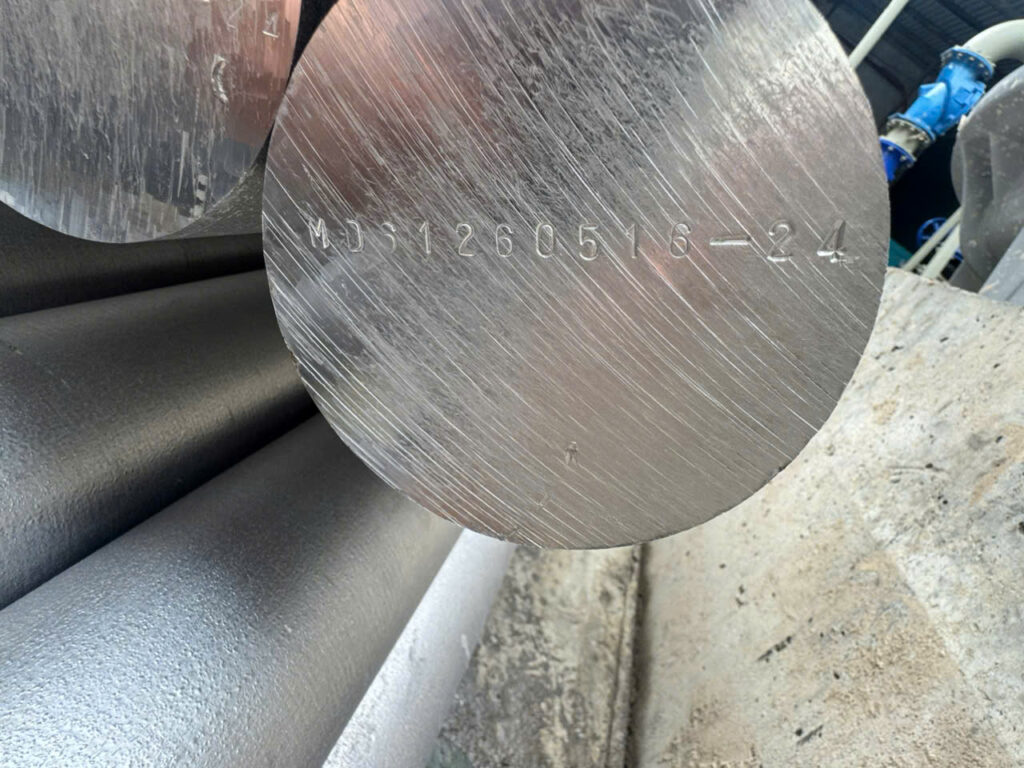
In the aluminum extrusion industry, billet quality is one of the key factors determining production efficiency, surface finish, and the mechanical properties of the final product. In addition to casting and homogenization processes, the chemical composition of aluminum billets plays a crucial role in controlling extrudability, extrusion speed, and overall product quality.
For 6xxx series alloys such as 6063, 6061, and 6005, each alloying element contributes differently to the extrusion process and final performance.
Silicon (Si)
Silicon is one of the most important alloying elements in Al-Mg-Si alloys. When combined with Magnesium (Mg), it forms Mg₂Si, the primary strengthening phase responsible for improving mechanical properties and age-hardening response.
An appropriate Silicon content helps:
- Improve extrusion performance.
- Enhance mechanical properties after heat treatment.
- Increase the hardness of aluminum profiles.
However, excessive Silicon may reduce surface brightness, increase the risk of surface defects, and negatively affect anodizing quality.
Magnesium (Mg)
Magnesium works together with Silicon to form Mg₂Si, the main strengthening phase in 6xxx series alloys.
The benefits of Magnesium include:
- Higher tensile strength and hardness.
- Improved heat-treatability.
- Better load-bearing capacity.
However, excessive Magnesium can significantly increase extrusion pressure, reduce extrusion speed, and raise energy consumption during production.
Iron (Fe)
Iron is generally considered an undesirable impurity in aluminum billets.
High Iron content can:
- Form hard intermetallic compounds.
- Reduce alloy ductility.
- Cause surface streaking defects.
- Affect anodizing and coating quality.
For architectural applications requiring premium surface finishes, Iron content is typically kept as low as possible to ensure appearance consistency and surface quality.
Copper (Cu)
Copper can improve alloy strength but may also reduce corrosion resistance.
Higher Copper levels can:
- Increase mechanical strength.
- Lower resistance to oxidation and corrosion.
- Cause uneven anodized coloring.
Therefore, Copper content in 6063 billets for architectural and window profile applications is usually maintained at a very low level.
Manganese (Mn)
Manganese helps improve the metal structure and increase material strength.
An appropriate Mn content can:
- Reduce grain coarsening.
- Improve mechanical performance.
- Enhance deformation resistance.
However, excessive Manganese may increase extrusion force and negatively impact production efficiency.
Chromium (Cr)
Chromium is used to control grain structure and improve resistance to stress corrosion cracking.
Its benefits include:
- Enhanced microstructural stability.
- Improved long-term strength.
- Reduced risk of distortion after heat treatment.
Like other alloying elements, Chromium must be carefully controlled to avoid reducing extrudability.
Titanium (Ti)
Titanium is typically added in small amounts during billet casting.
Its primary functions are:
- Grain refinement.
- Improved billet uniformity.
- Reduced hot-cracking risk during casting.
Billets with finer grain structures generally provide more stable extrusion performance and superior surface quality.
Zinc (Zn)
Zinc is not intentionally added to 6063 alloys and is usually present only as a trace impurity.
Excessive Zinc may:
- Reduce corrosion resistance.
- Affect anodizing quality.
- Cause color inconsistency on finished surfaces.
The Importance of Chemical Composition Control
In practice, billet quality depends not only on individual elements but also on the balance between them.
A high-quality aluminum billet should feature:
- Chemical composition within alloy specifications.
- Optimized Mg and Si ratios for the intended application.
- Strict control of impurities such as Fe, Cu, and Zn.
- Uniform metallurgical structure after homogenization.
When billet chemistry is properly controlled, extrusion plants can achieve higher productivity, lower scrap rates, improved surface finish, and greater overall manufacturing efficiency.
MINH DUNG ALUMINUM
Minh Dung Aluminum supplies high-quality aluminum billets in alloys 6063, 6061, 6005, and 6060 for extrusion manufacturers in both domestic and international markets. Our billets are produced with strict chemical composition control to ensure stable quality and reliable extrusion performance.
For product inquiries and quotations, please contact:
Lily Miller
Phone/Zalo/WhatsApp: +84 867 767 310
Email: sales@nhomminhdung.vn