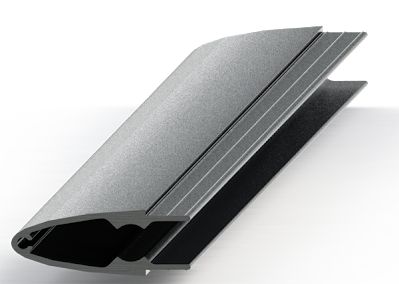
The demand for thin-wall aluminum extrusion is growing fast. However, this process is quite challenging. When you force metal through a tiny die gap, you create high pressure and friction. Consequently, manufacturers often face surface scratches or broken dies. Therefore, you need a high-quality aluminum billet, a precise die, and skilled operators.
Below is a practical guide to the five key factors for success.
5 Key Factors for Thin-Wall Aluminum Extrusion
1. Strict Billet Quality & Iron Control
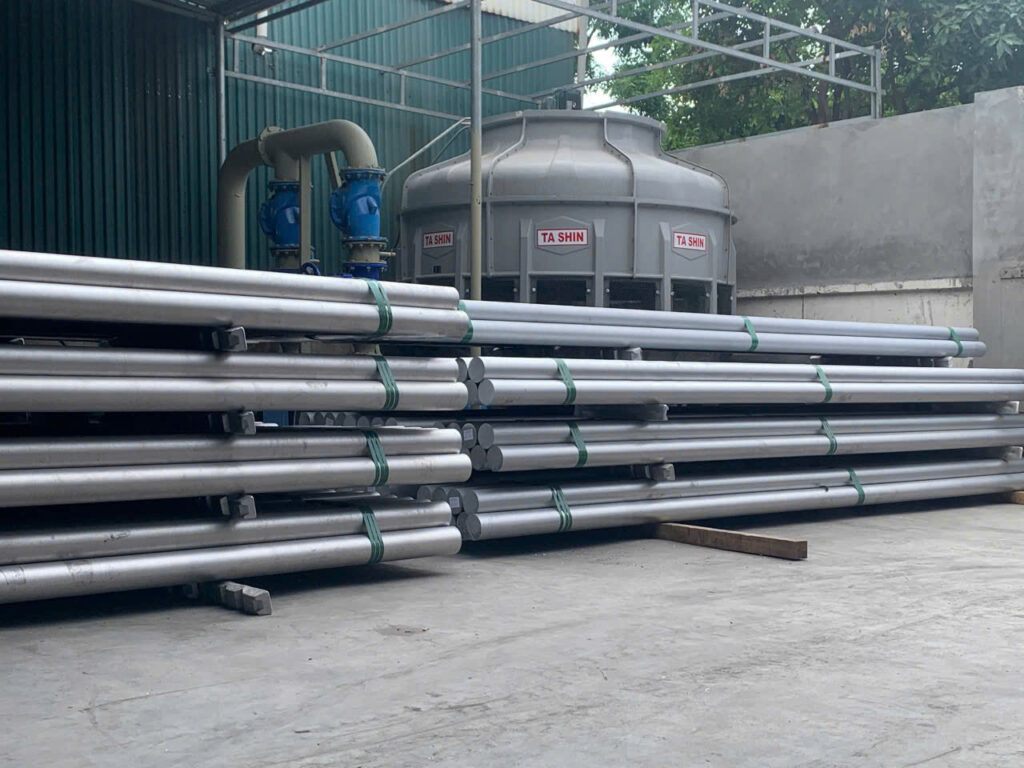
First, the quality of your aluminum billet is the most critical factor. The metal flow must be perfectly uniform.
- Low Iron (Fe) Content: Most importantly, you must keep Iron (Fe) levels very low. For thin-wall aluminum extrusion, using a billet with under 0.25% Fe is the perfect choice. Consequently, you reduce hard spots that scratch the die and tear the profile surface.
- Cleanliness & Homogenization: Furthermore, the billet must be free of gas bubbles. In addition, it must undergo proper homogenization. As a result, the metal becomes softer and flows easily through narrow gaps.
2. Advanced Die Technology
Second, dies for thin profiles endure massive stress. Therefore, engineers must design the bearing accurately.
By balancing the metal flow, they prevent the profile from bending. Moreover, the die surface needs nitriding and polishing. Consequently, this maximizes hardness and reduces friction.
3. Pressure and Temperature Control
Next, extruding thin walls increases the extrusion ratio rapidly. Thus, your machine needs strong and stable tonnage.
Furthermore, friction generates intense heat. Therefore, operators must lower the billet and die temperatures slightly. If the heat gets too high, the surface will blister. As a result, slowing down the extrusion speed is often necessary.
4. Quenching (Cooling)
After exiting the die, thin profiles lose heat very quickly. Moreover, they are highly sensitive to thermal changes.
If cooling fans blow unevenly, the metal will warp or twist. Therefore, you must ensure uniform airflow across the entire profile to prevent deformation.
5. Precision Stretching
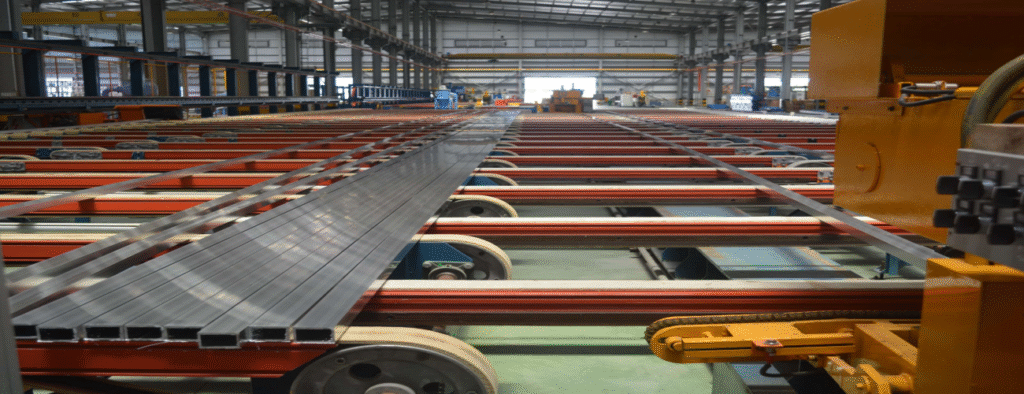
Finally, the profile moves to a stretcher. This machine pulls the metal to straighten it and relieve stress.
However, the pulling force must be incredibly precise. If you pull too hard, the thin wall will break. On the other hand, if you pull too lightly, the product will not be straight.
Minh Dũng Holdings: Premium Billet for Thin-Wall Extrusion
In conclusion, high-quality raw materials solve most extrusion problems. At Minh Dũng Holdings, we exclusively produce premium aluminum ingots and billets. We have shifted our focus entirely away from aluminum sheets and coils to supply top-tier billets for global B2B clients.
Our Billet Advantages:
- Strict Fe Control: We keep Fe levels strictly under 0.25%. Thus, we protect your dies and ensure a smooth, anodize-ready surface.
- High Homogenization: Our advanced treatment makes the metal ductile. As a result, you can run machines faster and reduce scrap.
- Global Export Capacity: We specialize in international B2B sales with flexible logistics and clear contract terms.
Kevin Nguyen
Export Specialist,
Phone/WhatsApp: +84 373 486 719