Aluminum extrusions are more than just a “lightweight alternative to steel.” They represent a comprehensive design and engineering solution that deeply impacts performance, safety, and operating costs for modern vehicles.
This article explores the material fundamentals, reasons for choosing aluminum extrusions, specific automotive applications, and technical considerations such as profile design, thermal management, joining methods, quality control, and cost-performance balance.
1. Why Choose Aluminum Extrusions for Automobiles?
As a material, aluminum has a low density (around 2.7 g/cm³) versus steel (~7.85 g/cm³), leading to a high strength-to-weight ratio when properly designed. In addition, aluminum offers good thermal conductivity, reasonable corrosion resistance (improved further with anodizing or PVDF coating), and is nearly 100% recyclable.
However, replacing steel with aluminum is not simply a matter of weight comparison. Several technical factors must be considered:
- Tensile strength, bending strength, and yield strength vary with each alloy; some aluminum alloys may offer mechanical properties comparable to steel after heat treatment but can fatigue more easily under cyclic load.
- Fatigue resistance: geometric design (multi-chamber sections, radius of corners) and surface treatment strongly influence fatigue performance.
- Machinability and joining: aluminum is easy to machine, but welded joints can weaken the heat-affected zone (HAZ); therefore, specialized welding techniques or mechanical fastening may be required.
- Material and processing cost: aluminum is more expensive per kilogram than steel, but when evaluating cost per strength-per-weight or fuel savings over vehicle life, the benefits may outweigh the higher material cost.
2. Automotive Applications of Aluminum Extrusions
The automotive industry’s push toward weight optimization, fuel efficiency, and electric vehicles has driven unprecedented use of aluminum extrusions. Rather than just replacing steel, extruded aluminum has become a core material that reshapes structural design, safety architecture, and thermal management systems.
The ability to use extrusion to create complex cross-sections makes aluminum an excellent material for components requiring stiffness, geometric stability, and long-term durability — properties that traditional steel constructions struggle to combine with low weight.
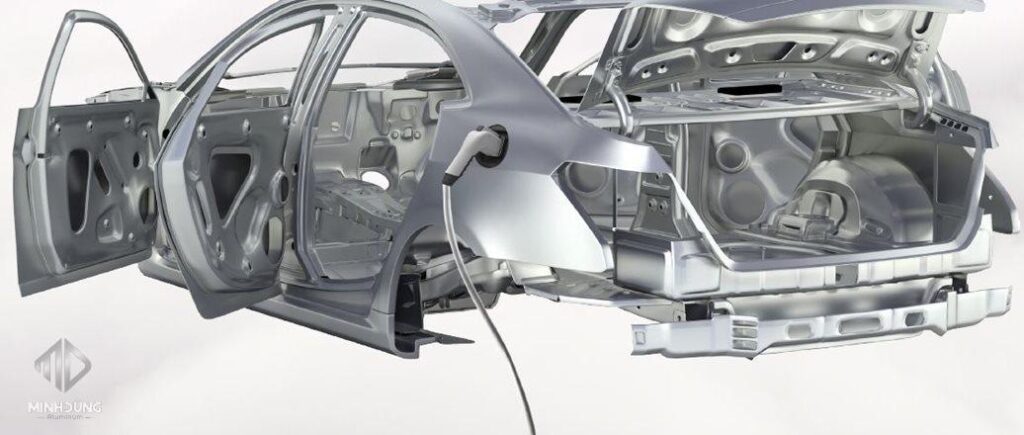
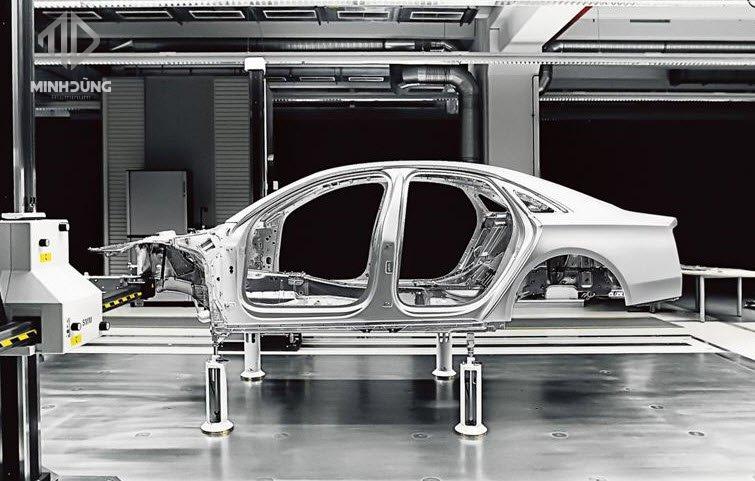
2.1. Aluminum Extrusions in Vehicle Frames and Body Structures
In modern vehicle design — especially electric vehicles — weight reduction is not just about fuel economy but also about extending driving range and improving weight distribution among major subsystems. Aluminum extrusions, being 30–40% lighter than steel, allow engineers to build chassis with high torsional stiffness while fully leveraging optimized cross-section design.
A key advantage is that aluminum profiles can be “stress-tailored”: their geometry can be optimized exactly where bending, torsion, or compression loads occur.
Therefore, it is not necessary to simply increase material thickness to achieve required stiffness. Multi-chamber profiles, variable cross-sections, or profiles with stiffening ribs can increase the moment of inertia, thereby boosting overall structural rigidity without increasing weight.
Additionally, extruded aluminum reduces the number of welds and mechanical joints required in the body structure. While steel needs to be assembled from many stamped parts, aluminum can produce near-monolithic components in a single extrusion stage. This reduces assembly errors, increases potential for automation, and improves noise-vibration-harshness (NVH) performance.
2.2. Aluminum Extrusions in Suspension and Load-Bearing Components
Aluminum extrusions are not limited to the main body. They are also used in highly precise, load-bearing parts such as motor mounts, suspension arms, subframes, or floor support modules. Using aluminum in these components significantly reduces unsprung mass — a critical factor influencing ride comfort and road handling.
However, using aluminum in suspension systems requires addressing fatigue strength, which is typically lower than steel.
Common engineering solutions include heat treatment (T6), designing profiles without sharp corners to avoid stress concentration, and combining extrusion with CNC machining for optimized shape. With these refinements, aluminum can meet the fatigue resistance requirements needed for long-term vehicle operation.
2.3. Aluminum Extrusions for EV Battery Cooling Systems
In electric vehicles, battery systems operate under high load and are highly sensitive to temperature. Aluminium extrusions are almost unmatched in meeting three critical requirements simultaneously: excellent heat dissipation, light weight, and ease of integrating fluid cooling channels.
Battery cooling plates are often extruded to include internal micro-channels for coolant flow. The precision of the extrusion process ensures uniform channel dimensions — something difficult to achieve with welded steel or bent copper in mass production.
Moreover, extruded aluminum plays a key role in:
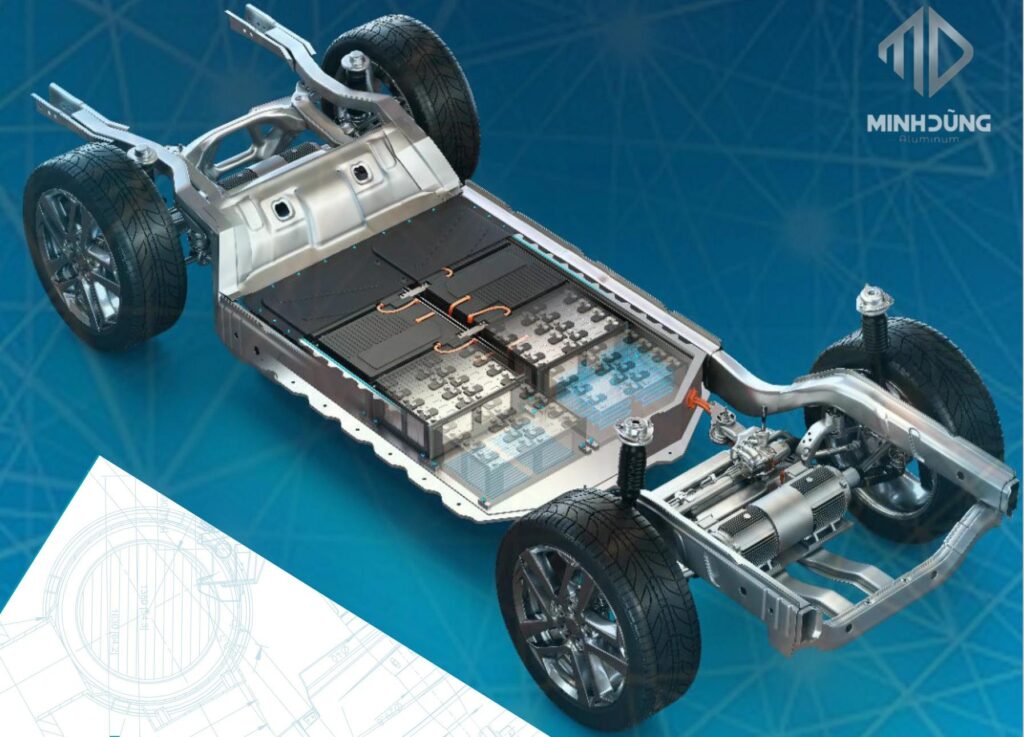
- the protective frame around battery packs (battery enclosure), which must withstand impact while aiding thermal management;
- structural battery pack trays, where the battery modules themselves become load-bearing parts — aluminum helps distribute load, reduce torsion under stress, and enhance safety;
- heat sinks and radiators for the inverter, motor control units, and fast-charging systems.
Thanks to hollow profiles that can integrate coolant or airflow passages, aluminum extrusions enable a complete thermal management ecosystem for electric vehicles — something few other materials can match.
2.4. Aluminum Extrusions in Car Interiors
Beyond structural and mechanical systems, aluminum extrusions are used inside the vehicle interior for seat frames, sliding rails, screen mounts, and decorative trims.
The anodized aluminum surface provides a durable, scratch-resistant, and premium feel — qualities that polymer-based materials often struggle to deliver. The fine control allowed by extrusion over shape and detail enables auto maker to design parts that are lightweight yet visually and tactile high-end.
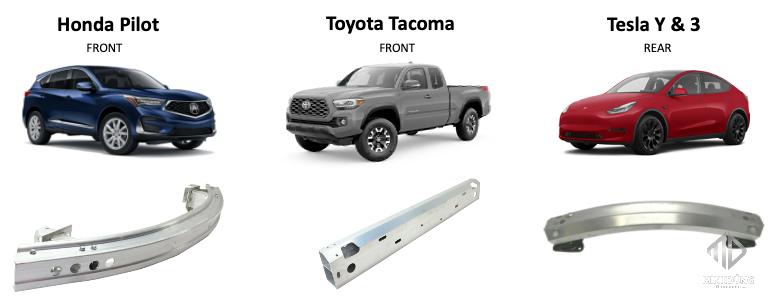
3. The Future of Aluminum Extrusions in the Automotive Sector
Over the next decade, aluminum usage per vehicle is expected to continue increasing, especially in electric vehicles.
As weight reduction becomes an essential goal to extend driving range, reduce energy consumption, and meet stricter emissions regulations, more components — from chassis, battery trays, load-bearing frames to thermal management systems — are being switched from steel to aluminum extrusions.
Next-generation extrusion technology is pushing this shift forward. One key example is Friction Stir Extrusion (FSE). It creates aluminum profiles with a finer and more uniform microstructure.
These profiles offer higher strength and fewer defects, making them ideal for high-precision and load-bearing parts. In parallel, advanced T6 heat-treatment methods increase hardness and improve mechanical stability. These improvements help aluminum meet strict safety standards.
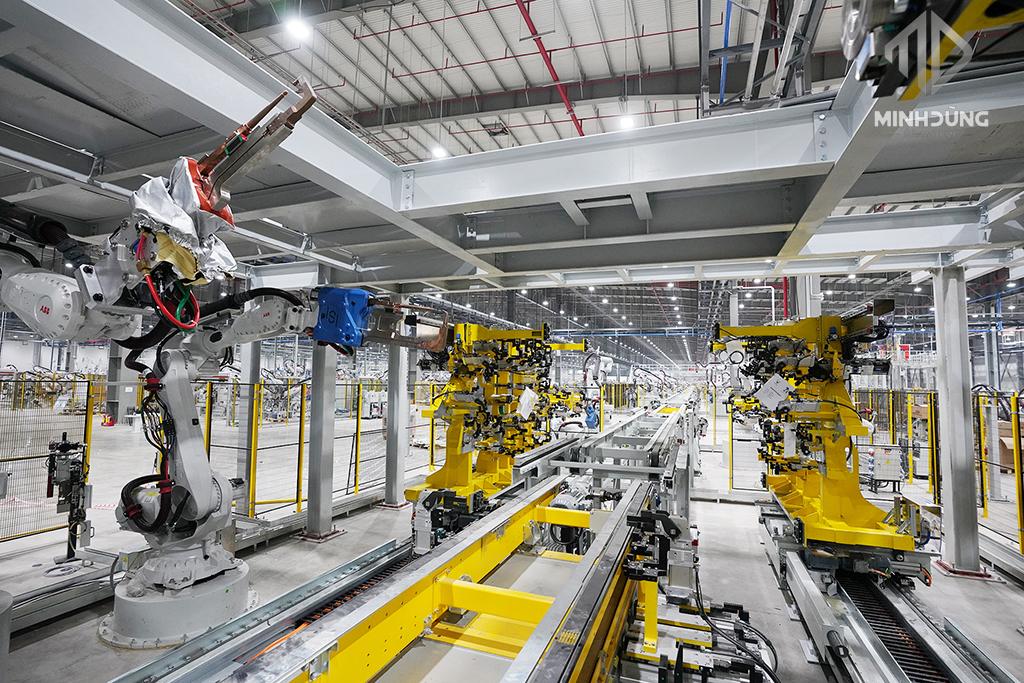
With the combination of advanced materials and precise extrusion technology, aluminum extrusions are not just supporting materials — they are becoming the core foundation for designing future vehicles that are lighter, safer, and more efficient.
Conclusion
Aluminum extrusions are increasingly proving their outstanding value in both the automotive and aerospace sectors. thanks to their advantages of light weight, high strength, and flexible formability, aluminum helps optimize fuel efficiency, increase safety, and improve structural durability.
As the automotive world steps into the era of electric and smart vehicles, aluminum is no longer simply a steel replacement — it is a fundamental building block defining the structure of next-generation vehicles.
With ongoing advances in extrusion technology, heat treatment, and high-performance aluminum alloys, the role of aluminum in transportation is poised to expand further — leading to a future where vehicles are lighter, more sustainable, and meet ever-stricter performance standards.
If you need further technical support or pricing information, please feel free to contact:
Hà Linh Nhi – Export & Import Sales Department
Website: https://nhomminhdung.vn/
Email: kinhdoanh@nhomminhdung.vn
Hotline/WhatsApp: +84 332 008948
#AluminiumProfiles #AluminiumExtrusion #6063Alloy #Anodizing #PowderCoating #IndustrialAluminum #ExtrusionFactory #AluminumManufacturer #MinhDungAluminum