Selecting the right aluminum billet has a direct impact on extrusion performance, surface quality, and scrap rate. In practice, many production issues originate not from the press or die, but from using an unsuitable billet. Below are the key factors to consider when choosing billets for extrusion.
1. Select the Right Alloy Grade
Each aluminum alloy has its own characteristics and should be selected based on the end-use application:
- 6063: excellent extrudability and surface finish → ideal for architectural profiles, windows, and doors
- 6061: higher strength → suitable for structural and industrial applications
- 6005 / 6005A: balanced strength and workability → used for load-bearing profiles
Choosing the correct alloy ensures both product performance and production efficiency.
2. Match Billet Diameter with Press Capacity
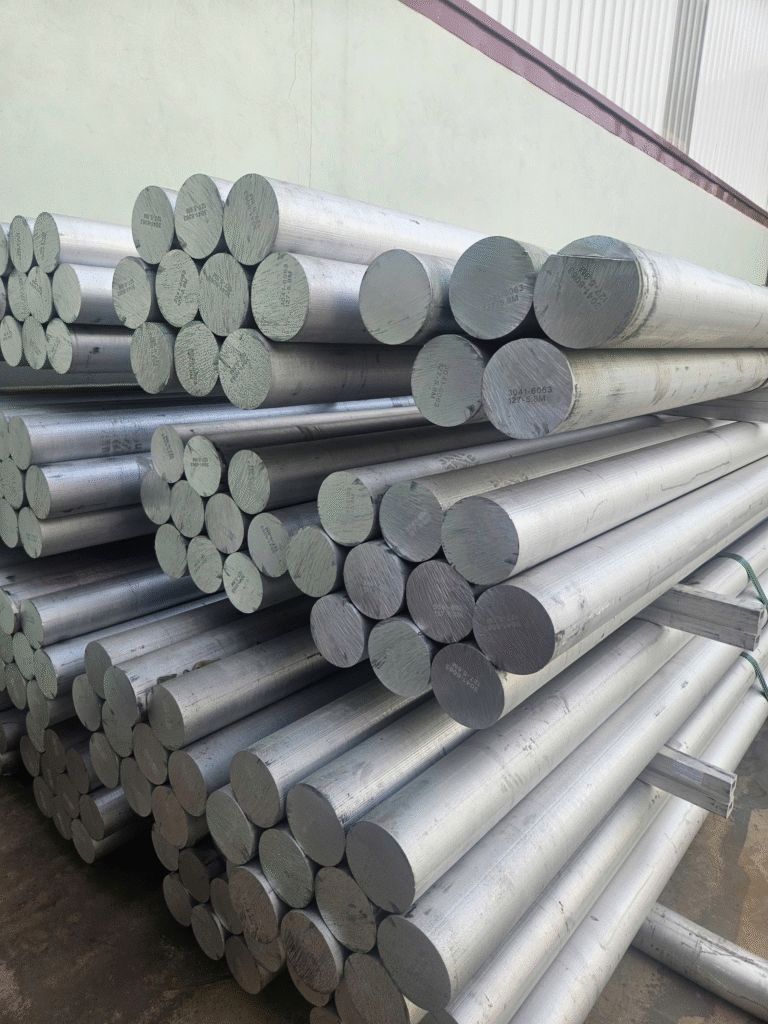
Billet size must be compatible with the extrusion press. Smaller and medium presses typically use 5-inch billets, while larger presses can handle 6-inch billets or more.
Using oversized billets can overload the press and increase wear, while undersized billets reduce productivity. Therefore, billet diameter should always align with machine specifications and production requirements.
3. Chemical Composition (Fe, Si, Mg)
The chemical composition of the billet plays a critical role in both extrusion behavior and final product quality.
- Fe (Iron): higher levels can increase hardness but often lead to surface defects such as streaks or lines, especially after anodizing
- Si (Silicon) and Mg (Magnesium): the primary alloying elements in the 6xxx series, which determine extrudability and mechanical properties after heat treatment
Maintaining low Fe content is important for surface quality, while a proper balance of Si and Mg ensures optimal flow during extrusion and desired mechanical performance.
4. Billet Surface Quality
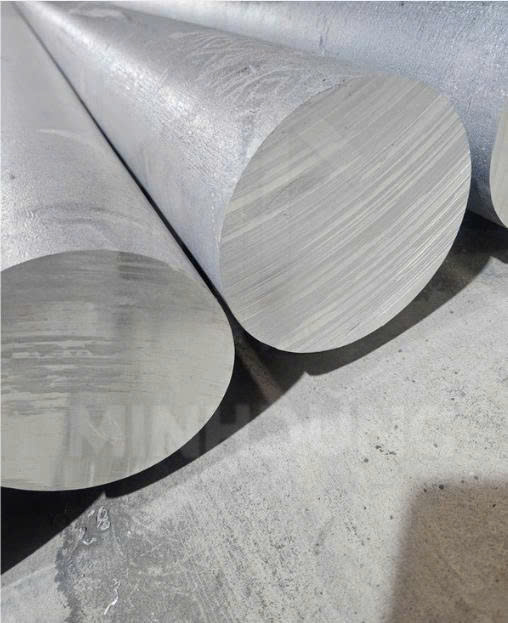
The condition of the billet before extrusion significantly affects the final product. Poor-quality billets can introduce defects during processing.
Key issues to check include:
- End cracks
- Gas porosity or inclusions
- Oxidized or contaminated surfaces
Such defects can lead to tearing during extrusion, reducing product quality and increasing scrap rates. Proper incoming quality control is essential.
5. Billet Temperature Control Before Extrusion
Billet temperature directly affects metal flow during extrusion. If the temperature is not properly controlled or uniform, the process becomes unstable.
Billets must be heated to the appropriate temperature depending on the alloy and product type. If the temperature is too low, the metal flow is restricted, increasing pressure and the risk of cracking. If too high, surface quality may deteriorate and mechanical properties may be affected.
Uniform temperature across the billet is equally important to ensure consistent metal flow throughout the extrusion process.
6. Compatibility with Die and Profile Design
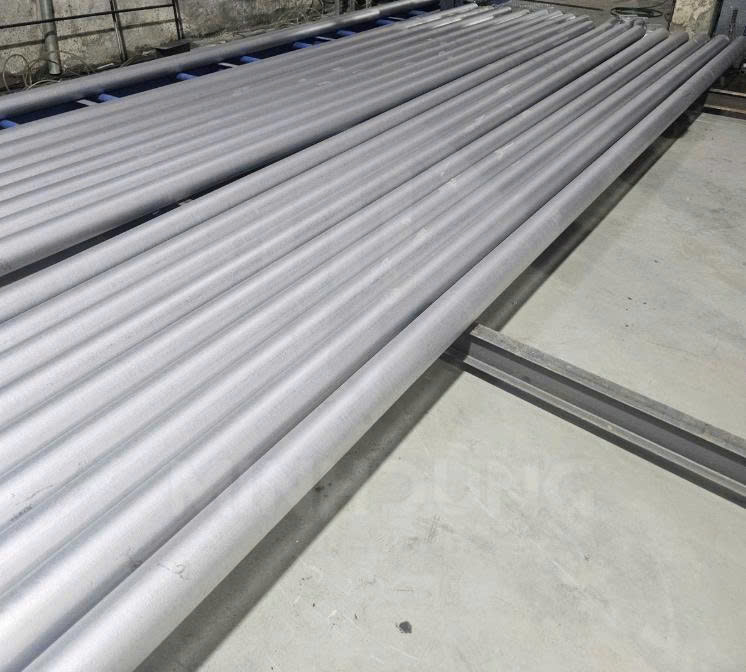
Not all billets are suitable for every die or profile design. The complexity of the product determines the requirements for billet quality.
For thin-walled, multi-cavity, or complex profiles, billets must have high quality and uniform structure to ensure stable metal flow. Otherwise, flow imbalance may occur, leading to distortion or surface defects.
For simpler profiles, billet requirements can be more flexible.
Minh Dung Aluminum – Reliable Aluminum Billet Supplier
Minh Dung Aluminum specializes in supplying 6061 and 6063 aluminum billets with stable quality, supporting extrusion manufacturers across Vietnam.
Contact for Consultation & Quotation
Ms. Lily
Phone / WeChat / WhatsApp: +84 867 767 310
Email: sales@nhomminhdung.vn