In the era of “Green Manufacturing” and Industry 4.0, the race to find materials that are lightweight, durable, and easy to machine has never been hotter. If steel is the “muscle” of construction structures, aluminum billets act as the flexible “backbone” of modern machine manufacturing.
Going far beyond being just a raw material for extrusion, high-quality aluminum billets play a pivotal role in creating machine components that require absolute precision. This article provides an in-depth analysis of the roles and practical applications of aluminum billets in the mechanical manufacturing sector.
1. What is an Aluminum Billet? Why Does Billet Quality Determine Machine Durability?
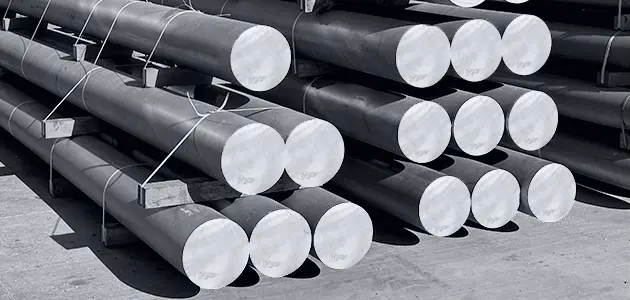
Before diving into applications, it is essential to understand the nature of this material. An aluminum billet is a solid, cylindrical alloy product created through Direct Chill (DC) casting from molten aluminum mixed with alloying elements (Magnesium, Silicon, Copper, Zinc, etc.).
However, the key difference between a billet used for residential aluminum doors and one used for precision machining lies in the Homogenization process.
- The Homogenization Process: Helps distribute the alloy’s grain structure evenly and relieves internal residual stress.
- Significance in Machining: If a billet is poorly homogenized, it becomes inconsistent during high-speed CNC milling/turning. This causes rapid tool wear, porous surface finishes, and dimensional instability after machining.
Therefore, in machine manufacturing, standard heat treatment for aluminum grades like 6061 or 6063 billets is a mandatory requirement.
2. 5 Reasons Mechanical Engineers Choose Aluminum Billets Over Steel or Stainless Steel
Why do Machine Designers increasingly prioritize aluminum, especially components machined from billet blanks?
- Lightweight: Aluminum has a density of about 2.7g/cm³, roughly one-third that of steel (7.8g/cm³). In automation lines, robots, or robotic arms, reducing the weight of moving parts minimizes inertia, increases operating speed, and saves energy for servo motors.
- Excellent Machinability: Aluminum billets (especially the 6xxx series) allow for much higher cutting speeds compared to steel. Chips evacuate easily, causing less tool wear. This helps machining facilities reduce cycle time, thereby lowering the final product cost.
- Natural Corrosion Resistance: The natural aluminum oxide layer protects machine parts from oxidation. When Anodized, the surface not only becomes exceptionally hard (nearly matching diamond) but also highly aesthetic, making it ideal for food processing, medical, or cleanroom machinery.
- Superior Thermal Conductivity: In machine mechanisms that generate high heat, aluminum acts as an effective heatsink, protecting electronic components and attached motors.
- Cost-Effectiveness & Recyclability: Although raw aluminum costs more than standard steel, the lower machining costs and high scrap recovery value make the Total Cost of Ownership (TCO) for aluminum components highly competitive.
3. Typical Applications of Aluminum Billets in Machine Manufacturing
From a round billet, whether extruded into profiles or cut into short blanks for CNC milling/turning, aluminum is present everywhere in an industrial machine.
3.1. Structural Frames & Conveyors
In machine building, structural frames and conveyor systems are the most common applications of aluminum billets. Extruded 6063 billets create aluminum profiles with high precision and stable surfaces, perfect for assembling machine structures.
Compared to traditional welded steel structures, using billet-derived aluminum offers clear advantages through modularity, allowing businesses to easily adjust designs when modifying production lines. Core benefits include:
- Easy assembly, disassembly, and expansion without complex welding.
- Clean, rust-free surfaces suitable for high-standard production environments.
- Lightweight nature, reducing the load on the entire machine system.
3.2. Jigs & Fixtures
In automotive, electronics, and precision engineering, jigs and fixtures demand high precision but must remain lightweight for easy handling and installation. For this reason, 6061-T6 aluminum billets are a popular choice.
6061 billets offer stable mechanical properties and excellent CNC machinability, maintaining tight tolerances over long periods of use. Typical applications include:
- Checking fixtures.
- Welding fixtures in assembly lines.
- Component trays in electronics manufacturing.
3.3. Robotic Parts
For industrial robots, materials must optimize weight without sacrificing durability. Parts like robotic arms, joints, or rotary bases require low moments of inertia for rapid acceleration and precise stopping.
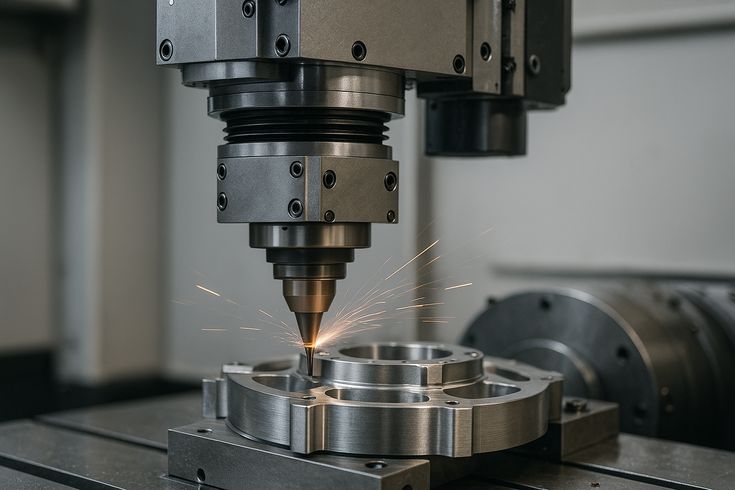
Aluminum billets are cut and machined using 5-axis CNC to create complex, hollowed-out shapes. This reduces overall weight while ensuring rigidity and stability at high speeds, helping to:
- Increase movement speed and precision.
- Reduce energy consumption.
- Extend the lifespan of drive systems.
3.4. Hydraulic & Pneumatic Manifolds
In hydraulic and pneumatic systems, manifold blocks control flow and pressure. These parts require high-density materials capable of withstanding extreme pressure without any leaks.
Hot-Top cast aluminum billets provide a dense, uniform metal structure, eliminating porosity. This is critical when machining complex internal fluid channels. Key requirements met by billet aluminum include:
- High-pressure resistance.
- Absolute airtightness post-machining.
- Long-term stability in continuous working environments.
3.5. Molds
While steel dominates heavy stamping molds, billet aluminum excels in other areas. PET blow molds, vacuum forming molds, and shoe sole molds frequently utilize high-quality 6061 or 7075 aluminum billets.
The biggest advantage is rapid thermal conductivity, which cools plastic faster and shortens the molding cycle. This brings:
- Shorter cycle times.
- Easier CNC machining, reducing mold-making time.
- Flexibility for projects requiring frequent design changes.
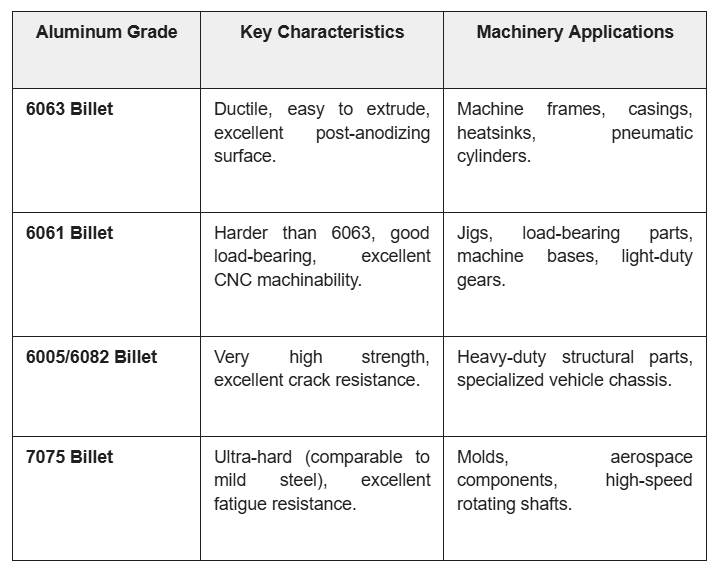
4. Which Billet to Choose for Machine Parts?
Not all billets are created equal. Engineers select the appropriate aluminum grade based on technical requirements:
5. Future Trends: Aluminum and the Precision Machinery Industry
The machinery manufacturing market in Vietnam is shifting strongly from rough machining to precision engineering. The demand for high-quality aluminum billets (ranging from 3 to 9 inches in diameter, with smooth surfaces and precise chemical compositions) is surging to serve FDI companies and export markets.
Utilizing international-standard aluminum billets (such as ASTM B221, JIS H4100) not only helps mechanical firms reduce defect rates (NG) but also elevates the standing of Vietnamese products on the global supporting industry map.
Conclusion
An aluminum billet is not just a lifeless block of metal; it is the starting point of precision and efficiency in machine manufacturing. From sturdy frames to agile robotic arms, the presence of aluminum is a testament to the modern, green, and smart manufacturing trend.
For manufacturers, choosing a reputable aluminum billet supplier with strict homogenization and quality control processes is the first step in building perfect machines.
Are you looking for a high-quality aluminum billet supplier (6063, 6061) for your mechanical machining or extrusion projects? Contact us today for technical consultation and the best quotation.
Mia Ha
Export–Import Sales Department
🌐 Website: https://nhomminhdung.vn/
📧 Email: kinhdoanh@nhomminhdung.vn
📱 Hotline / WhatsApp: +84 332 008 948