Aluminum vs Steel for Cleanrooms: Which Material Should Customers Choose?
Every surface in a cleanroom affects contamination control, from the wall frame to the door profile. Aluminum and steel (mainly stainless steel) are the two most common structural metals in controlled environments. Which one is right depends on your cleanliness class, cleaning regime, budget and timeline.
Why Material Choice Matters in a Cleanroom?
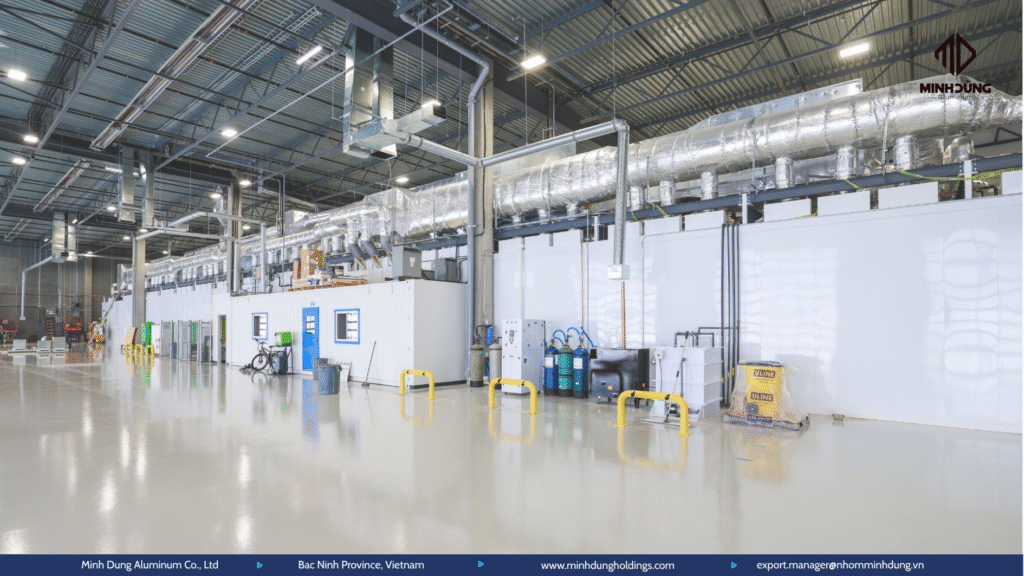
Cleanrooms are classified under ISO 14644-1 by the maximum number of airborne particles allowed per cubic meter:
| ISO Class | Max particles ≥0.5 µm per m³ |
| ISO 5 | 3,520 |
| ISO 7 | 352,000 |
| ISO 8 | 3,520,000 |
For comparison, typical outdoor urban air contains about 35 million particles ≥0.5 µm per m³, which corresponds to ISO 9.
ISO 14644-4 sets out the design and construction requirements. Cleanroom surfaces should be smooth, non-shedding and resistant to cleaning agents. Your framing material must meet these requirements for the life of the facility.
Aluminum vs Steel: Side-by-Side Comparison
| Property | Aluminium (6061-T6) | Stainless Steel (304) |
| Density | 2.70 g/cm³ | ~8.0 g/cm³ |
| Thermal conductivity | ~167 W/m·K | ~16 W/m·K |
| Tensile strength | ~310 MPa | ~515 MPa |
| Machinability rating | 90/100 | 45/100 |
| Raw material price | Typically 20–40% lower per kg | Higher |
| Corrosion resistance | Good (natural oxide layer, improved by anodizing) | Excellent |
Figures are typical values; exact numbers vary by alloy, temper and supplier.
1. Weight and Installation: Aluminum Wins
Aluminum is roughly one-third the weight of stainless steel (2.7 vs about 8.0 g/cm³). In a cleanroom project this means:
- Lighter ceiling grids and wall frames, which reduce the load on the building structure.
- Faster, safer handling and installation on site.
- Lower freight cost when exporting profiles internationally.
Bolt-together aluminum systems also need no on-site welding or painting. Welding creates fumes, spatter and surface defects, all unwelcome in a clean build.
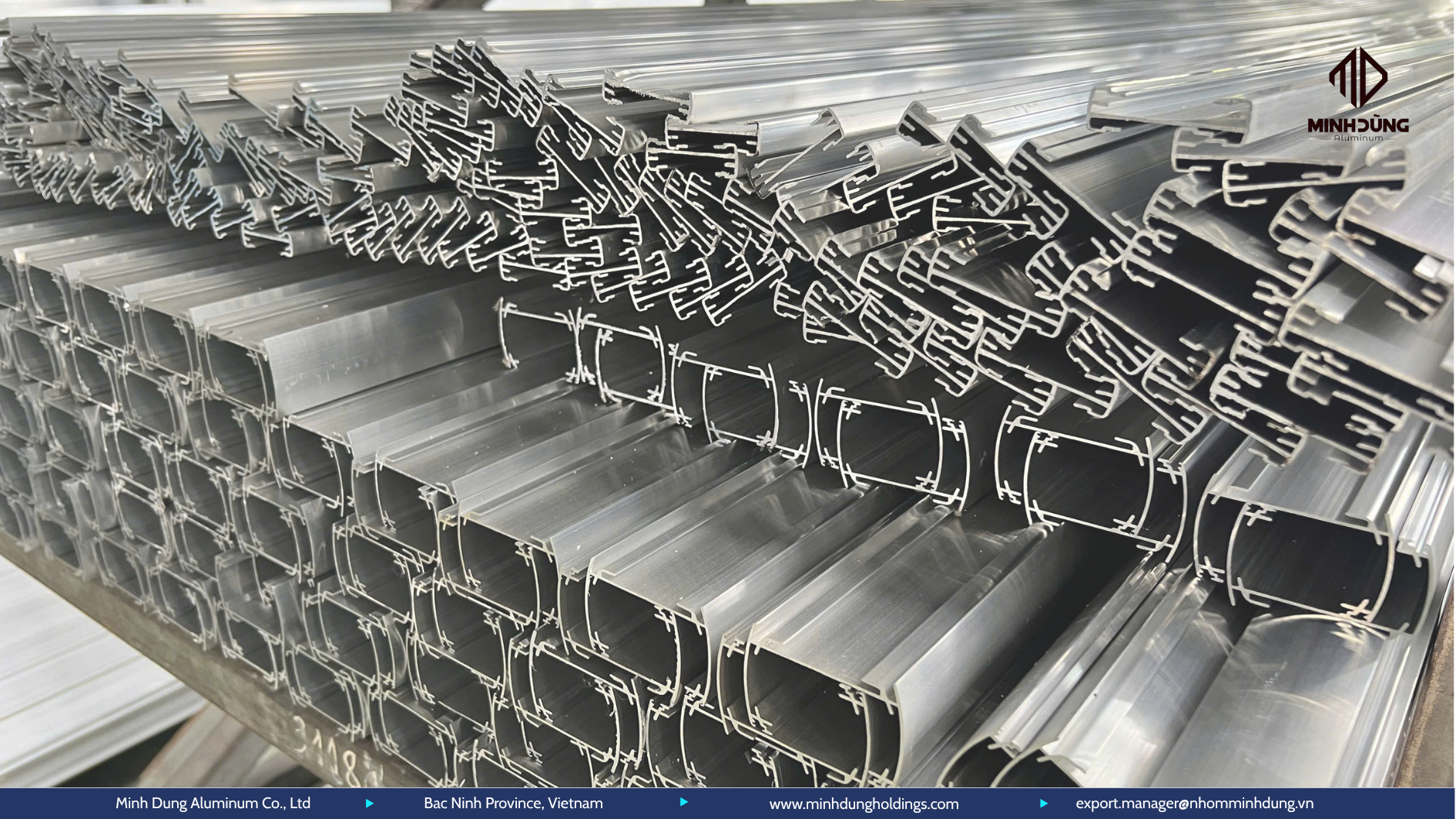
Aluminium profile for clean room/ Source: https://youthfilter.com/cleanroom-system/aluminum-profile-for-cleanroom/
2. Flexibility and Customization: Aluminum Wins
Extrusion lets manufacturers produce complex profiles in a single piece. Integrated channels, glazing grooves, cable ducts and cove corners can be built into the profile, which reduces joints and particle traps. Aluminum is also about twice as easy to machine as stainless steel (90 vs 45 on the machinability scale), and stainless machining costs can run 2-3 times higher. That makes custom profiles and modular layouts more economical.
Modular aluminum systems also suit facilities that may expand or reconfigure, which is common in electronics, medical devices and food packaging.
3. Corrosion and Chemical Resistance: Stainless Steel Leads, Aluminum Can Close the Gap
This is stainless steel’s strongest advantage. Its chromium-rich passive layer makes it highly resistant to rust. For pharmaceutical and biotech areas using aggressive disinfectants and sporicides, 316L stainless steel is often specified. Electropolished surfaces (Ra ≤ 0.6 µm) sit at the top of the cleanroom specification and cost range.
Aluminum also forms a natural oxide layer and performs well in most indoor environments. For cleanroom use, anodizing or powder coating is recommended. It hardens the surface, improves cleanability and protects against routine cleaning agents. Strongly alkaline or chlorine-based cleaners can still damage bare aluminum, so check your disinfection protocol before specifying.
4. Strength: Steel Is Stronger, but Aluminum Is Usually Enough
Stainless steel has higher tensile strength, which matters for heavy-load applications. Cleanroom wall and ceiling framing, partitions, door frames, equipment enclosures and workstations rarely need that strength. Modern aluminum profile systems carry significant mechanical loads and can support self-supporting ceilings.
5. Cost: Aluminum Is More Economical Overall
Aluminum raw material typically costs 20-40% less per kilogram than stainless steel. Combined with lower weight, faster installation and cheaper fabrication, total project cost is usually lower. Stainless steel carries a higher upfront cost but can pay back in demanding GMP environments through longer service life under harsh cleaning regimes.
6. Sustainability: Aluminum Wins
Many cleanroom customers, especially in the EU, Japan and the US, now set ESG targets for their supply chain.
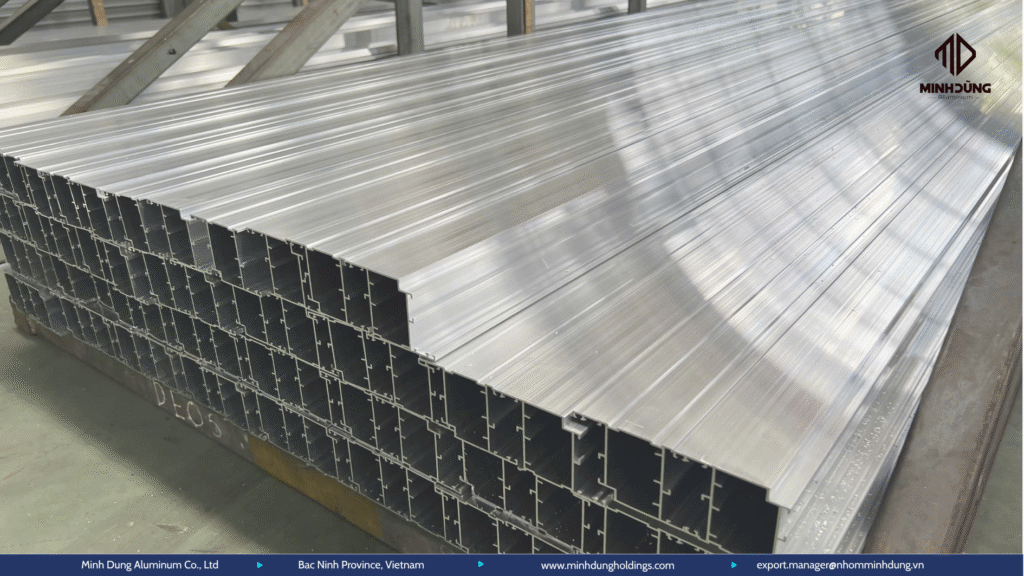
- Recycling aluminum uses about 95% less energy and emits about 95% fewer greenhouse gases than primary production.
- Aluminum can be recycled repeatedly without losing its properties. About 75% of all aluminum ever produced is still in use today.
- In building and construction, aluminum recycling rates can exceed 90%.
Recycled-content aluminum can therefore lower the carbon footprint of a cleanroom project.
So, Which Should You Choose?
Choose aluminum when:
- Your cleanroom is ISO 6-8 or a general controlled environment (electronics, automotive, packaging, food, medical device assembly).
- You need modular, expandable or fast-build systems.
- Budget, weight and shipping cost matter.
- You want custom-designed profiles and lower embodied carbon.
Choose stainless steel when:
- You work in pharmaceutical or biotech areas (GMP Grade A/B, ISO 5 or cleaner) with frequent sporicidal or aggressive chemical cleaning.
- Maximum hygiene and chemical resistance outweigh cost.
- Structural loads are unusually high.
Use both. Many cleanrooms combine anodized aluminum framing with stainless steel in the most critical zones. This balances performance and budget.
Aluminum Extrusion Solutions for Cleanrooms from Minh Dung Aluminum
If aluminum is the right fit for your project, the quality of the profile is as important as the material. Minh Dung Aluminum, based in Vietnam, is an integrated manufacturer covering recycling, remelting, billet casting and extrusion under one roof.

What we offer:
- Alloys and tempers: 6005, 6061, 6063 and 6082 in T5/T6, suitable for structural and architectural framing.
- Finishes: mill finish, anodized and powder coated, with in-house anodizing and powder coating lines.
- Scale: about 40,000 tons of annual capacity, 6 extrusion presses (4″–8″ billets) and 2 production plants.
- Custom design: an in-house design team that works with you from concept to production, optimizing profiles for manufacturability and cost.
- Quality control: in-house spectrometer analysis and dimensional inspection on every batch.
- Certifications: ISO 9001, ISO 14001 and ISO 45001.
- Global standards: extrusions made to EN 755 and EN 12020 (Europe), ASTM B221 (USA), AS/NZS 1866 (Australia/New Zealand) and JIS H4100 (Japan/Asia).
- Green aluminum: products made from recycled aluminum, supporting your sustainability goals.
We already supply customers in North America and Europe, and we can supply standard or custom profiles for cleanroom framing, partitions, door and window systems and equipment enclosures.
FAQ
Is aluminum suitable for ISO 5 cleanrooms?
Yes for framing and structural parts, when smooth anodized or coated profiles with concealed connections are used. For the most aggressive pharmaceutical cleaning regimes, stainless steel is often specified for exposed surfaces.
Does aluminum shed particles?
Bare, rough or damaged surfaces can. Anodizing or powder coating gives a harder, smoother, easier-to-clean surface, and well-designed profiles avoid crevices where particles collect.
Is aluminum cheaper than stainless steel?
Typically yes: lower raw material price per kg, lower weight, cheaper machining and faster installation.
Which alloys are best for cleanroom framing?
6063-T5/T6 for architectural profiles with good surface finish, and 6061/6005-T6 where higher strength is needed.