Modern manufacturing environments demand structural materials that are lightweight, durable, adaptable, and easy to integrate into different systems. From cleanroom partitions in pharmaceutical and electronics facilities to industrial pallet frames used in material handling, every component must meet specific requirements for strength, hygiene, dimensional accuracy, and operational efficiency.
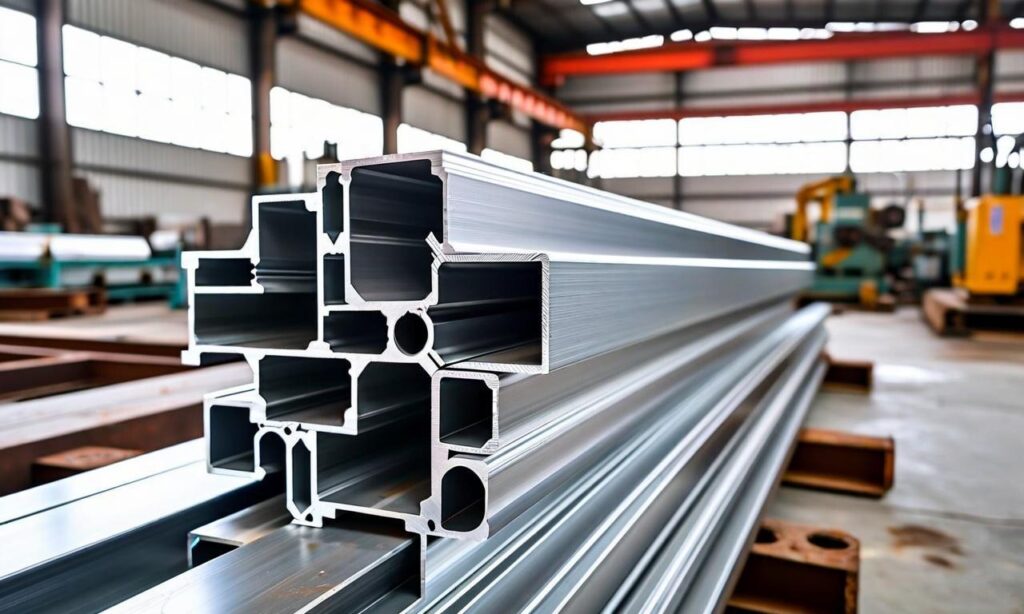
Aluminum extrusion profiles have become a practical solution for these applications because they combine a favorable strength-to-weight ratio with corrosion resistance, design flexibility, and a wide range of surface finishes. Their cross-sections can be engineered for specific structural and functional requirements, while cutting, drilling, milling, and CNC machining allow profiles to be adapted to individual projects.
Although cleanrooms and industrial pallet systems serve different purposes, both benefit from the versatility of aluminum. The key is selecting the right alloy, profile geometry, surface treatment, and assembly method for the intended application.
1. What Makes Aluminum Profiles Suitable for Industrial Applications?
Aluminum extrusion profiles offer a combination of material properties and design flexibility that makes them suitable for a wide range of industrial structures. Instead of assembling a frame from multiple separate components, manufacturers can use specially designed extrusions to integrate mounting slots, connection points, and functional features into a single profile. This can simplify assembly, reduce component count, and support more efficient production.
Lightweight Yet Strong
One of the main advantages of aluminum is its high strength-to-weight ratio. Compared with heavier structural materials, aluminum profiles can reduce the weight of frames, equipment supports, and material-handling structures while providing the required rigidity when properly engineered.
Lower structural weight can also make components easier to transport, handle, and install. However, load capacity depends on the alloy, temper, cross-sectional geometry, wall thickness, unsupported span, and connection design. For applications involving heavy equipment or pallet loads, engineering calculations and load testing may be necessary.
Corrosion Resistance and Surface Finishes
Aluminum naturally forms a thin oxide layer that helps protect it from corrosion in many environments. Additional surface treatments can improve appearance, surface durability, and resistance to specific operating conditions.
Common finishing options include:
- Mill finish: The natural surface produced by extrusion, suitable for applications where additional finishing is not required.
- Anodizing: An electrochemical treatment that creates a controlled oxide layer, improving surface durability and corrosion resistance.
- Powder coating: A coating process that provides a decorative finish and additional surface protection, with color options to suit different applications.
The appropriate finish depends on the working environment, cleaning agents, humidity, exposure to chemicals, and required service life. For technical background, see the.
Modular Design and Easy Assembly
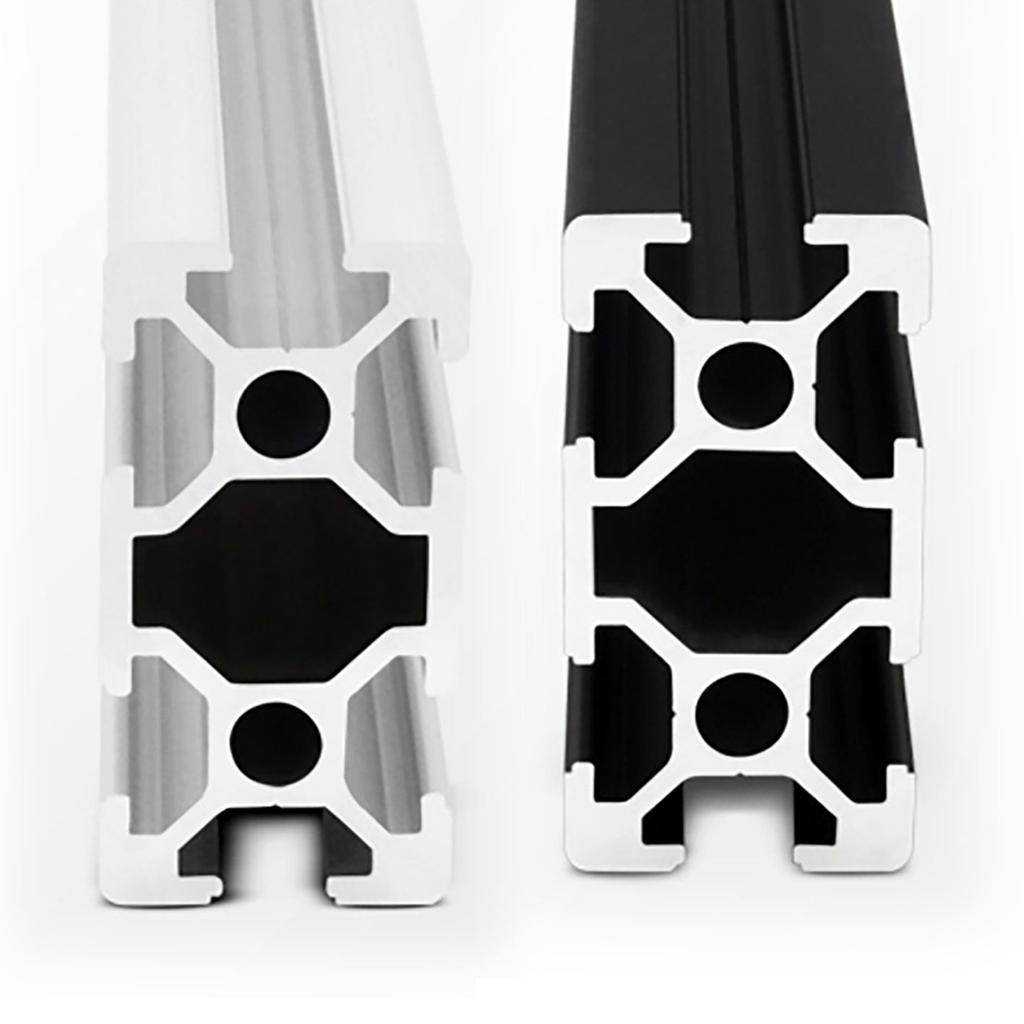
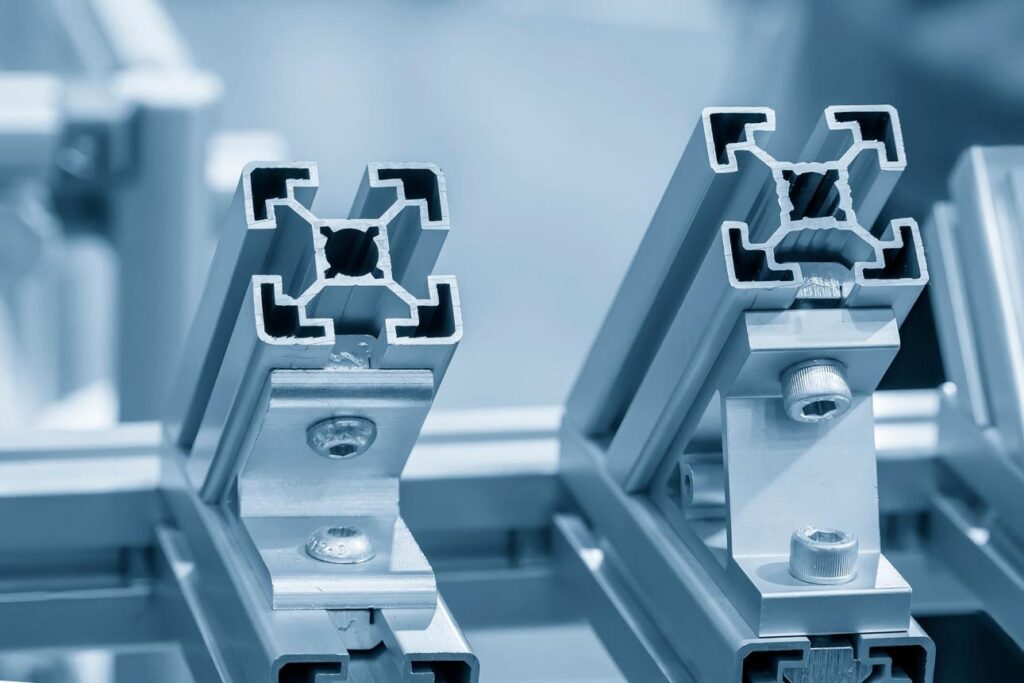
Many aluminum extrusion systems incorporate T-slots or other connection features that allow brackets, fasteners, panels, and accessories to be installed directly onto the profile. This modular approach makes it easier to assemble frames, add components, and modify equipment layouts without redesigning the entire structure.
For manufacturers working with changing production requirements, modular aluminum framing can support quicker installation and more flexible equipment configurations. It is especially useful for machine guarding, workstations, cleanroom framing, conveyor supports, and customized material-handling equipment.
Customization for Different Requirements
A key advantage of extrusion technology is the ability to produce profiles with cross-sections designed around a specific application. Depending on the project, profiles can incorporate grooves, channels, mounting features, and other functional details to reduce the need for additional components.
Further processing can include precision cutting, drilling, tapping, milling, and CNC machining. These operations help manufacturers prepare profiles for assembly and meet project-specific dimensions and tolerances.
For businesses sourcing aluminum profiles, custom extrusion is particularly valuable when standard sections cannot meet the required fit, structural performance, or assembly method. A technical drawing or physical sample can help an extrusion manufacturer assess feasibility and recommend a suitable profile design.
2. Why Are Aluminum Profiles Used in Cleanroom Systems?
Cleanrooms are controlled environments designed to manage airborne particles and, depending on the application, other sources of contamination. They are used in industries such as pharmaceuticals, medical devices, electronics, semiconductors, and biotechnology.
Aluminum profiles are commonly used in cleanroom construction because they can provide lightweight structural framing, support modular assembly, and accommodate different panel and equipment configurations. Their suitability, however, depends on the complete system design, surface finish, cleaning procedures, and the cleanliness requirements of the facility.
Cleanroom Partition and Wall Framing
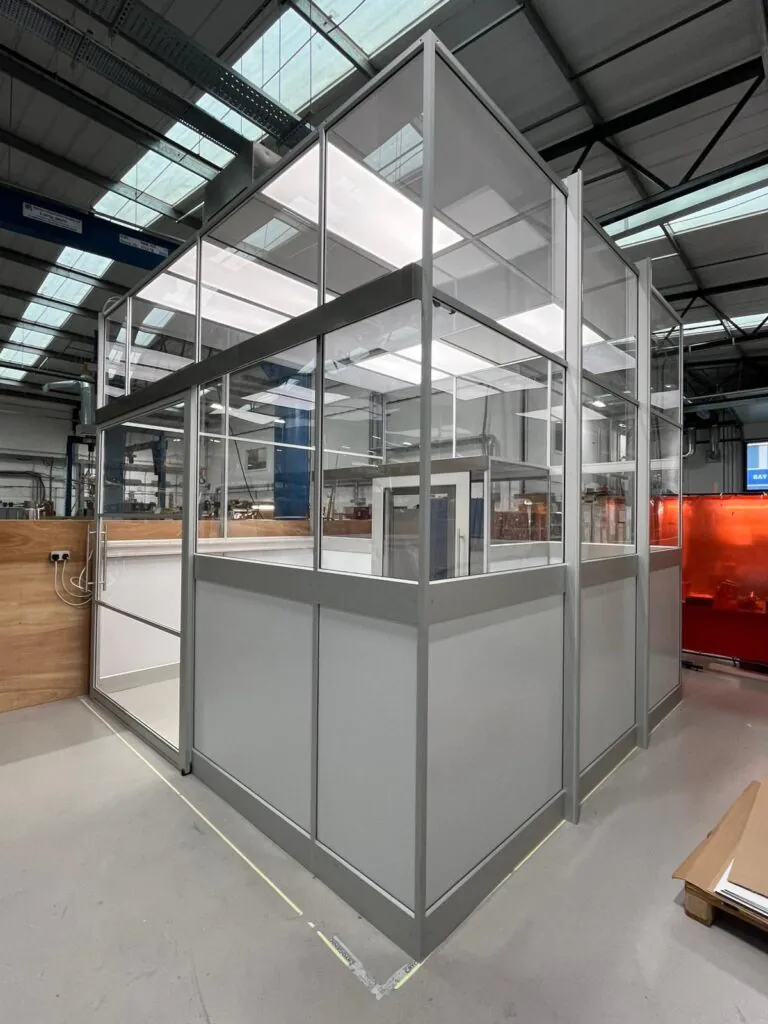
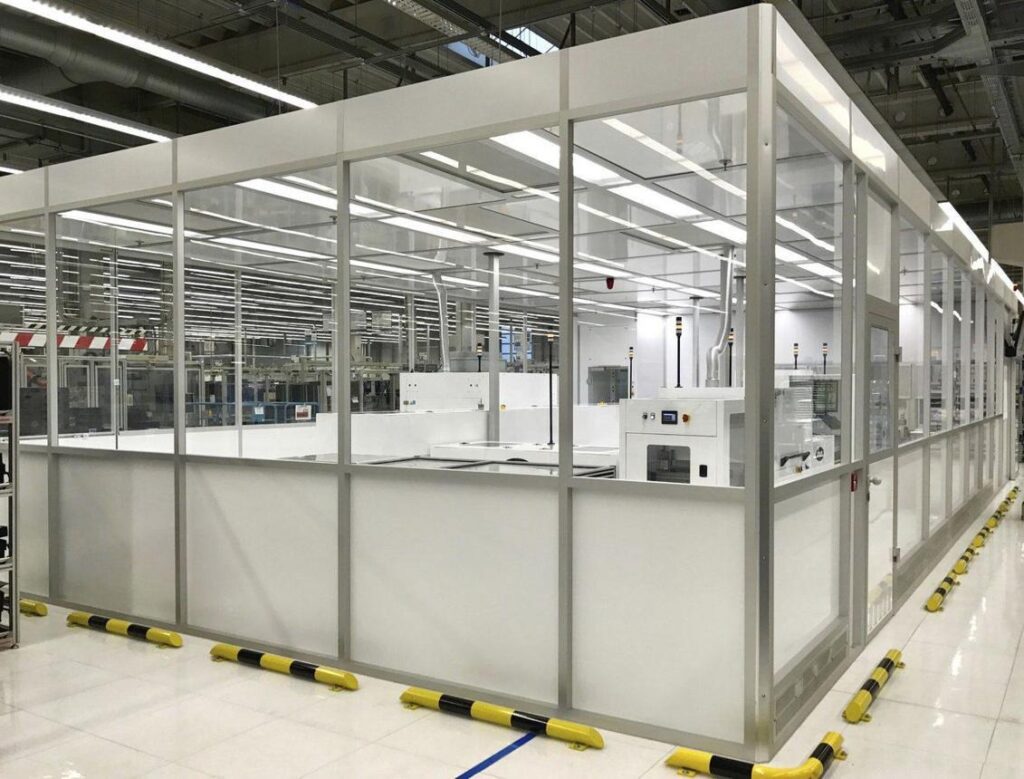
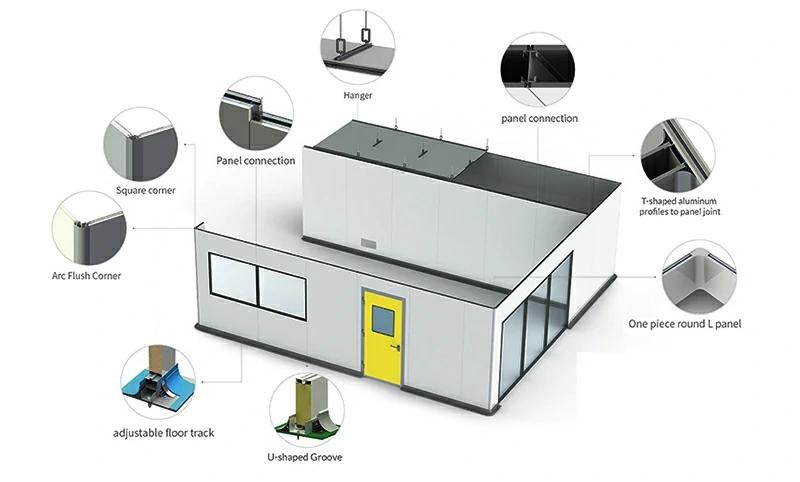
Aluminum profiles can form the structural framework for cleanroom partitions, wall panels, ceiling grids, doors, viewing windows, and access openings. Their dimensional flexibility allows system designers to create layouts that suit specific room dimensions and equipment arrangements.
Extruded profiles can also incorporate channels or mounting features for panel retention, gaskets, fasteners, and connecting components. This helps integrate the framing with the wider cleanroom enclosure system.
For modular cleanroom projects, the ability to manufacture profiles to specified dimensions can simplify installation and help achieve consistent alignment across multiple sections.
Smooth Surfaces and Easier Cleaning
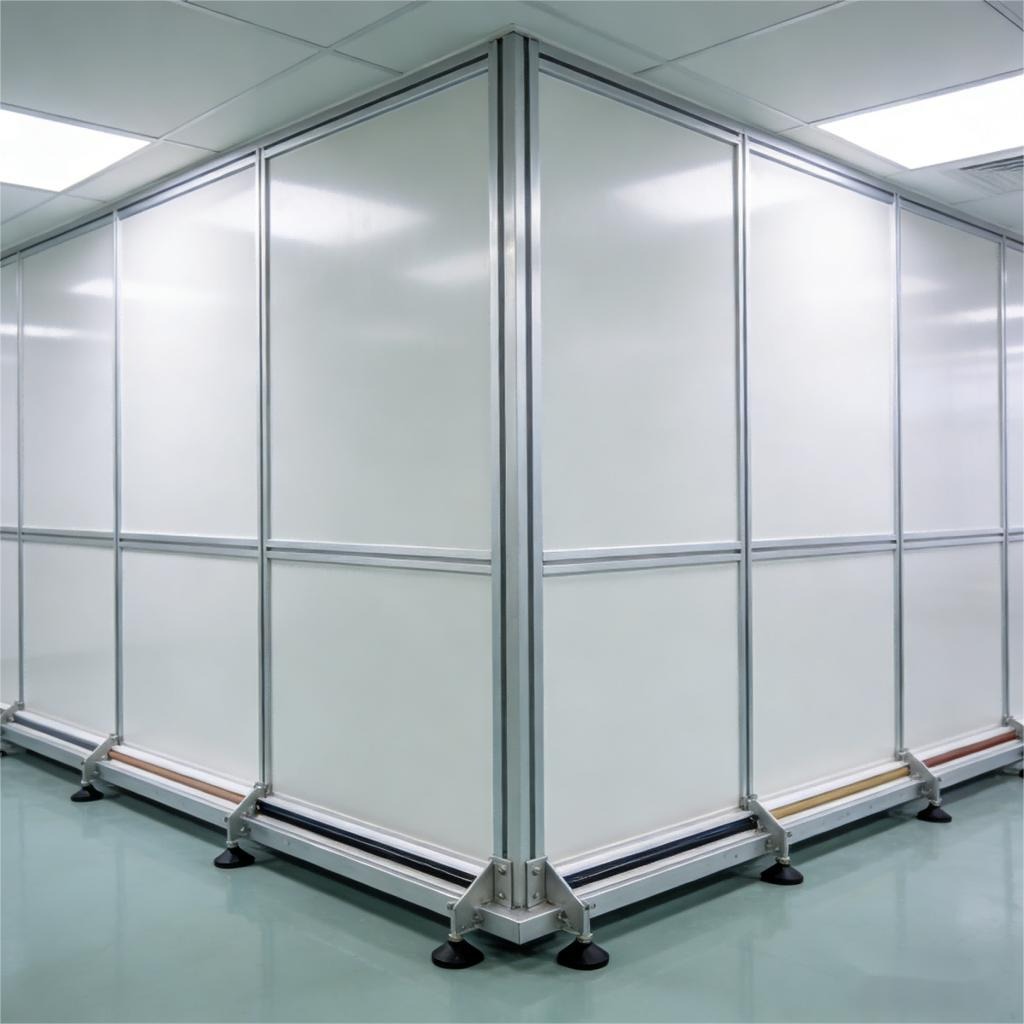
Surface cleanliness is an important consideration in controlled environments. Profile geometry, joints, surface condition, and the compatibility of materials with cleaning agents all affect how easily a structure can be cleaned.
Anodized aluminum profiles may be suitable for certain cleanroom applications because of their durable surface. However, anodizing alone does not make a profile suitable for every cleanroom. Designers must also consider exposed grooves, sharp corners, gaps, fasteners, and areas where dust or residue could accumulate.
Where stringent hygiene requirements apply, a profile with an appropriate surface finish and a carefully designed assembly may be preferable to an open section with difficult-to-clean recesses. The cleaning method should be evaluated against the actual process and material requirements.
For reference, the ISO 14644-13 cleanroom standard provides guidance on cleaning surfaces to achieve specified levels of particle and chemical cleanliness.
Compatibility with Cleanroom Equipment
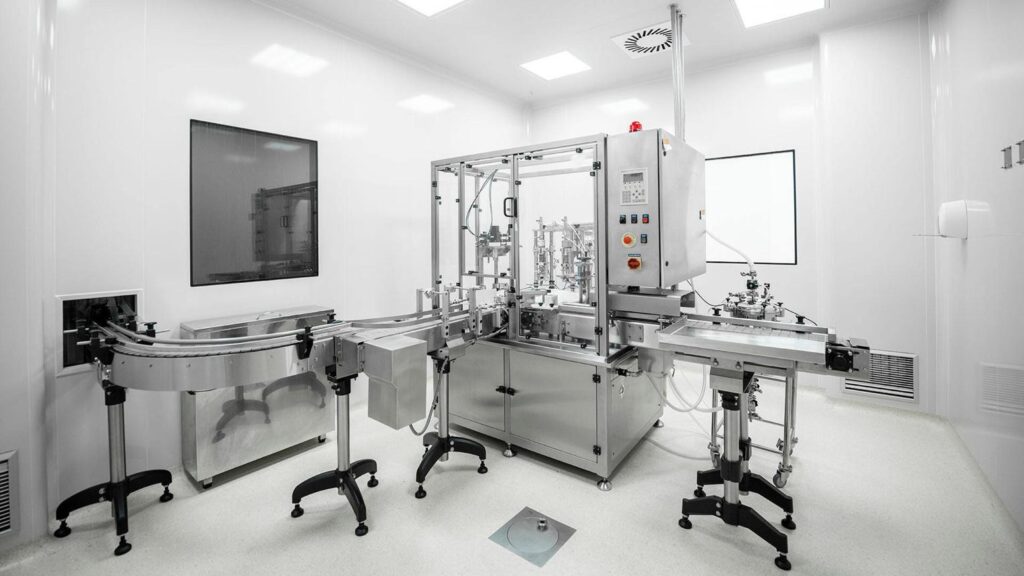
Beyond walls and partitions, aluminum extrusion profiles can be used for equipment frames, inspection stations, workbenches, conveyor supports, machine enclosures, and component mounting structures.
Their adaptability is useful when cleanroom equipment needs to accommodate different dimensions, accessories, or production processes. Modular profiles can also make it easier to reposition supports or replace components during equipment upgrades, provided the system has been designed for such modifications.
The required profile should be selected according to the equipment load, vibration, deflection limits, cleaning regime, and any electrical or electrostatic-control requirements. In sensitive environments, the suitability of the entire assembly must be assessed rather than relying on the base material alone.
Choosing the Right Profile and Finish
Selecting aluminum profiles for cleanrooms involves more than choosing an alloy or surface color. Buyers and system designers should evaluate the required structural performance, surface quality, chemical compatibility, and ease of cleaning.
Key considerations include:
- Alloy and temper: Select according to the required strength, formability, and fabrication needs.
- Profile geometry: Consider wall thickness, load paths, joints, grooves, and exposed surfaces.
- Surface finish: Specify mill finish, anodizing, or powder coating based on the environment and cleaning requirements.
- Dimensional accuracy: Establish tolerances for panel interfaces, connections, and equipment mounting.
- Cleanroom requirements: Confirm compatibility with the facility’s cleanliness classification and operating procedures.
The ISO 14644 series provides standards covering cleanroom classification and related considerations. Using aluminum profiles does not automatically make a structure compliant with cleanroom requirements; compliance depends on the complete design, materials, installation, and validation process.
3. Why Are Aluminum Profiles Used in Industrial Pallet Systems?
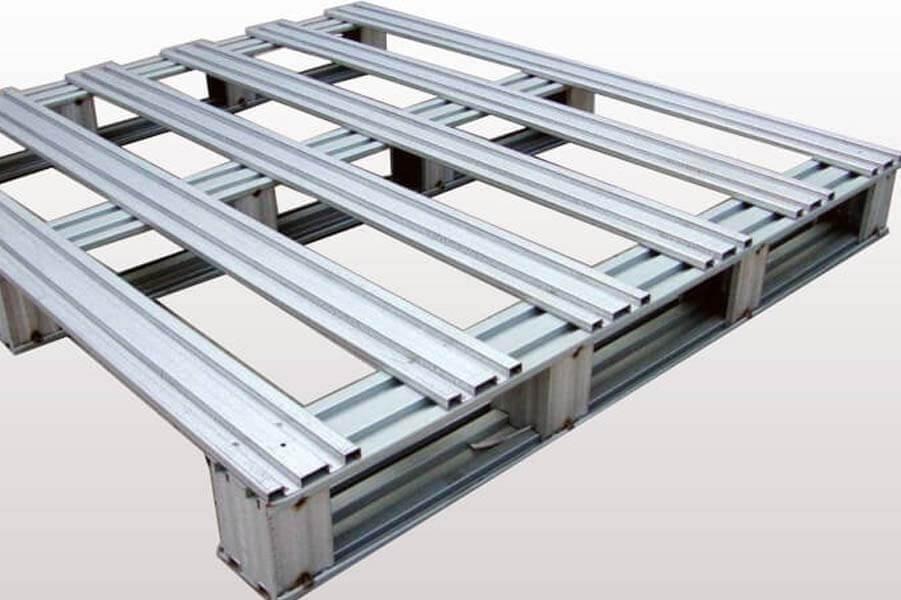
Industrial pallet systems and material-handling equipment must support products securely while remaining practical to transport, load, unload, and maintain. Depending on the application, aluminum profiles can be used to build pallet frames, reusable transport racks, equipment carriers, and custom handling platforms.
Their main advantages are low structural weight, flexible dimensions, and the ability to integrate mounting features. Nevertheless, the suitability of aluminum depends on the load, impact exposure, handling method, and operating environment. The profile and assembly must be engineered for the intended duty.
Lightweight Frames for Material Handling
Aluminum profiles can reduce the self-weight of pallet frames and transport fixtures compared with heavier designs of similar function, depending on their geometry and structural requirements. This may make handling easier and reduce the amount of dead weight moved during transport.
In applications involving reusable carriers or dedicated equipment racks, lower frame weight can be useful when operators repeatedly move empty units or when the handling process has strict weight limits.
However, a lightweight design must still provide adequate stiffness, resistance to impact, and safe support for the intended payload. Load ratings should be established through appropriate engineering calculations and testing rather than inferred from the material alone.
Custom Dimensions for Different Loads
Industrial products vary significantly in size, shape, and weight. Custom aluminum extrusion profiles allow manufacturers to develop frames around particular products, handling equipment, and storage configurations.
Profile dimensions, cross-sections, and connection points can be adapted to the design of the pallet or transport rack. Additional machining can create mounting holes, locating features, and interfaces for wheels, brackets, or other components.
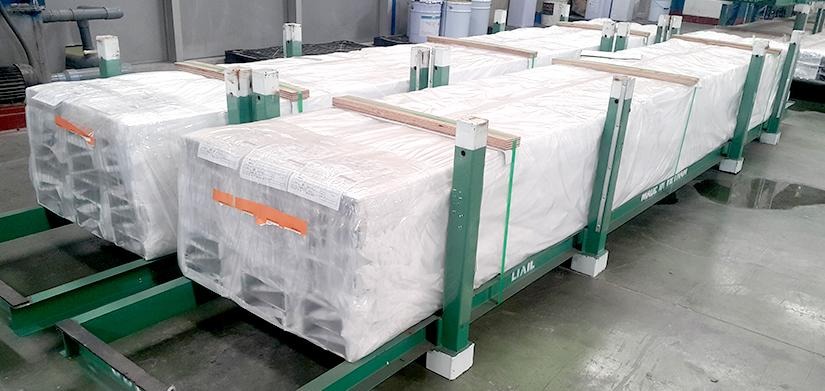
For export packaging and containerized transport, the overall frame dimensions are also important. A well-planned design should consider container dimensions, forklift access, loading direction, clearance, and the space required to unload the equipment safely.
Modular Construction and Replaceable Components
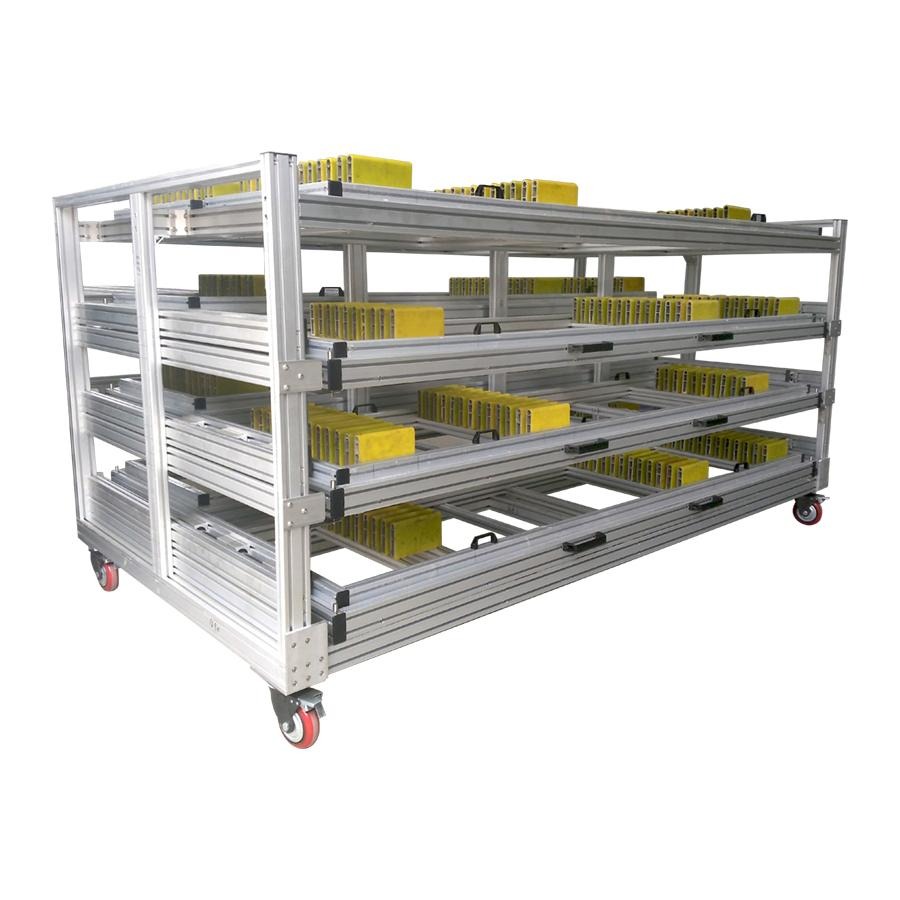
Modular aluminum framing can help manufacturers create transport fixtures that are adjustable or repairable. Profiles connected with brackets and fasteners may allow certain components to be replaced without rebuilding the entire structure.
This can be useful for reusable pallet systems, production-line carriers, and specialized handling racks that need to accommodate different product sizes over time.
The actual benefit depends on the design. Connections must remain secure under repeated handling, vibration, and impact, while replaceable components should be accessible without compromising structural integrity. For heavy-duty applications, the connection system and fatigue performance deserve particular attention.
Surface Protection and Long-Term Maintenance
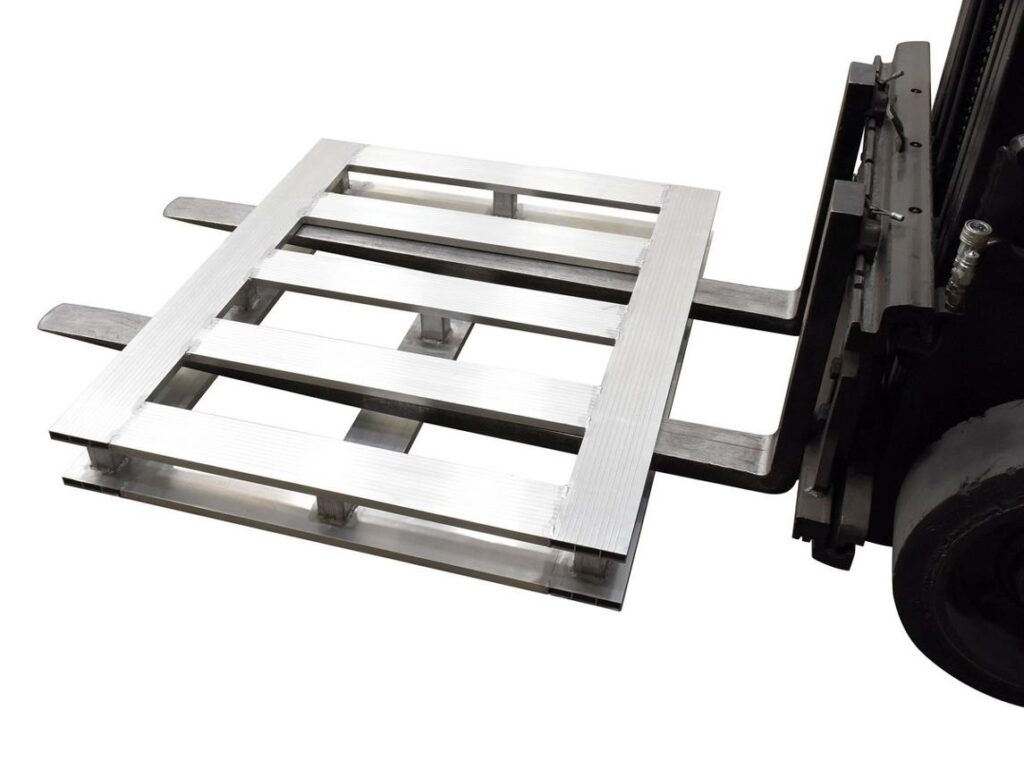
Industrial pallet frames may operate in warehouses, production areas, logistics facilities, or environments exposed to moisture and cleaning chemicals. Choosing a suitable surface finish can help protect the aluminum and maintain the required appearance.
Anodizing can improve the surface’s resistance to wear and corrosion in many applications, while powder coating can provide color coding or a decorative protective layer. The best option depends on the environment and expected handling conditions.
For pallet systems that experience frequent forklift contact, abrasion, or repeated impacts, designers should also consider mechanical damage to the surface, fastener condition, and inspection requirements. Regular checks of joints, load-bearing members, and contact points help maintain safe operation.
4. How to Choose the Right Aluminum Extrusion Profile
Choosing the right aluminum extrusion profile starts with understanding how the component will be used. A cleanroom frame may prioritize cleanability and panel integration, while a pallet frame may require higher stiffness, impact resistance, and a verified load capacity.
Consider the following factors before requesting a quotation:
- Define the application and load requirements. Specify payload, unsupported span, operating conditions, handling method, and any allowable deflection.
- Select the alloy and temper. Grades such as 6063-T5 and 6061-T6 may be suitable for different applications, depending on the required strength, geometry, and fabrication process.
- Choose the surface finish. Specify mill finish, anodizing, or powder coating according to appearance, corrosion exposure, cleaning agents, and wear conditions.
- Confirm dimensions and machining. Provide profile drawings, lengths, dimensional tolerances, hole locations, slots, and any cutting or CNC requirements.
- Review samples and technical requirements. Confirm fit, finish, and critical dimensions before moving into mass production.
For custom projects, supplying a CAD drawing or a physical sample gives the manufacturer a clearer basis for evaluating the profile design, tooling requirements, estimated weight per meter, and production feasibility.
5. Why Source Aluminum Profiles from Vietnam?
Vietnam is becoming an attractive sourcing location for international buyers look
Competitive Manufacturing Costs: Vietnam offers competitive manufacturing costs compared with many traditional manufacturing markets while maintaining access to modern extrusion and processing capabilities. However, buyers should compare suppliers based on the total cost, including tooling, extrusion, machining, surface treatment, packaging, shipping, and quality requirements rather than focusing only on the price per kilogram.ing for aluminum extrusion products. Several factors can make Vietnam a competitive sourcing option.
FTA Benefits: Vietnam’s network of free trade agreements, including EVFTA, CPTPP, RCEP, and AANZFTA, can provide preferential import tariffs for eligible aluminum profiles exported to partner markets, helping international buyers reduce overall import costs. The actual tariff benefit depends on the destination market, HS code, applicable FTA, and compliance with the relevant rules of origin and certif
Custom Aluminum Extrusion Capability: Vietnamese manufacturers can supply both standard and customized aluminum extrusion profiles. Custom production allows manufacturers to develop profiles according to customer drawings and application requirements.ication requirements (Vietnam Trade Repository).
Custom Aluminum Extrusion Capability: Vietnamese manufacturers can supply both standard and customized aluminum extrusion profiles. Custom production allows manufacturers to develop profiles according to customer drawings and application requirements.ication requirements (Vietnam Trade Repository).
Flexible Production: For buyers with different profile designs, specifications, and order requirements, flexible production capabilities can simplify sourcing and product development.
Export Experience: For international buyers, experience with export documentation, packaging, logistics, and international shipping is an important factor when selecting a Vietnamese aluminum supplier.
Surface Treatment and Secondary Processing: Depending on the manufacturer, buyers can source additional processes such as anodizing, powder coating, cutting, CNC machining, and other fabrication services.
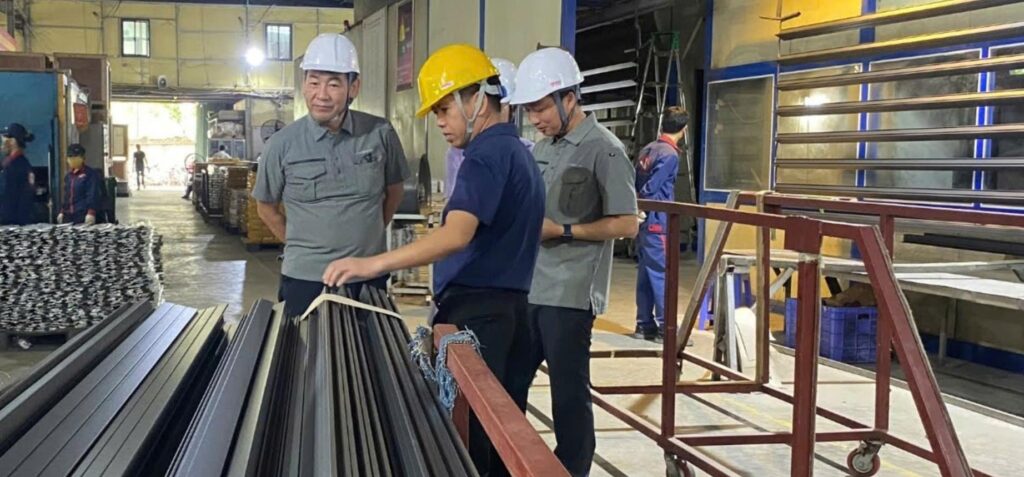
6. Why Choose Minh Dung Aluminum for Custom Aluminum Profiles?
Minh Dung Aluminum in Vietnam specializes in aluminum products including aluminum billets, aluminum extrusion profiles, and aluminum ingots. The company focuses on supplying aluminum products for different customer requirements and applications, with an emphasis on stable quality, customized production, and international business cooperation.
Aluminum Extrusion Profiles: Minh Dung Aluminum can develop aluminum extrusion profiles according to customer requirements, including customized shapes and specifications.
Customized Production: For customers with technical drawings or specific product requirements, customized extrusion can be discussed based on the intended application, dimensions, alloy, quantity, and surface treatment.
Recycled Aluminum Source: Minh Dung Aluminum focuses on recycled aluminum sources as part of its aluminum production approach. For buyers with sustainability requirements, the specific recycled content, material specification, and documentation should be discussed according to the project requirements.
Stable Quality: Quality control is an important part of aluminum production, particularly for international buyers who require consistent dimensions, surface quality, and mechanical performance.Export Experience: Minh Dung Aluminum has experience working with international customers and can discuss product specifications, packaging, documentation, and shipping requirements for export orders.
Production Capacity: Minh Dung Aluminum has a stated production capacity of approximately 40,000 tons per year, covering its aluminum product lines (Minh Dung Holdings).
Conclusion: One Material, Multiple Industrial Solutions
Aluminum extrusion profiles provide a versatile option for cleanroom structures and industrial pallet systems because they combine low weight, corrosion resistance, adaptable geometry, and multiple finishing options. However, performance depends on selecting the right alloy, profile design, surface treatment, and assembly method for each application.
For manufacturers seeking custom aluminum profiles, working directly with an extrusion supplier can help streamline technical evaluation, machining, finishing, and export planning.
Looking for a reliable source of custom aluminum profiles? Contact Minh Dung Aluminum or send us your drawings and specifications to discuss your requirements and request a quotation.
CONTACT US
Website: https://minhdungholdings.com/
Email: export@nhomminhdung.vn
WhatsApp / Phone: +84 942024605