Introduction
As the demand for solar energy systems, electric vehicle (EV) charging infrastructure and advanced power electronics continues to grow, effective thermal management has become an essential consideration in equipment manufacturing. Components such as power semiconductors, converters and electronic control units generate heat during operation. Without proper heat dissipation, excessive temperatures can affect equipment performance, reliability and service life.
In this article, we explore common aluminum heat sink designs, their applications in solar inverters, EV chargers and industrial power electronics, and the key considerations when sourcing custom aluminum heat sink profiles from Vietnam.
1. Why Are Aluminum Heat Sinks Important for Power Electronics?
As power electronic equipment becomes more compact and powerful, effective thermal management is increasingly important. Devices such as solar inverters, EV chargers, power supplies and industrial control systems generate heat during operation. If this heat is not properly dissipated, it can affect component performance, reliability and service life.
Aluminum heat sinks provide an effective solution by transferring heat away from electronic components and releasing it into the surrounding environment.
Why Aluminum Is Widely Used for Heat Sinks
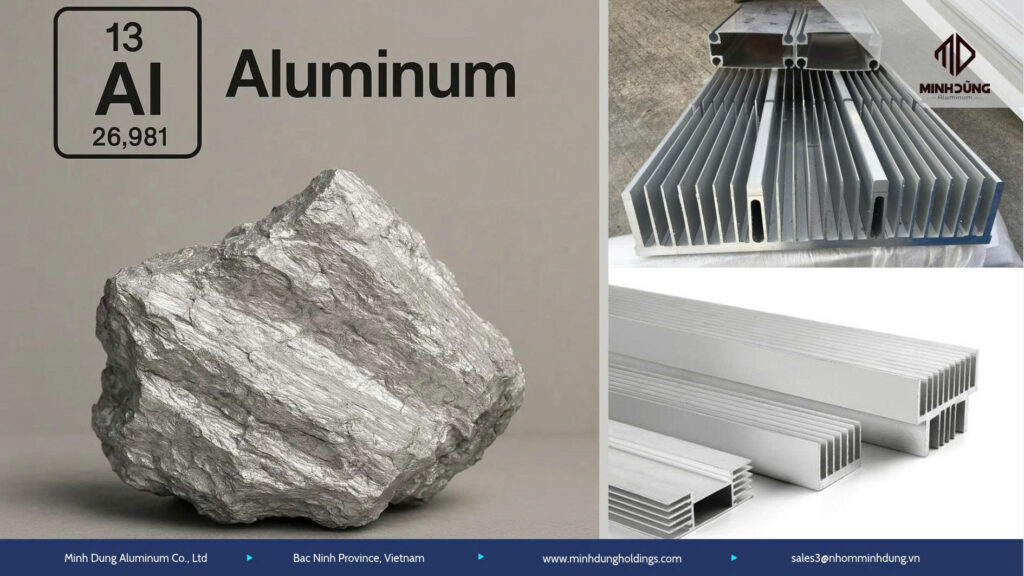
Aluminum is a popular material for heat sink manufacturing because it offers a practical combination of thermal conductivity, low weight, corrosion resistance and workability.
Key advantages include:
- Good thermal conductivity: Helps transfer heat away from electronic components.
- Lightweight construction: Reduces the overall weight of equipment.
- Design flexibility: Can be extruded into complex profiles with multiple fins and channels.
- Corrosion resistance: Suitable surface treatments can provide additional protection.
- Manufacturing efficiency: Aluminum extrusion supports consistent production of customized cross-sections.
The Role of Extruded Aluminum Heat Sink Design
Aluminum extrusion is particularly suitable for manufacturing heat sinks because it allows manufacturers to produce complex cross-sectional shapes in continuous lengths.
Instead of assembling multiple separate components, an extruded profile can integrate the base and cooling fins into one piece. This can simplify production, reduce component count and provide flexibility in designing the cooling structure.
The extrusion design can be adjusted according to the equipment’s dimensions, mounting requirements and intended cooling arrangement.
2. Common Aluminum Heat Sink Shapes and Designs
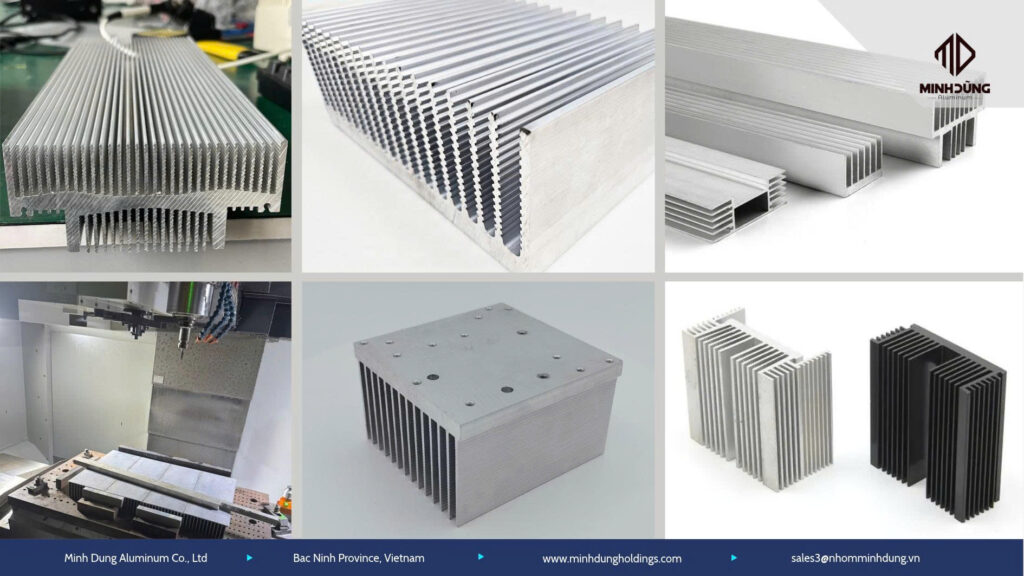
Heat sinks are available in various shapes and configurations. The appropriate design depends on the heat generated by the equipment, available installation space, airflow direction and cooling requirements.
Below are several common aluminum heat sink designs used in electronic and power equipment.
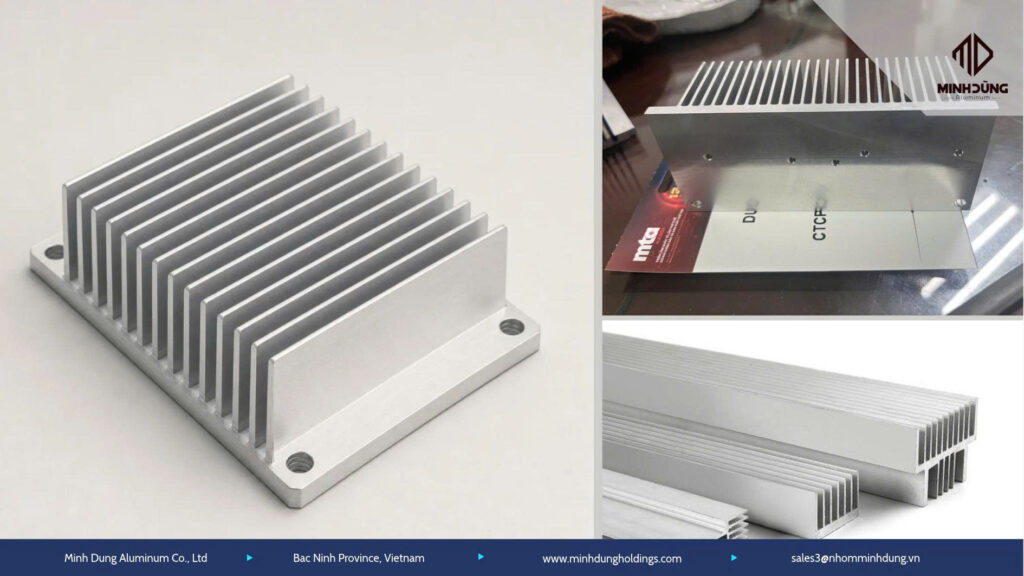
Straight-Fin Heat Sinks
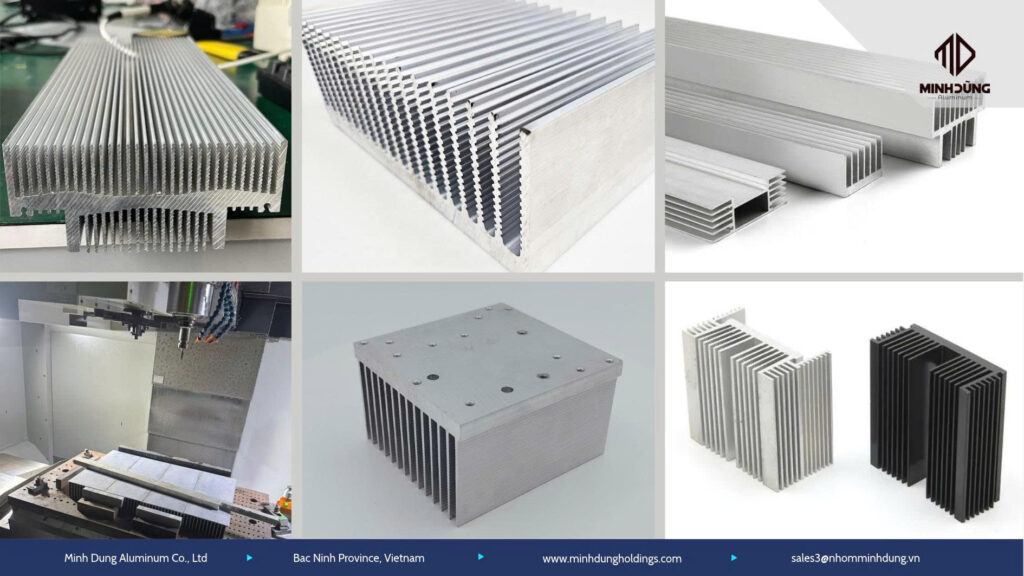
Straight-fin heat sinks feature parallel fins extending from a flat base. This is one of the most common configurations for aluminum extrusion.
The design provides multiple heat-dissipating surfaces and can be suitable for applications where airflow moves along the direction of the fins.
Typical applications: Power supplies, industrial electronics, solar inverters and electronic control units.
Radial and Star-Fin Heat Sinks
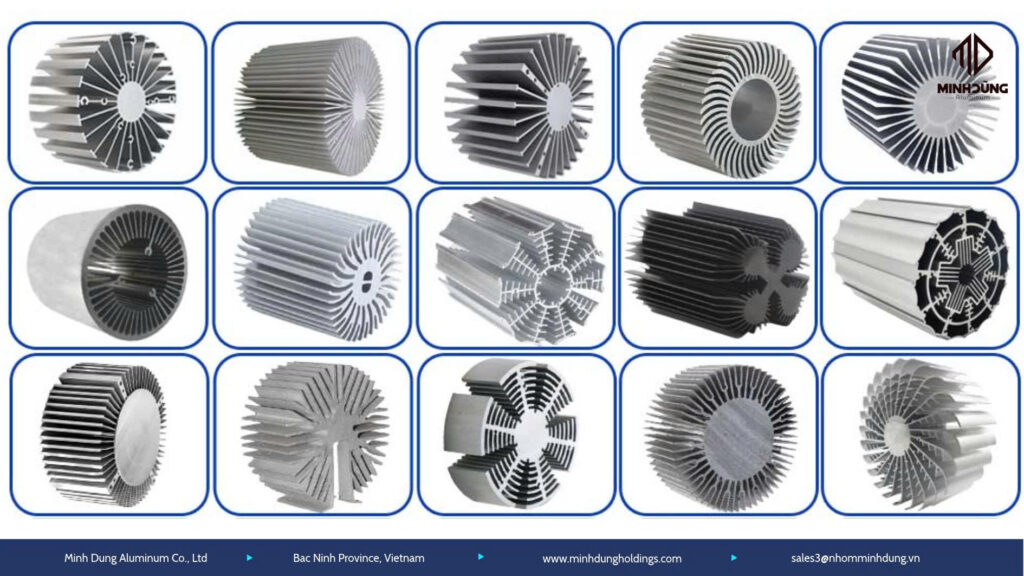
Radial heat sinks feature fins arranged around a central base, while star-shaped designs use multiple fins extending outward from a central point.
These configurations can provide a large cooling surface within a relatively compact footprint. They are often selected for components with specific mounting and heat distribution requirements.
Typical applications: Power semiconductor devices, LED lighting and compact electronic assemblies.
3. Aluminum Heat Sinks for Solar Inverters
Thermal Management in Solar Inverters
Solar inverters contain power semiconductor devices and other electronic components that produce heat during operation.
Heat sinks help transfer this heat away from critical components. Depending on the inverter design, cooling may involve natural convection, forced-air cooling or a combination of thermal management methods.
The heat sink must be designed to fit the inverter’s internal structure and work with its overall cooling system.
Extruded Aluminum Heat Sinks for Inverter Cooling
Extruded aluminum heat sinks are widely used in power electronics because their profiles can incorporate multiple fins, mounting surfaces and other structural features.
For solar inverter manufacturers, custom extrusion can provide flexibility in:
- Find height and thickness.
- Fin spacing and overall profile width.
- Base thickness and mounting surfaces.
- Profile length and cutting dimensions.
- Additional machining features for assembly.
These specifications can be adjusted based on the inverter’s design and the manufacturer’s technical requirements.
4. Aluminum Heat Sinks for EV Chargers
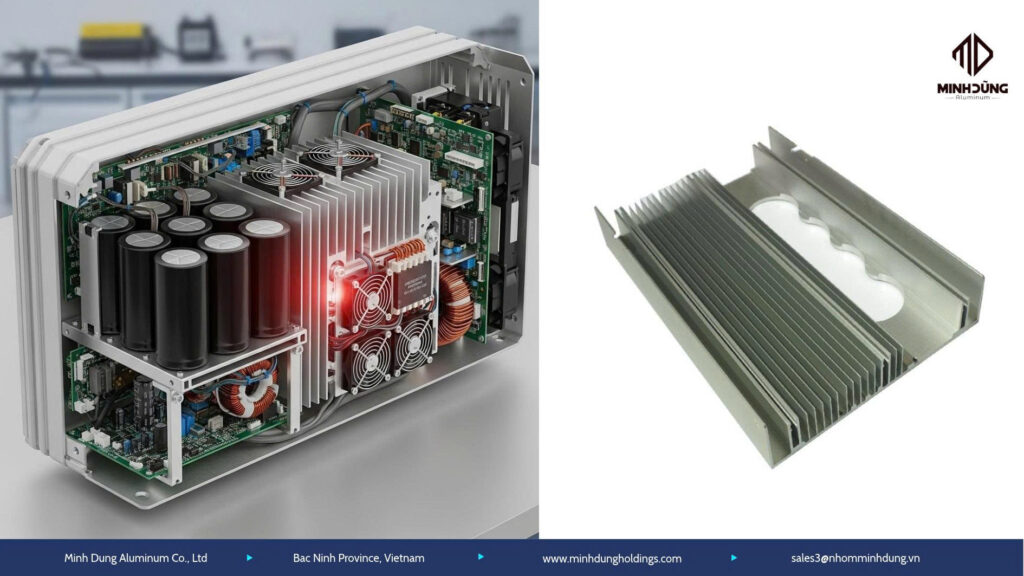
EV chargers contain components such as power semiconductors, switching devices and power conversion modules. These components generate heat as electrical energy is converted and delivered to the vehicle.
A suitable heat sink helps dissipate heat and supports stable equipment operation. Its design must be considered together with the charger’s enclosure, airflow and overall thermal management system.
5. Aluminum Heat Sinks for Industrial Power Electronics
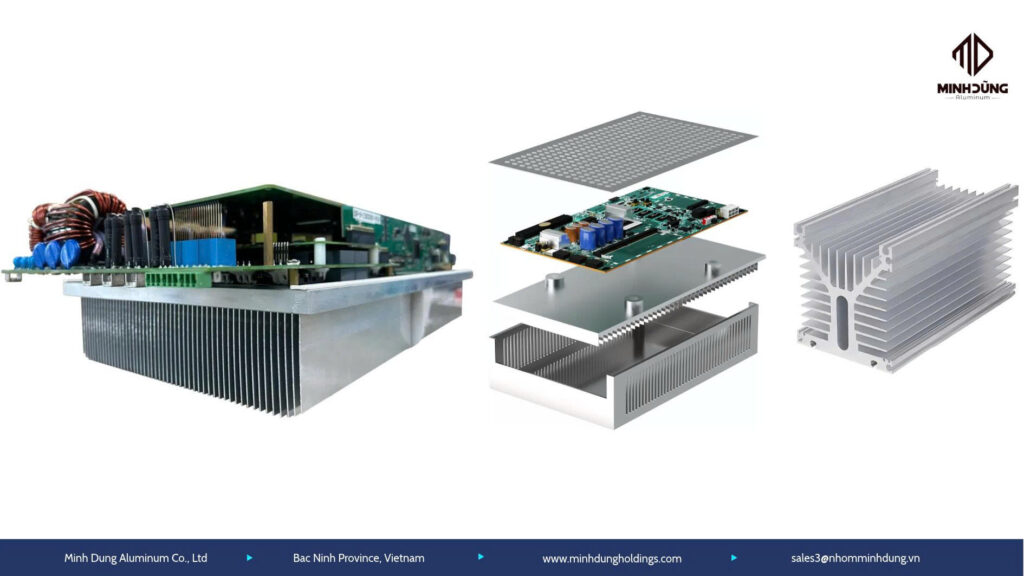
Beyond solar inverters and EV chargers, aluminum heat sinks are also used in various industrial power electronic systems.
These applications often require profiles that can withstand continuous operation and fit specific equipment configurations.
Power Supply and Conversion Equipment
Industrial power supplies and conversion systems use electronic components to regulate and distribute electrical energy.
Aluminum heat sinks help dissipate the heat generated by these components. Extruded profiles can be designed with different fin configurations and mounting features to suit the equipment.
Motor Drives and Industrial Control Systems
Motor drives and industrial control systems contain power electronic components that generate heat during operation.
Custom aluminum heat sink profiles can be incorporated into equipment housings or used as separate cooling components, depending on the product design.
6. Custom Aluminum Extrusion Heat Sinks Based on Your Drawings
For equipment manufacturers, selecting the right aluminum heat sink is not simply a matter of choosing a standard profile. The component must match the product’s dimensions, mechanical requirements and thermal management design.
Custom aluminum extrusion provides the flexibility to manufacture profiles based on specific technical drawings or samples.
Custom Extrusion Profiles for Specific Cooling Requirements
Aluminum extrusion allows manufacturers to customize the cross-section of a heat sink according to the application.
Depending on the design, customization may include:
- Overall profile width and height.
- Base thickness and fin dimensions.
- Fin spacing and number of fins.
- Mounting slots, grooves and connection features.
- Required profile length and cutting tolerance.
Customers can provide 2D drawings, 3D files or physical samples for technical review and quotation.
The extrusion design should be evaluated for manufacturability before production. This helps ensure that the requested geometry is suitable for the extrusion process and the intended application.
Aluminum Alloy Selection – 6063 and 6061
6063 offers good extrudability, surface finish and corrosion resistance, making it suitable for complex heat sink profiles. 6061 provides higher mechanical strength and is suitable for applications with additional structural requirements. Alloy selection depends on the customer’s specifications and intended use.
Surface Finishing Options
Common finishing options include:
- Mill Finish: Natural surface after extrusion.
- Anodizing: Improves surface protection and appearance.
- Powder Coating: Provides a durable, colored protective finish.
7. Why Source Aluminum Heat Sink Profiles from Vietnam?
Vietnam has become an increasingly attractive sourcing destination for international manufacturers looking for alternative aluminum suppliers.
With an established aluminum manufacturing sector, competitive production conditions and a network of international trade agreements, Vietnam offers opportunities for buyers seeking long-term manufacturing partners.
Factory-Direct Manufacturing
Working directly with an aluminum extrusion manufacturer allows buyers to communicate with the production team and discuss technical requirements more efficiently.
It can also reduce reliance on intermediaries and provide better visibility into manufacturing processes, quality control and production planning.
Flexible OEM/ODM Support
Different equipment manufacturers have different product designs and technical requirements.
We support customized aluminum extrusion projects based on customer drawings, samples and specifications. Our team can discuss profile dimensions, alloy selection, surface finishing and additional machining requirements before production.
Vietnam’s Free Trade Agreements and Potential Tariff Advantages
Vietnam has signed several FTAs with major markets, including the EVFTA, CPTPP, UKVFTA, RCEP, AANZFTA and VIFTA. These agreements may allow eligible Vietnamese aluminum products to benefit from preferential import duties, helping international buyers reduce sourcing costs. Actual benefits depend on product HS codes and rules of origin.
8. Aluminum Heat Sink Manufacturing at Minh Dung Aluminum
Minh Dung Aluminum is an integrated aluminum manufacturer based in Bac Ninh, Vietnam, supplying aluminum ingots, billets and customized extrusion profiles to domestic and international customers.
From Aluminum Billets to Finished Extrusion Profiles
Our manufacturing process covers several key stages:
- Aluminum Melting: Aluminum scrap and other qualified materials are processed through our melting operations.
- Billet Casting: Molten aluminum is cast into billets according to the required specifications.
- Extrusion: Aluminum billets are heated and extruded through customized dies to produce the required profile cross-sections.
- Surface Treatment: Profiles can be supplied with mill finish, anodizing or powder coating, depending on project requirements.
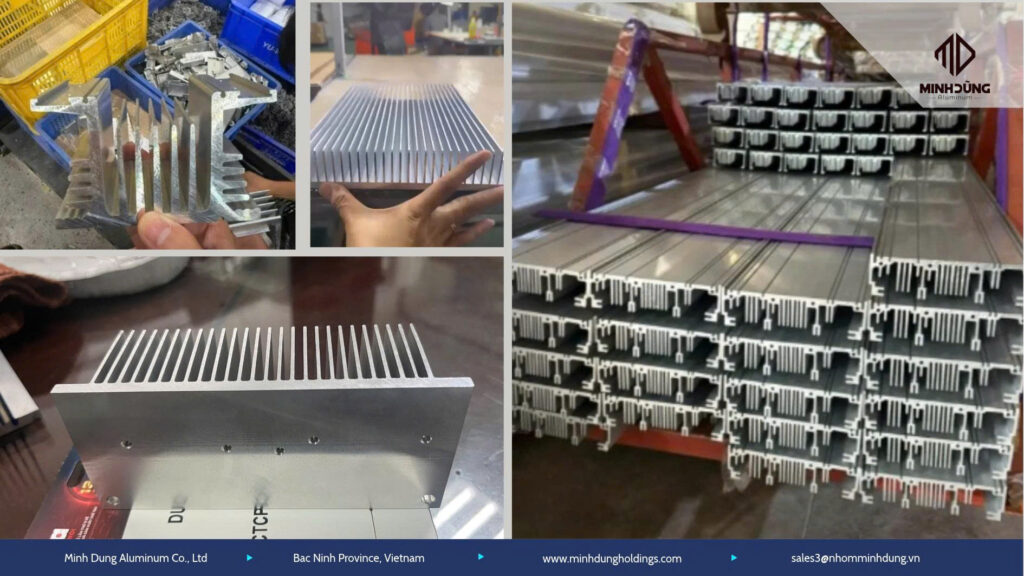
- Secondary Processing: Cutting, CNC machining, drilling, tapping and other operations can be arranged according to customer drawings.
- Quality Inspection: Products undergo relevant material and dimensional checks before delivery.
Quality Control and Technical Inspection
Consistent product quality is important for manufacturers using aluminum profiles in industrial equipment.
Our quality control activities include material composition checks using spectrometer equipment and dimensional inspections to verify products against agreed specifications.
Minh Dung Aluminum operates under ISO 9001, ISO 14001 and ISO 45001 management systems. Applicable product standards and technical requirements can be discussed for each project.
Work with a Direct Aluminum Extrusion Manufacturer in Vietnam
Whether you manufacture solar inverters, EV chargers, power supplies or industrial electronic equipment, Minh Dung Aluminum can support your aluminum extrusion sourcing requirements.
We welcome inquiries from OEMs, equipment manufacturers, distributors and industrial buyers looking for customized aluminum heat sink profiles.