Introduction
As LED lighting technology continues to develop, effective heat management has become an important consideration for lighting manufacturers. Although LED lights are known for their energy efficiency and long service life, excessive heat generated during operation can affect their performance, reduce component lifespan, and lead to premature failure.
Aluminum heatsinks play an essential role in addressing this challenge by transferring heat away from LED components and releasing it into the surrounding environment. Among the available manufacturing solutions, aluminum extrusion offers considerable flexibility in designing heatsink profiles to meet different lighting requirements.
For lighting manufacturers looking for reliable OEM suppliers, Vietnam is becoming an interesting sourcing destination for custom aluminum extrusion products. Minh Dung Aluminum provides custom aluminum profile solutions tailored to customers’ technical drawings, dimensions, and finishing requirements.
1. What Are LED Aluminum Heatsink Profiles?
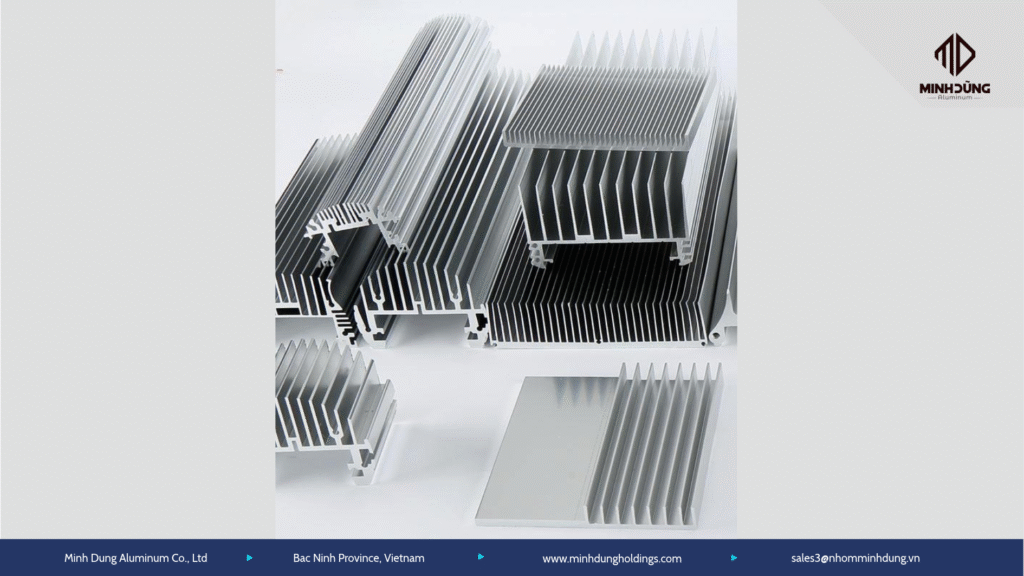
LED aluminum heatsink profiles are specially designed aluminum components used to absorb and dissipate heat generated by LED chips and other electronic components during operation. They are commonly integrated into the housing or structural body of LED lighting products, serving both thermal management and mechanical support functions.
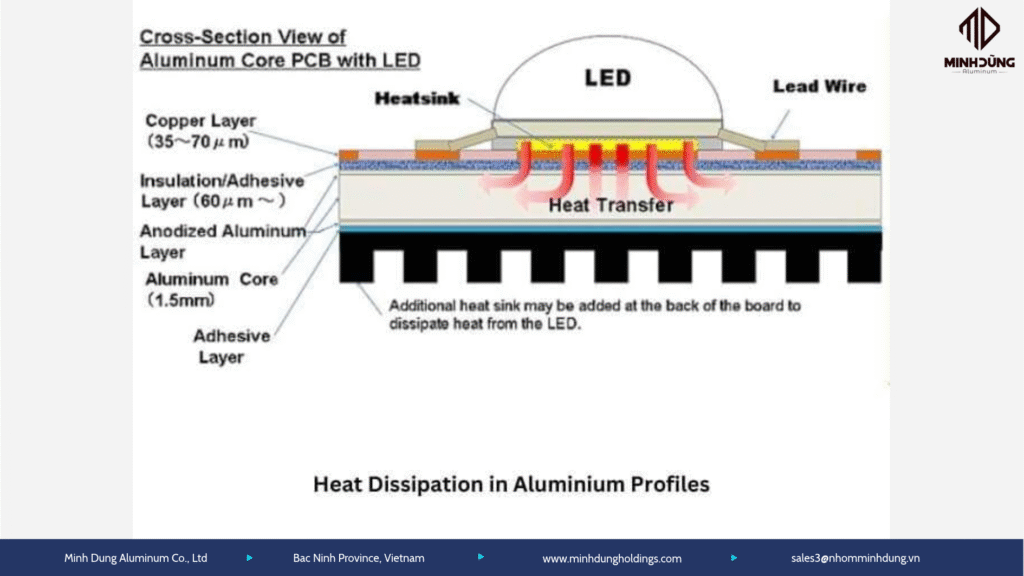
When an LED operates, part of its electrical energy is converted into heat. If this heat is not properly managed, the temperature of the LED junction can increase, potentially reducing light output, affecting color consistency, and shortening the lifespan of the lighting system.
An aluminum heatsink helps manage this heat through three main processes: conduction, convection, and radiation. Heat first transfers from the LED module to the aluminum base through direct contact. It then spreads throughout the heatsink structure before being released into the surrounding air, primarily through convection and radiation.
The design of a heatsink typically includes a mounting base and a series of cooling fins. The base provides a surface for mounting LED modules, while the fins increase the exposed surface area, allowing heat to dissipate more effectively.
2. Why Aluminum Extrusion Is Ideal for LED Heat Sinks
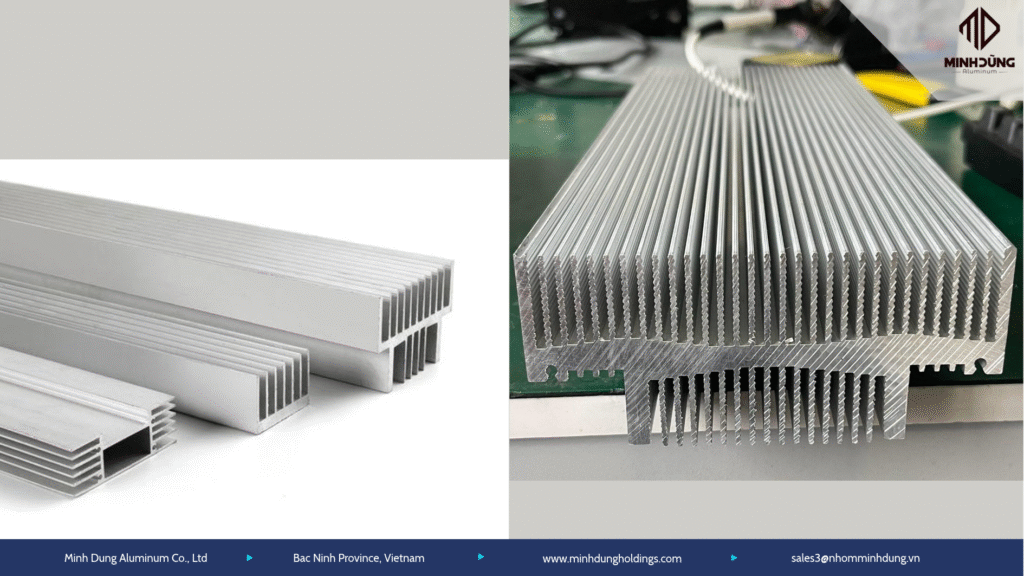
Aluminum extrusion is widely used in heatsink manufacturing because it allows manufacturers to create complex cross-sectional designs while maintaining consistent dimensions along the profile length.
One of its main advantages is design flexibility. Through customized extrusion dies, manufacturers can produce profiles with different base thicknesses, fin heights, fin spacing, and overall geometries. These design features can be adjusted according to the thermal requirements, available installation space, and structural specifications of each LED lighting product.
Aluminum also offers a favorable combination of thermal conductivity, low weight, and corrosion resistance. Compared with heavier metal alternatives, it allows lighting manufacturers to develop lightweight products without compromising the structural requirements of the heatsink.
Overall, aluminum extrusion provides a balance of thermal performance, design flexibility, and manufacturing efficiency, making it a suitable solution for custom LED heatsink production.
3. OEM Customization: From Drawings to Aluminum Extrusion
For lighting manufacturers, standard heatsink profiles do not always meet the requirements of their product designs. Different LED modules, power ratings, housing structures, and installation conditions may require specific profile dimensions and cooling-fin configurations.
OEM aluminum extrusion allows manufacturers to develop heatsinks according to their own technical drawings or existing samples. Instead of adapting a lighting product to an available standard profile, customers can work directly with an extrusion manufacturer to develop an aluminum section that matches their design requirements.
The customization process typically starts with reviewing the customer’s drawings, including the cross-sectional geometry, overall dimensions, wall thickness, fin height, and spacing. These details help determine whether the proposed design is suitable for extrusion and whether any adjustments are needed before tooling development.
After the design is confirmed, a dedicated extrusion die is manufactured for the required profile. The aluminum billet is then heated and pushed through the die to create the specified cross-section. Following extrusion, the profiles undergo further processing according to the customer’s requirements.
Surface finishing is another important part of OEM customization. Depending on the intended application and appearance, aluminum heatsink profiles can be supplied with mill finish, anodizing, or powder coating. Additional operations such as cutting, drilling, tapping, CNC machining, and punching can also be performed to prepare the profiles for assembly.
By combining customized extrusion with secondary processing, manufacturers can receive aluminum heatsink components that are closer to their final product specifications, helping simplify their subsequent assembly
4. Why Source Custom LED Aluminum Profiles from Vietnam?
When evaluating aluminum extrusion suppliers, international buyers consider more than the unit price. Manufacturing capabilities, production consistency, customization flexibility, communication, and export support are also important factors in selecting a long-term supplier.
Vietnam has become an alternative sourcing destination for international manufacturers seeking to diversify their supply chains. Its manufacturing sector has developed across various industrial segments, including metal processing and aluminum extrusion. For buyers in the lighting industry, this creates opportunities to work directly with Vietnamese manufacturers for customized aluminum components.
One potential advantage is factory-direct sourcing. Working directly with a manufacturer rather than through multiple trading intermediaries can improve communication between purchasing teams and production engineers. This is particularly valuable for OEM projects involving technical drawings, tooling development, dimensional adjustments, and repeated production orders.
Vietnam also participates in several free trade agreements with major international markets, including the CPTPP, EVFTA, and AANZFTA. Depending on the destination market, HS classification, applicable rules of origin, and supporting documentation, eligible aluminum products may benefit from preferential import tariffs.
5. Custom LED Aluminum Heatsink Manufacturing at Minh Dung Aluminum
As a direct aluminum manufacturer in Vietnam, Minh Dung Aluminum provides integrated production capabilities covering aluminum billets and extruded profiles. Established in 2017, the company has developed its manufacturing operations from aluminum scrap recycling and remelting into a broader production system serving different industrial applications.
With two production facilities covering approximately 30,000 m² and an overall production capacity of around 40,000 metric tons per year across aluminum ingots, billets, and extrusion profiles, Minh Dung is positioned to support customers requiring factory-direct aluminum supply.
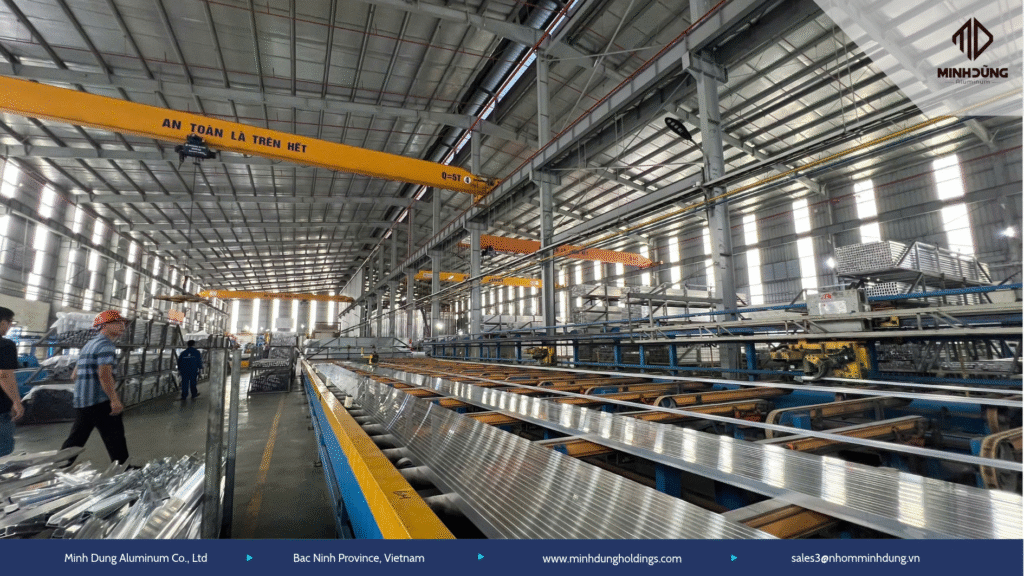
For custom LED heatsink projects, our extrusion capabilities allow us to manufacture aluminum profiles according to customer drawings and samples. Customers can specify the required cross-sectional design, dimensions, alloy, temper, and surface finish to suit their lighting product requirements.
Beyond extrusion, Minh Dung also offers secondary processing to help customers obtain profiles that are closer to their final assembly specifications. Depending on the design, processing options include cutting to specified lengths, drilling, tapping, CNC machining, and punching.
Punching is particularly useful for LED heatsink profiles that require mounting holes, ventilation openings, or other specified cutouts. Instead of receiving only standard extruded bars and arranging all subsequent processing independently, customers can request these operations as part of their customized production requirements. This can help reduce additional handling and simplify downstream assembly.
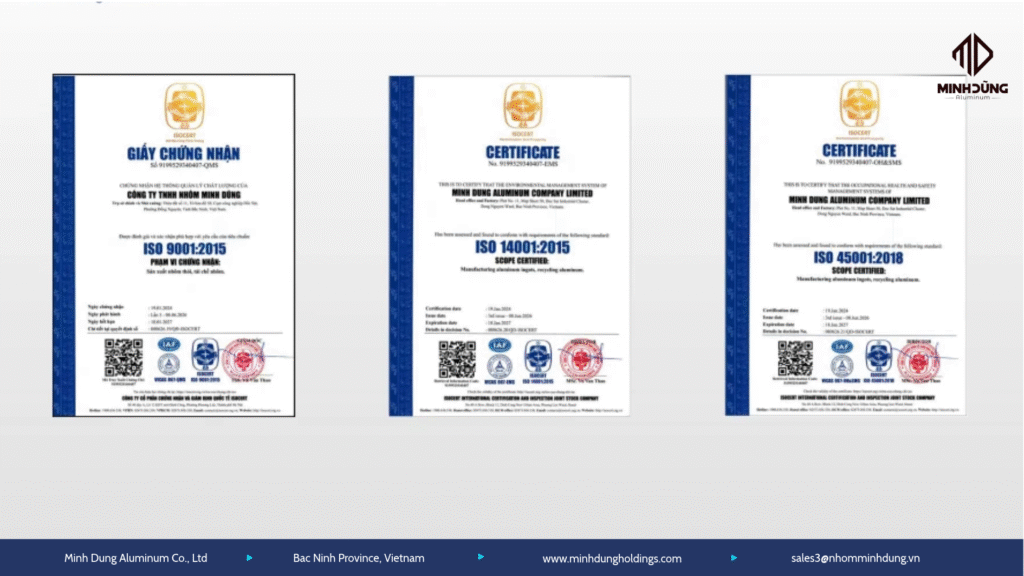
Quality control is carried out throughout the manufacturing process, including alloy composition verification using spectrometer testing and dimensional inspections to check profile specifications. Our production system is supported by ISO 9001, ISO 14001, and ISO 45001 management certifications.
6. Request a Quote for Custom LED Aluminum Heatsink Profiles
Looking for a reliable manufacturer of custom LED aluminum heatsink profiles in Vietnam? Minh Dung Aluminum welcomes OEM inquiries from lighting manufacturers, distributors, and industrial buyers looking for customized extrusion solutions.
To help our engineering and sales teams evaluate your requirements and prepare an accurate quotation, please share your technical drawings or product samples, preferred aluminum alloy and temper, estimated order quantity, required profile length, and surface finishing specifications.
Our team will review your requirements and discuss the suitable extrusion and secondary processing options for your project.