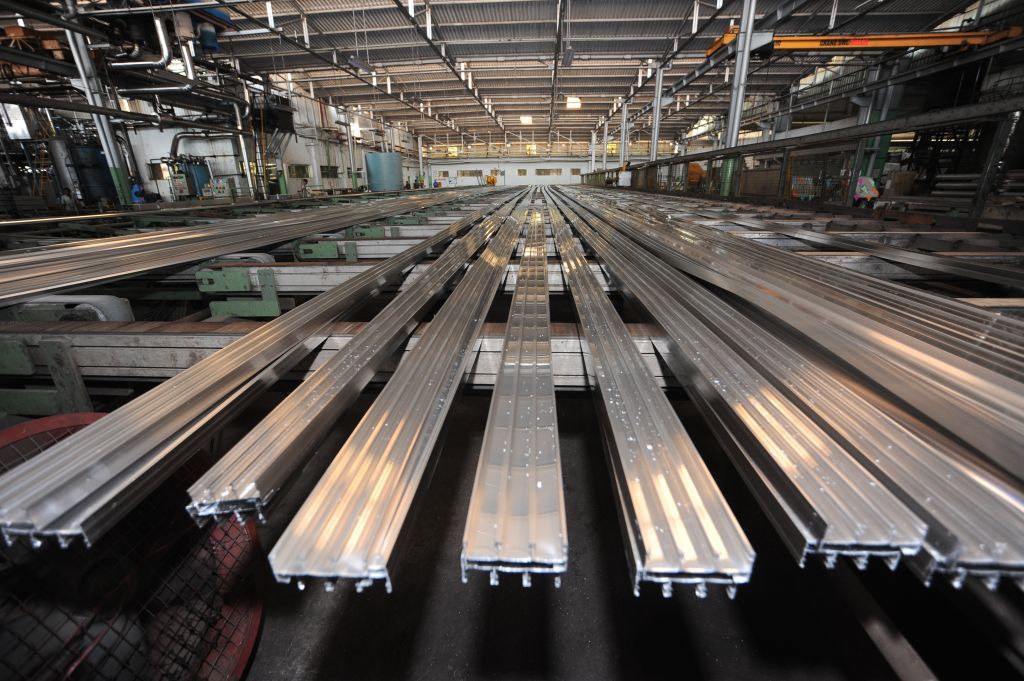
In the aluminum extrusion industry, increasing machine speed is the fastest way to reduce costs. However, pushing these limits often causes severe surface defects. Finding the right 6063 aluminum billet is the true solution to balance speed and quality.
1. The Extrusion Pain Point: Speed vs. Quality
When factories increase extrusion speed, friction generates massive heat. Temperatures above 580°C at the die exit cause two critical problems:
- Pick-up: Micro-welding happens when hot aluminum sticks directly to the die bearing.
- Tearing: This stuck aluminum then scratches the profile surface, causing deep lines or torn edges.
Consequently, scrap rates rise sharply. The surface finishes fail strict anodizing standards. Furthermore, factories lose valuable time stopping machines to clean the dies. The root cause is rarely the machine; it is usually the microstructure of the billet itself.
2. Decoding Microstructure for Flawless Surfaces
To achieve a perfectly smooth finish at high speeds, you must control the alloy composition from the very beginning.
Strict Iron Control (Fe < 0.3%)
Iron (Fe) is inevitable in aluminum production. However, exceeding 0.3% creates secondary particles during casting. These particles form the $\beta$-AlFeSi phase. This phase has a hard, needle-like shape. During extrusion, these tiny “needles” disrupt metal flow and cause tearing. Therefore, keeping Iron below 0.3% is an absolute requirement for premium surfaces.
The Magic of Homogenization
Homogenization is much more than simple heating. It completely transforms the internal structure. Proper time and temperature break down the sharp $\beta$-AlFeSi phase. They convert it into the round, porous $\alpha$-AlFeSi phase. These round particles glide smoothly through the die. This minimizes friction and prevents die scratches.
3. The Golden Mg/Si Ratio and Cooling Rate
Beyond Iron, the interaction between Magnesium (Mg) and Silicon (Si) inside your 6063 aluminum billet dictates your maximum extrusion speed.
- Balanced Ratio: The ideal mass ratio to create strengthening Mg2Si is 1.73:1. Excess Magnesium drastically increases extrusion pressure. This forces your press to work harder and slower. Conversely, a carefully controlled excess of Silicon (like in Lean/Rich 6063 series) improves aging hardness without slowing down the metal flow.
- Crucial Cooling Rate: This is the ultimate metallurgical secret. Slow cooling causes Mg2Si to form large particles that scratch the die. We use high-pressure cooling fans. This rapid cooling “freezes” Mg and Si in a supersaturated solid solution. The resulting billet is extremely soft for fast extrusion, yet it still achieves perfect T5/T6 hardness after the aging oven.
4. Boosting Yields and Meeting CBAM Standards
Using a perfectly structured 6063 aluminum billet brings massive economic and environmental benefits to your factory floor:
- Extended Die Life: You will significantly reduce machine downtime for die maintenance.
- Lower Scrap Rate: You achieve higher yields for premium anodized and powder-coated products.
- Green Aluminum Compliance: Lower extrusion pressure means your machines consume less electricity per ton. This reduced carbon footprint helps your profiles meet strict European CBAM regulations easily.
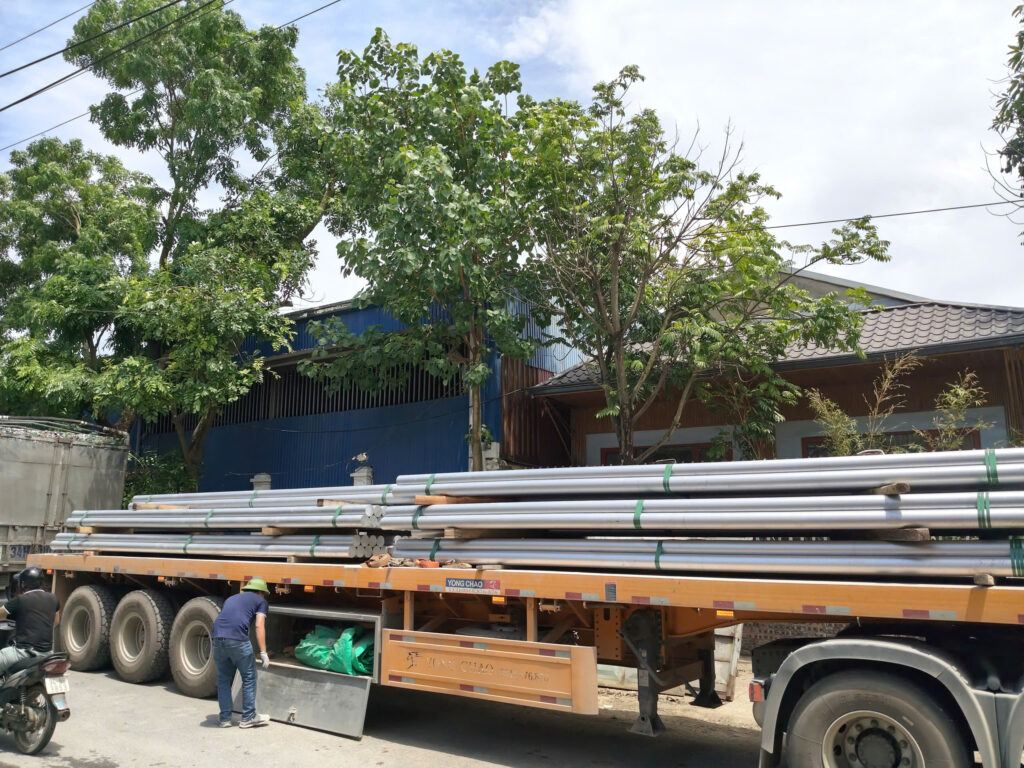
5. Minh Dung Holdings: Your Global Billet Partner
At Minh Dung Holdings, we know a great billet is more than just basic chemistry. It is a complete metallurgical solution designed to solve factory bottlenecks.
We strictly control iron levels and optimize the Mg/Si ratio for every batch. Furthermore, we utilize advanced homogenization and rapid cooling technologies. Our 6063 aluminum billet empowers international factories to achieve maximum speeds, deliver flawless surfaces, and support global sustainability goals.
Kevin Nguyen – Export Specialist
Phone/WhatsApp: +84 373 486 719