Introduction
Solar installations depend on more than panels and inverters. Every mounting rail, frame, and support bracket needs a material that is light enough to handle, strong enough to last decades outdoors, and precise enough to fit standardized solar hardware. Aluminum extrusion has become the default choice for this role across rooftop, ground-mounted, and carport solar systems.
As solar developers and mounting system manufacturers look to diversify their supply base, Vietnam has become a growing source of aluminum profiles for solar applications. Minh Dung Aluminum supplies aluminum extrusion and processing for solar mounting components, working with international B2B buyers who need consistent profiles and dependable production capacity.
Why Aluminum Profiles Are Important in Solar Systems
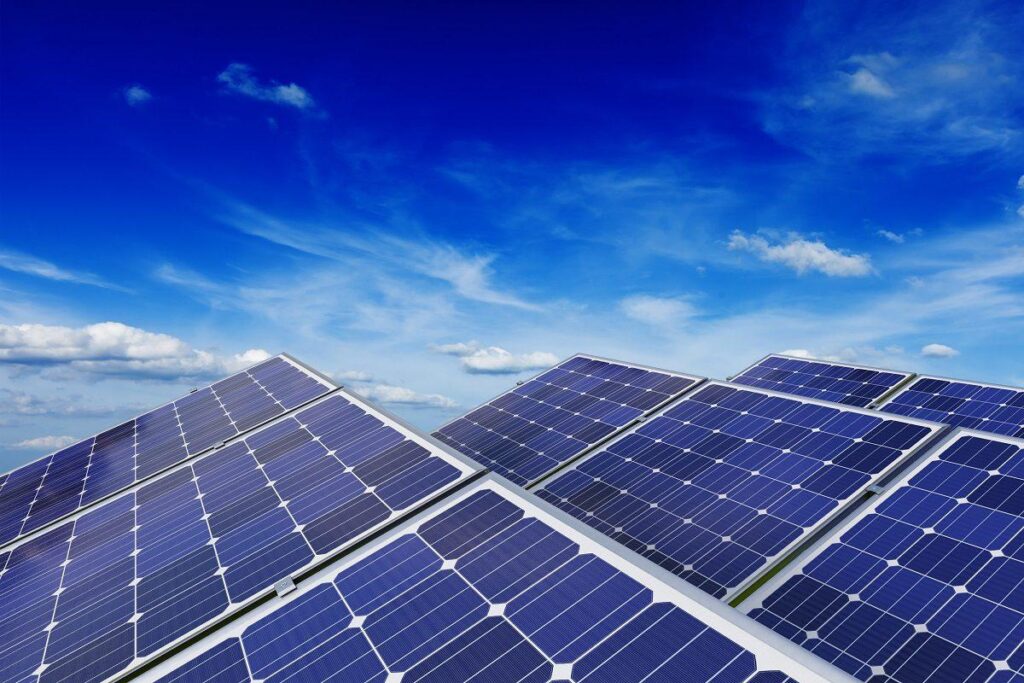
Aluminum is used across nearly every structural component of a solar installation for a combination of physical and practical reasons:
- Lightweight – reduces the load on roofs and mounting structures, and lowers shipping costs for export orders.
- Corrosion resistance – aluminum naturally forms a protective oxide layer, which matters for systems exposed to rain, humidity, and UV for 20-plus years.
- Strength-to-weight ratio – extruded profiles can be engineered to carry structural loads without adding unnecessary mass.
- Durability – aluminum holds up under repeated thermal expansion and contraction cycles typical of outdoor exposure.
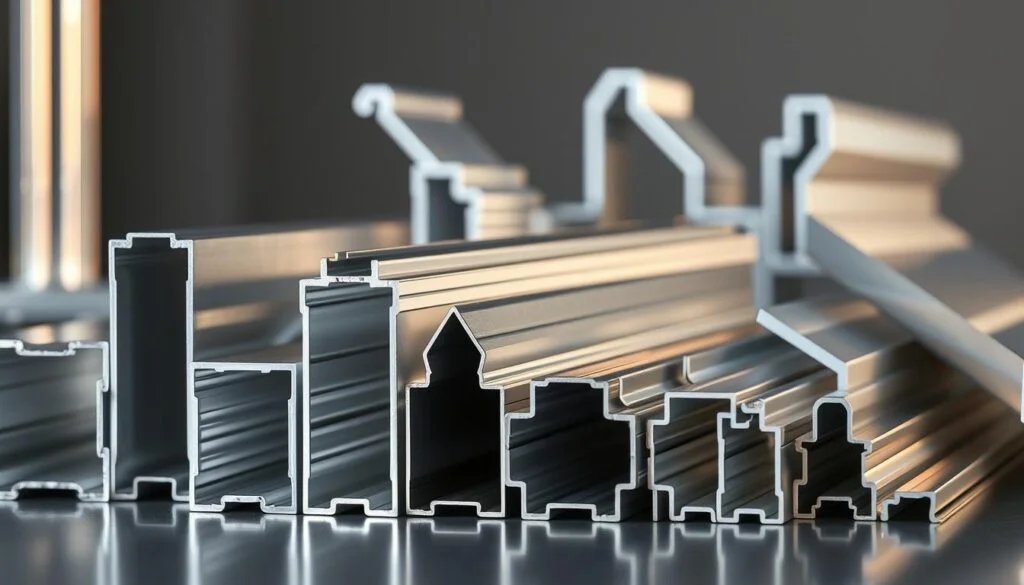
- Design flexibility – extrusion allows complex cross-sections (slots, channels, grooves) to be built directly into the profile, reducing the need for additional hardware.
- Ease of installation – standardized profile shapes work with common clamps, bolts, and connectors used across the solar mounting industry.
- Recyclability – aluminum can be recycled repeatedly without losing its structural properties, which aligns with sustainability goals in solar projects.
Where Are Aluminum Profiles Used in Solar Systems?
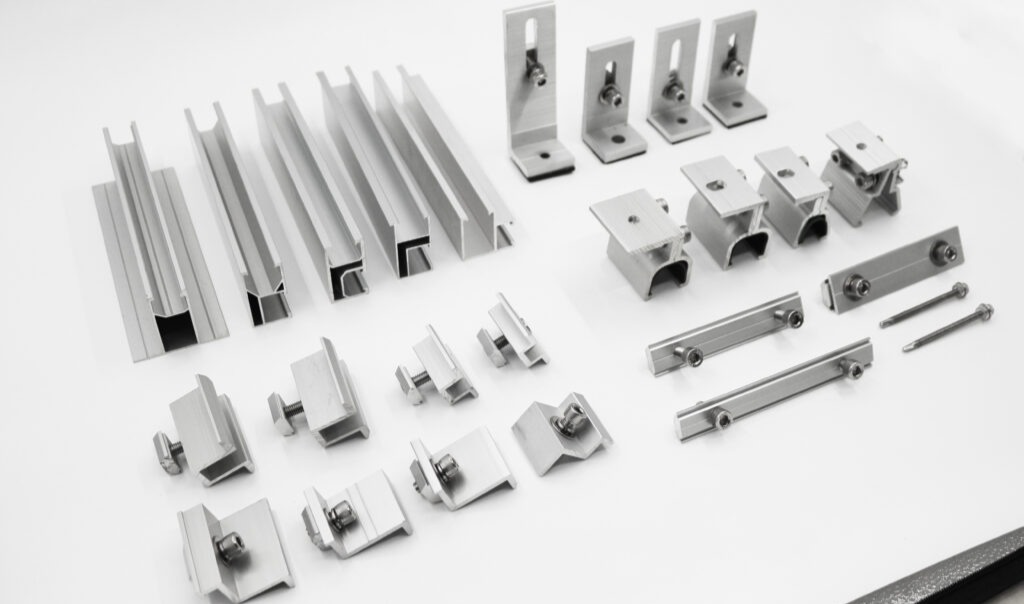
Aluminum extrusions appear throughout the mechanical structure of a solar installation, from the panel itself down to the ground or roof anchoring system.
| Application | Aluminum Profile Type | Function |
| Solar panel frames | Perimeter frame extrusion | Protects and structurally supports the panel laminate |
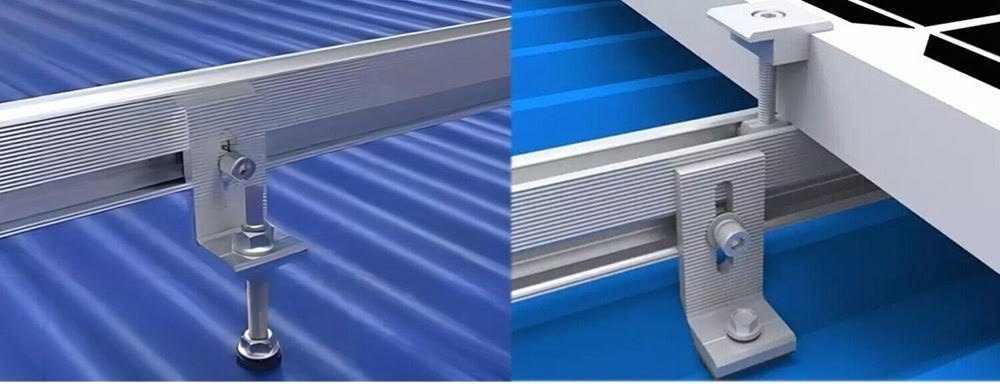
| Mounting rails | Rail/track profile | Provides the base structure panels are clamped to |
| Roof mounting systems | Rail + bracket profiles | Connects panels to roof anchors, manages load distribution |
| Ground-mounted systems | Structural post and beam profiles | Forms the support frame anchored into the ground |
| Carport solar structures | Heavy-duty structural profiles | Supports panels over parking areas, combining structural and architectural function |
| Brackets and support components | Small custom profiles | Connects rails, adjusts tilt angle, secures panel edges |
Each application places different demands on the profile – panel frames prioritize precision and surface finish, while ground-mount structural posts prioritize load-bearing strength.
Minh Dung Aluminum – Vietnam Aluminum Extrusion & Processing Supplier
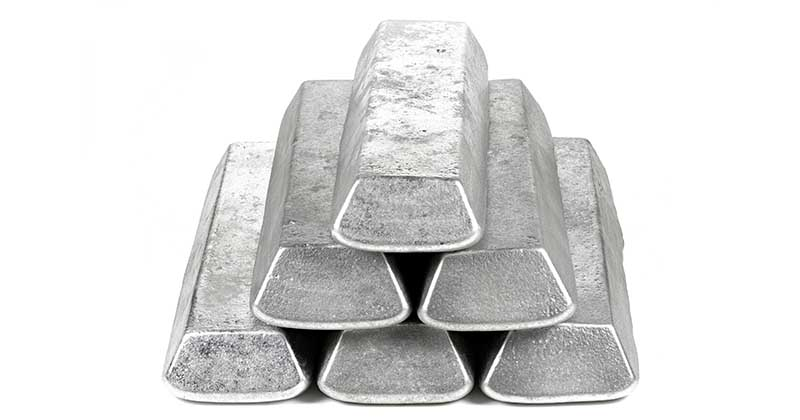
Minh Dung Aluminum provides aluminum extrusion and processing services for industrial and construction applications, including components used in solar mounting systems. The company works with B2B buyers who need extruded profiles produced to specification, along with downstream processing rather than raw extrusion alone (Minh Dung Aluminum).
From Aluminum Extrusion to Further Processing – One-Stop Solution
Solar mounting components rarely leave the factory as raw extruded bars. They typically require several additional steps before they’re ready for installation. Minh Dung Aluminum offers this as a connected process:
Aluminum billet → Extrusion → Cutting → CNC/Machining → Drilling/Punching → Surface Treatment → Fabrication → Quality Inspection → Packing
Working with a single supplier across this chain offers practical advantages for solar mounting manufacturers and EPC buyers:
- Better dimensional consistency – profiles, cuts, and machined features are controlled under one production process instead of being handed between vendors.
- Easier quality control – one point of accountability for tolerances and finish, rather than reconciling standards across multiple suppliers.
- Reduced coordination – fewer vendor handoffs means fewer scheduling and communication gaps.
- More efficient production – extrusion and processing scheduled together shortens overall lead time.
- Customization – a single supplier can adjust extrusion die design and machining specs together, rather than treating them as separate projects.
- Better supply-chain management – consolidating extrusion and processing simplifies logistics for buyers importing finished components.
Custom Aluminum Profiles for Solar Applications
Solar mounting systems are rarely built from off-the-shelf profiles. Manufacturers typically need extrusions matched to their own rail, bracket, or frame designs. Minh Dung Aluminum develops profiles according to:
- Customer drawings
- Required dimensions and tolerances
- Alloy requirements
- Surface treatment specifications
- Cutting length
- Machining requirements
- Packaging requirements for export
Buyers can share technical drawings and specifications directly to discuss manufacturing feasibility, tooling requirements, and production timelines before committing to an order.
Aluminum Alloys for Solar Applications
Alloy selection affects strength, machinability, surface finish, and cost, so the right choice depends on the specific application rather than a single default option. Alloys commonly considered for solar mounting components include:
- 6063 – often used where a good surface finish and moderate strength are needed, common in visible frame and rail applications.
- 6061 – typically selected where higher structural strength is required, such as load-bearing structural members.
- 6005/6005A – used in some structural mounting applications requiring a balance between strength and extrudability.
The right alloy for a given project depends on factors including strength requirements, extrusion complexity, surface finish expectations, the specific application, and any machining or fabrication steps down the line. Minh Dung Aluminum can discuss alloy selection with buyers based on their technical drawings and end-use requirements.
Why Source Aluminum Profiles from Vietnam?
For international buyers reassessing their supply chains, Vietnam offers several practical considerations as an aluminum extrusion sourcing location:
- Manufacturing capability – an established base of extrusion producers serving export markets.
- Competitive production cost – a factor buyers commonly weigh against other Southeast Asian and established suppliers.
- Export-oriented supply – producers structured around international shipping and documentation requirements.
- Custom manufacturing – capacity to develop dies and profiles to buyer specifications rather than only supplying standard stock shapes.
- Flexible order requirements – ability to accommodate varying order volumes for different project sizes.
- Supply-chain diversification – an additional sourcing option for buyers looking to reduce reliance on a single country or supplier.
- Broad free trade agreement network – Vietnam participates in a wide range of FTAs, including EVFTA with the European Union, UKVFTA with the United Kingdom, CPTPP (covering Australia, Canada, Mexico, Chile, Peru, and Japan, among others), and RCEP, which can support more favorable import conditions for buyers in these markets (Vietnam Trade Repository).
Why Choose Minh Dung Aluminum for Solar Aluminum Profiles?
Minh Dung Aluminum’s positioning centers on covering more of the production chain under one roof, rather than acting only as an extrusion supplier:
- Aluminum extrusion – production of profiles based on customer specifications.
- Custom profiles – die development and profile design support for solar-specific components.
- Further processing – cutting, machining, drilling, surface treatment, and fabrication in-house.
- Quality control – inspection integrated across production stages.
- B2B export support – experience working with international commercial buyers.
- Technical communication – direct discussion of drawings, tolerances, and alloy requirements.
- Packaging and shipping support – export-ready packing suited to international logistics (Minh Dung Aluminum).
How to Order Custom Aluminum Profiles from Minh Dung Aluminum
- Send drawings/specifications – share technical drawings, dimensions, or reference samples.
- Discuss alloy and profile requirements – confirm alloy choice, tolerances, and surface treatment.
- Quotation – receive pricing based on volume, profile complexity, and processing requirements.
- Sample/tooling confirmation – review samples or tooling proofs before mass production.
- Mass production – extrusion run based on confirmed specifications.
- Processing and finishing – cutting, machining, and surface treatment as required.
- Quality inspection – dimensional and surface checks prior to shipment.
- Packing and shipment – export packaging suited to the destination market.
Conclusion
Aluminum profiles are a structural backbone of solar systems, from panel frames to ground-mounted racking. For solar mounting manufacturers, panel producers, installers, and EPC companies sourcing internationally, working with a supplier that covers both extrusion and further processing can simplify production and improve consistency across a project.
Minh Dung Aluminum offers aluminum extrusion and processing services for solar mounting components, supporting international B2B buyers from initial drawing review through to export-ready shipment.
Looking for a reliable Vietnam aluminum extrusion supplier for your solar project? Contact Minh Dung Aluminum to discuss your aluminum profile requirements.
📩sales3@nhomminhdung.vn
🌐www.minhdungholdings.com
📱 WhatsApp: +84 976257821