Vietnam Aluminum Profiles: A New Option for Global Sourcing
For years, China has been one of the world’s major sources of aluminum profiles. The reason is easy to understand. China has a huge aluminum manufacturing base, extensive extrusion capacity, a mature supplier network and the ability to produce almost every type of profile, from simple architectural sections to highly customized industrial components.
However, purchasing decisions are changing.
Today, an aluminum profile buyer may have to consider much more than the price.
- Where is the profile manufactured?
- What is the import duty?
- Is the aluminum profile low carbon & CBAM compliant?
- Is the product affected by anti-dumping measures?
- Can the supplier manufacture according to our drawing?
- Can we obtain reliable carbon and material information?
- What happens if our existing supply chain is disrupted?
These questions are encouraging international buyers to explore a second manufacturing base. And Vietnam is increasingly becoming part of that conversation.
Vietnam already has a developed manufacturing ecosystem, a growing aluminum extrusion industry and a network of trade agreements covering major markets. Some Vietnamese manufacturers are also moving further downstream, from billet production to extrusion, machining, surface treatment and finished components.
For companies that have traditionally sourced aluminum profiles from China, Vietnam does not necessarily have to mean “replace China.”
It can mean something more practical: Add Vietnam as another qualified sourcing option.
Here are five reasons why.
1. Competitive Manufacturing Costs Without Looking Only at the Factory Price
The first reason buyers look at Vietnam is straightforward: cost competitiveness.
Vietnam has developed into a major manufacturing base for international supply chains, particularly in industries such as electronics, machinery, furniture, construction products and industrial components.
For aluminum profiles, however, comparing only the ex-factory price can be misleading.
Imagine two suppliers:
| Supplier A | Supplier B |
| Profile price: $3.00/kgBut the buyer also has to arrange:Cutting, Machining, Surface treatment, Additional packaging, Quality inspection, Multiple suppliers | Profile price: $3.15/kg But the supplier provides: Custom extrusion, Cutting, CNC machining, Surface treatment, Export packaging, Inspection documentation |
The second supplier may actually produce a lower total sourcing cost, depending on the project.
That is why international procurement teams increasingly look at total cost of ownership, rather than simply the lowest aluminum price.
What makes Vietnam interesting?
A capable Vietnamese aluminum manufacturer can integrate several stages:
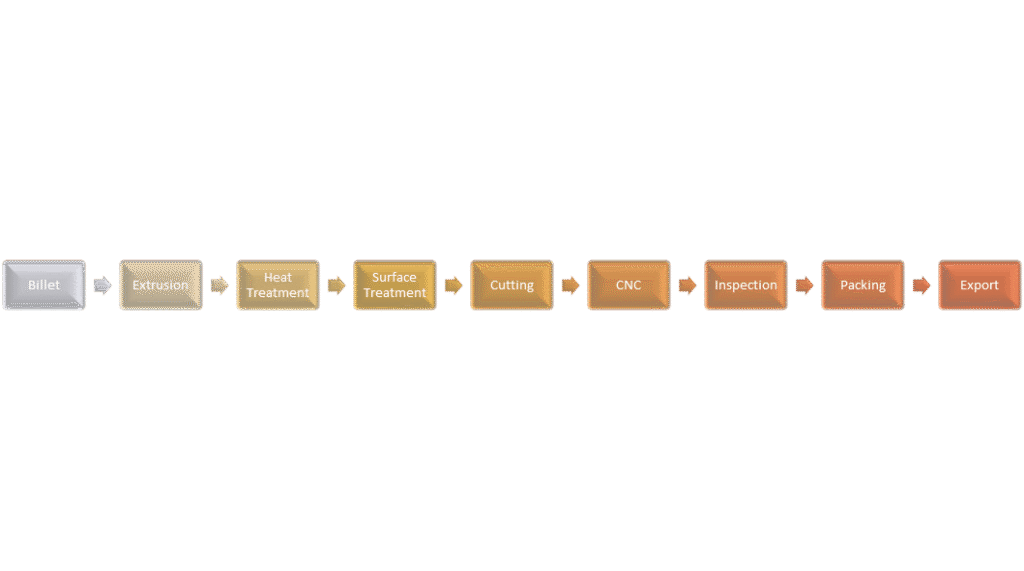
This reduces the number of suppliers involved in a project and can simplify purchasing and quality control.
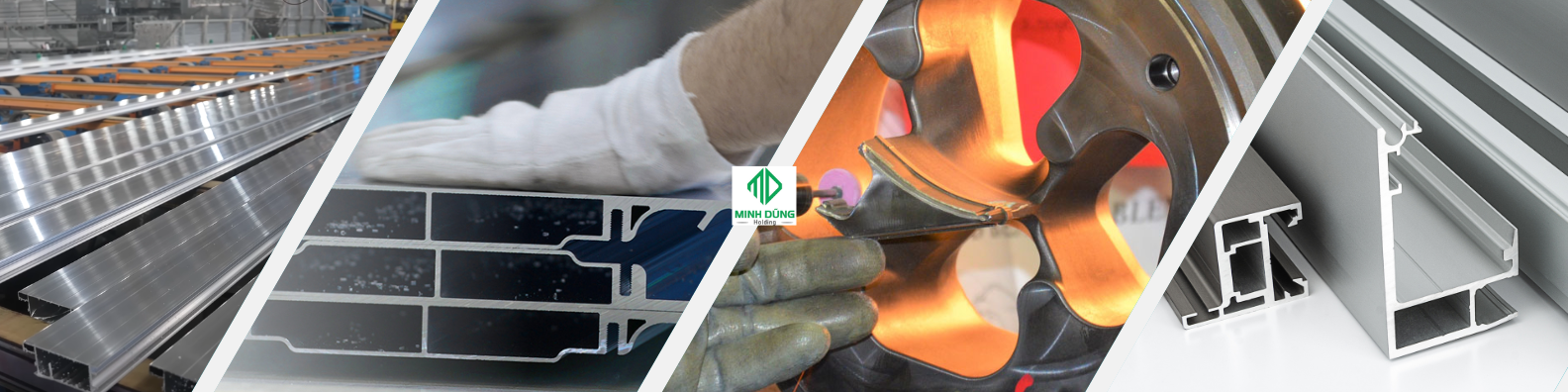
Vietnam’s growing extrusion base provides examples of this integrated model. For instance, Vietnamese manufacturers publicly report production facilities combining billet production, extrusion, finishing, CNC machining and export preparation. Minh Dung Aluminium reports a 40,000 m² facility and annual capacities of 40,000 tonnes for billets and profiles.
A simple way to compare sourcing cost:
Factory Price + Processing + Finishing + Packaging + Freight + Import Duty + Quality
= Total Sourcing Cost
The cheapest kilogram is not always the cheapest supply chain.
That is an important distinction when comparing aluminum profiles from different countries.
2. Vietnam’s Aluminum Extrusion Industry Is Growing
Vietnam’s aluminum industry is no longer limited to basic window and door profiles.
The market has expanded into:
- Industrial aluminum profiles
- Solar mounting systems
- Heat sinks
- Machinery frames
- Transportation components
- Furniture
- HVAC
- Electronics
- Curtain walls
- Windows and doors
- Customized OEM components
The production infrastructure is also becoming more sophisticated.
For example, LIXIL VINA reports integrated production covering mold making, casting, extrusion, surface treatment, machining and assembly, with reported monthly capacities of 3,200 tonnes for casting, 2,300 tonnes for extrusion and 2,000 tonnes for anodizing treatment.
Another Vietnamese extrusion manufacturer, Minh Dung Aluminium, reports 16 extrusion lines, 2 factories and 40,000 tonnes/year of output, alongside anodizing, powder coating, wood-grain finishing and CNC processing.
These examples are important because they show the direction of the Vietnamese industry: from simple extrusion toward integrated aluminum manufacturing.
From Standard Profiles to Engineered Profiles
International buyers are increasingly asking suppliers to manufacture profiles according to their own drawings rather than selecting products from a standard catalog.
A modern extrusion project may start with nothing more than:
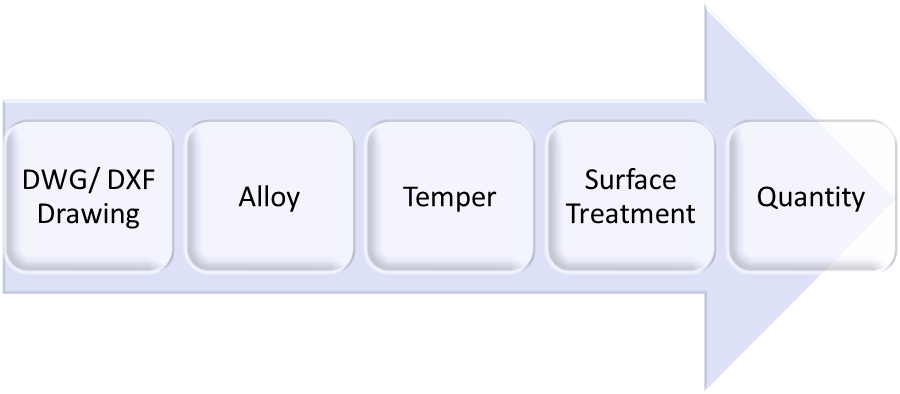
The manufacturer then handles:
- Extrusion feasibility review
- Die design
- Die production
- Trial extrusion
- Dimensional inspection
- Sample approval
- Mass production
- Finishing
- Cutting / CNC processing
- Export packing
This is particularly valuable for OEM customers.
From Aluminum Billet to Finished Profile
01. Billet Preparation
↓
02. Billet Heating
↓
03. Extrusion Through Die
↓
04. Cooling & Quenching
↓
05. Stretching & Cutting
↓
06. Aging / Heat Treatment
↓
07. Anodizing / Powder Coating
↓
08. CNC / Fabrication
↓
09. Quality Inspection
↓
10. Export Packaging
Vietnam’s Aluminum Industry Is Also Moving Toward Green Aluminum
There is another development that should not be overlooked. Aluminum buyers are increasingly interested in recycled content, carbon footprint and material traceability. This is especially relevant for companies selling into Europe.
Minh Dung Aluminum, for example, has developed its business around recycled aluminum and downstream extrusion, producing billet and profiles from qualified recycled aluminum and primary aluminum inputs. The company reports approximately 40,000 tonnes/year of billet and extrusion capacity and supplies 6005, 6061, 6082 and 6063 products.
For European buyers, this discussion is becoming increasingly relevant because the EU’s CBAM definitive regime started on 1 January 2026, with aluminum among the covered sectors. Importers above the applicable 50-tonne annual threshold for CBAM goods are required to follow the relevant authorization and certificate obligations.
3. Vietnam Provides a Practical China+1 Strategy
This may be the strongest reason for companies that already buy from China.
The question does not have to be:
“Should we stop buying from China?”
A better question may be:
“Should we qualify a second source?”
This is the basic idea behind the China+1 strategy.
Instead of relying on one country for 100% of aluminum profile supply, a company can maintain its existing Chinese suppliers while developing a Vietnamese supplier for selected products or projects.
Why does this matter?
Because supply chains can be affected by:
- Trade-policy changes
- Anti-dumping measures
- Shipping disruptions
- Production delays
- Capacity shortages
- Customer requirements for alternative origin
- Changes in landed cost
A second source does not automatically eliminate these risks.
But it gives the procurement team another option.
4. Vietnam’s FTA Network Creates More Export Opportunities
Trade policy is another reason Vietnam has attracted international manufacturers.
Vietnam currently has 16 FTAs in force, including major agreements such as:
- CPTPP
- EVFTA
- UKVFTA
- RCEP
- VJEPA
- VKFTA
The Vietnamese Ministry of Industry and Trade describes Vietnam as participating in 16 FTAs covering more than 60 countries and territories.
For an aluminum profile buyer, however, there is an important distinction:
An FTA does not automatically mean 0% duty for every aluminum profile.
The actual preferential tariff depends on:
HS Code + Country of Destination + Rules of Origin + Product Qualification
So the correct question is not simply:
“Does Vietnam have an FTA?”
It is:
“Does my aluminum profile qualify for preferential treatment under the relevant FTA?”
| Agreement | Key markets |
| EVFTA | European Union |
| CPTPP | Canada, Australia, Japan, Mexico, Peru, Chile, NZ, etc. |
| UKVFTA | United Kingdom |
| RCEP | ASEAN + China, Japan, Korea, Australia, NZ |
| VJEPA | Japan |
| VKFTA | South Korea |
Vietnam’s Ministry of Industry and Trade lists CPTPP, EVFTA and UKVFTA among its newer-generation FTAs, while RCEP entered into force in 2022.
But What About Anti-Dumping Duties?
For buyers considering Vietnam as an alternative to China, trade-remedy exposure can be commercially important. For example, the European Union currently applies definitive anti-dumping duties to certain aluminum extrusions originating in China. The published rates range from 21.2% to 32.1%, depending on the exporter/category.
The UK also has definitive anti-dumping measures covering certain aluminum extrusions originating from China. The measure currently applies from 17 December 2022 through 16 December 2027, subject to the product scope and exclusions.
Canada has also continued its trade-remedy framework for aluminum extrusions originating in or exported from China. In its 2025 expiry-review determination, the CBSA concluded that expiry of the existing order was likely to result in continued or resumed dumping and subsidizing of the subject Chinese goods.
| Market | China | Vietnam |
| EU | Certain Chinese aluminum extrusions subject to AD duties of 21.2–32.1% | Check normal tariff + EVFTA eligibility + product scope |
| UK | Certain Chinese aluminum extrusions subject to AD duties | Check UK tariff + UKVFTA/CPTPP rules |
| Canada | Trade-remedy measures on certain Chinese extrusions | Check CPTPP eligibility and product-specific rules |
| USA | Aluminum extrusion AD/CVD measures apply | Vietnam is also subject to a U.S. aluminum extrusion AD order |
| Australia | Trade remedies can apply depending on product/origin | Check current tariff and trade-remedy status |
And this last line is extremely important.
Vietnam is NOT automatically “anti-dumping free.”
The U.S. Department of Commerce’s 2024 final determination included Vietnam among the countries investigated for aluminum extrusions. Several named Vietnamese exporters received a 14.15% dumping rate, while the Vietnam-wide entity received 41.84% based on adverse inference.
Therefore, a professional sourcing article should never say: ❌ “Vietnam has no anti-dumping duties.”
Vietnam can provide an alternative country of origin, but buyers must check the specific destination market, HS code, exporter status and applicable trade-remedy measures before importing.
That makes the article much more credible to professional purchasing teams.
5. Quality, Customization and Ready-to-Use Aluminum Profiles
Price may get a supplier onto a buyer’s shortlist. Quality and consistency keep the supplier there. Today’s aluminum profile buyers increasingly need more than a standard 6-meter extrusion.
A project may require:
- AA 6063
- AA 6061
- AA 6005 / 6005A
- T5 / T6 temper
- Specific wall thickness
- Tight dimensional tolerances
- Anodizing
- Powder coating
- Electrophoresis
- Wood grain
- Cutting
- CNC machining
- Drilling
- Punching
- Assembly
Vietnamese manufacturers are increasingly offering these services.
/For example, Minh Dung Aluminum currently lists 6000-series extrusion profiles including 6005, 6061 and 6063, with standard and customized designs, surface finishing and machining services including cutting, CNC machining, drilling, tapping, punching, milling and assembly.
That creates an important shift in the sourcing model.
Instead of buying: Raw aluminum profile, the buyer can purchase: Ready-to-use aluminum component
What Can Buyers Ask a Vietnamese Aluminum Extrusion Manufacturer to Provide?
Before placing an order, a professional buyer should request more than a price.
| Material Alloy,Temper, Chemical composition, Billet origin, Recycled content, if relevant | Profile Drawing Cross-section, Wall thickness, Length Tolerance, Weight per meter |
| Surface Mill finish Anodizing Powder coating Electrophoresis Wood grain Brushed / polished | Processing, Cutting, CNC machining, Drilling, Punching, Milling Assembly |
| Quality Inspection report, Mechanical properties, Dimensional report, Surface inspection, Certificate of conformity, Relevant ISO / product standard | Export Country of origin, HS code, Packing method, Incoterm, Port of loading, Lead time |
This is where an experienced exporter can make a difference.
Vietnam vs. China: What Should Aluminum Buyers Actually Compare?
There is no single answer for every project.
China has an enormous manufacturing ecosystem and remains an important aluminum production base.
Vietnam, meanwhile, provides another manufacturing origin with growing extrusion capacity, expanding downstream processing and broad FTA coverage.
So instead of asking:
“Is Vietnam better than China?”
A procurement team should ask:
“Which sourcing option gives this particular project the best combination of cost, quality, origin, compliance and supply-chain flexibility?”
| Factor | What to evaluate |
| Price | Ex-factory + processing |
| Quality | Alloy, temper, tolerance and consistency |
| Capacity | Can the factory handle your monthly volume? |
| Customization | Can it manufacture from your drawing? |
| Processing | CNC, cutting, coating, assembly |
| Origin | Where is the billet/profile actually manufactured? |
| Duty | Normal tariff + FTA preference |
| Trade remedies | AD/CVD or other measures |
| Carbon | Recycled content and emissions data |
| Logistics | Lead time, port and freight |
| Documentation | CO, CQ, COA, mill certificate, inspection report |
Buyer comparison checklist
Why Vietnam Is Becoming More Interesting for Green Aluminum Buyers
There is one more reason Vietnam deserves attention: the sourcing conversation is moving toward carbon transparency.
For European buyers, CBAM has already moved from a future policy discussion into the definitive regime beginning in 2026.
That means aluminum suppliers increasingly need to think about:
Material source → production process → emissions data → documentation → customer reporting
This creates an opportunity for manufacturers that can combine:
♻️ Recycled Aluminum
with
⚙️ Efficient Manufacturing
and
📋 Reliable Documentation
Minh Dung Aluminum has positioned its aluminum extrusion business around recycled and lower-carbon aluminum, with billet and extrusion production integrated into its Vietnam operation. Its published product information covers 6005, 6061, 6063 and other 6xxx-series profiles, alongside processing such as CNC machining and surface finishing.
For buyers looking for a Vietnam source, this is an increasingly relevant part of supplier qualification.
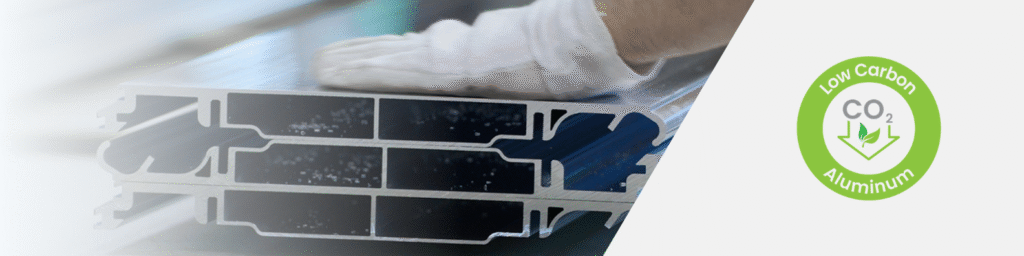
Vietnam Is Not Simply Replacing China. It Is Expanding the Sourcing Map
The strongest case for Vietnam is not that every company should stop buying from China. China remains a major global manufacturing center with enormous production capacity and supplier depth. The more practical opportunity is diversification.
A buyer can continue working with established Chinese suppliers while simultaneously qualifying Vietnamese manufacturers for:
- New projects
- Customized profiles
- Solar profiles
- Industrial profiles
- Architectural systems
- CNC-machined components
- Smaller or medium-volume projects
- Products requiring an alternative country of origin
- Lower-carbon aluminum sourcing
That approach creates a more flexible sourcing strategy.
Final Takeaway: Why Consider Vietnam for Aluminum Profiles?
Vietnam offers international aluminum buyers five important things:
1. Competitive Manufacturing
A growing manufacturing base can offer competitive production and integrated processing.
2. Growing Extrusion Capacity
Vietnamese manufacturers are expanding from basic extrusion into industrial, solar, architectural and customized profiles.
3. China+1 Flexibility
Vietnam can serve as an additional sourcing country rather than requiring buyers to abandon existing Chinese suppliers.
4. Extensive Trade Agreements
Vietnam has 16 FTAs in force, including EVFTA, CPTPP, UKVFTA and RCEP, although actual tariff benefits depend on product classification and rules of origin.
5. Customization and Green Manufacturing
Increasing downstream capabilities, from extrusion and surface treatment to CNC processing, allow suppliers to deliver more than a standard aluminum profile, while recycled aluminum and carbon data are becoming increasingly important for international buyers.
Looking for an Alternative Source for Your Aluminum Profiles?
If your company currently sources aluminum profiles from China, you do not need to change your entire supply chain overnight.
Start with one project.
Send a Vietnamese manufacturer:
📐 Your drawing
🔩 Alloy & temper
📏 Dimensions / tolerance
🎨 Surface treatment
📦 Required quantity
🌍 Destination country
Then compare the complete sourcing equation:
Product price + processing + freight + duty + compliance + quality + lead time
That is the real cost of aluminum sourcing.
Have an aluminum profile project in Europe, Canada, Australia, North America or another international market?
Minh Dung Aluminum supplies Vietnam-origin aluminum extrusion profiles for construction, industrial, solar and other applications, with standard and customized extrusion options. The company also provides downstream processing such as cutting, CNC machining, drilling, punching and surface finishing.
Send us your aluminum profile drawing and requirements.
We’ll review your specification and help you explore a Vietnam sourcing option for your next project.
Explore aluminum profiles from Vietnam.