1. Europe’s aluminum procurement is entering a new era
European aluminium buyers traditionally evaluated suppliers based on price, alloy quality, and delivery reliability. This is changing with the implementation of the Carbon Border Adjustment Mechanism (CBAM).
Since the transitional reporting phase began in October 2023, EU importers of CBAM-covered aluminium products have been required to report embedded greenhouse gas emissions. From 2026, these emissions become financially relevant through CBAM certificates linked to the EU Emissions Trading System (EU ETS).
For European buyers, this means total landed cost increasingly includes not only product price and logistics, but also tariff and carbon-related costs.
As a result, procurement teams in construction, automotive, renewable energy, and extrusion are increasingly looking for suppliers that can provide competitive pricing, consistent metallurgy, reliable supply, and transparent carbon data.
Why aluminum billet matters in the European manufacturing value chain
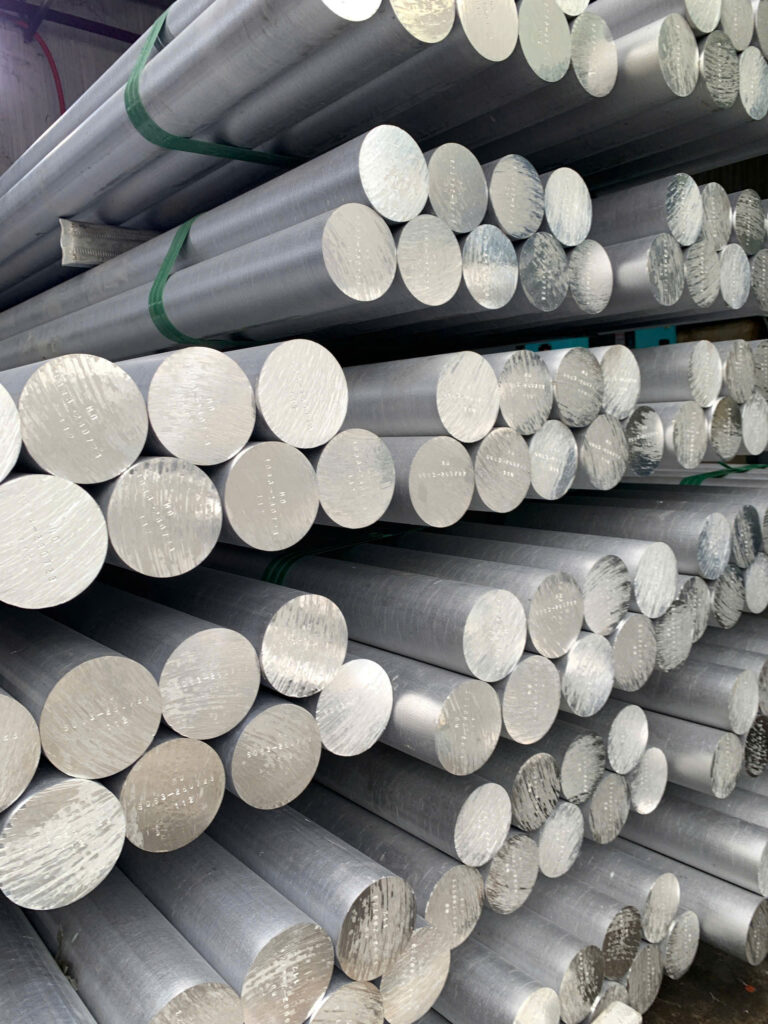
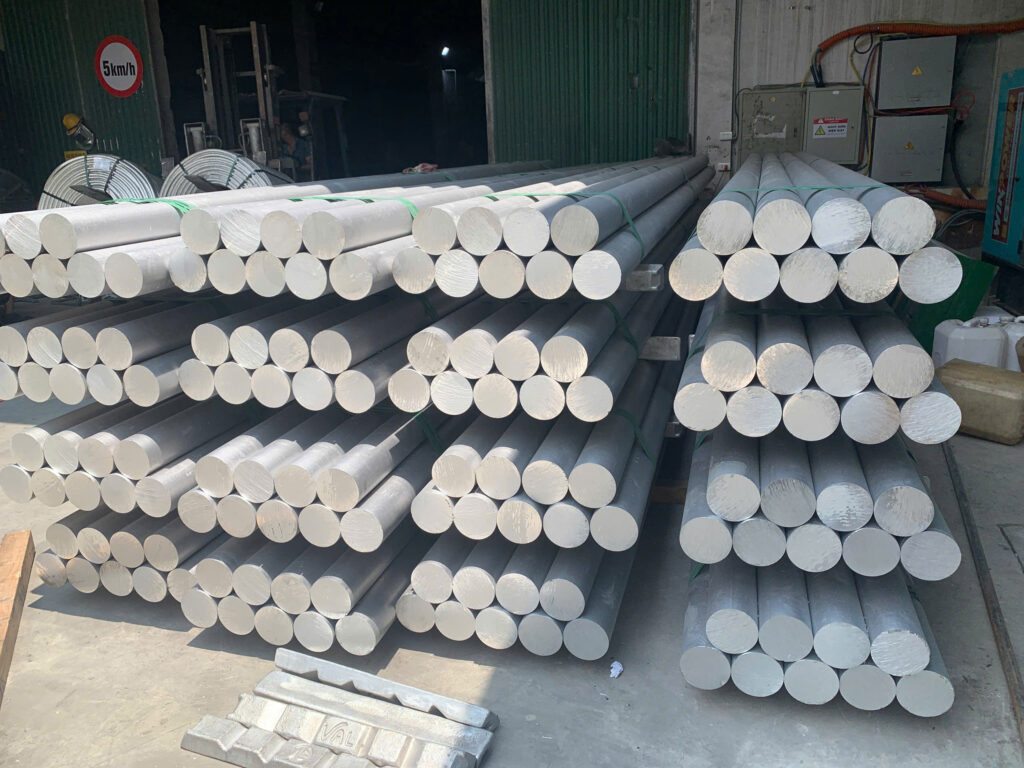
Aluminium billet is a critical feedstock for extrusion manufacturers. Across Europe, Aluminium billet is the primary feedstock for extrusion and is widely used in:
- Architectural windows, curtain walls, and façade systems
- Automotive and EV components
- Solar mounting systems
- Railway and transportation infrastructure
- Industrial machinery and engineering
The 6000-series, particularly AA6063, 6060, 6082, 6005A, and 6061, is widely used because of its balance of extrudability, corrosion resistance, weldability, and mechanical strength. European applications commonly require compliance with EN 573-3 and EN 755.
2. Deep Dive: Technical Overview of Low-Carbon Aluminum Billet
Low-carbon aluminum billet is not simply recycled aluminum. From a metallurgical perspective, it is a high-performance semi-finished product manufactured under tightly coLow-carbon aluminium billet is not simply recycled aluminium. It must combine controlled alloy chemistry, casting, homogenisation, quality inspection, and reduced embedded emissions.
For extrusion manufacturers, billet consistency directly affects extrusion pressure, surface finish, dimensional stability, and mechanical properties.
2.1 Technical specifications of European-grade aluminum billet
European extrusion plants predominantly consume the 6000-series Al-Mg-Si alloy family, which offers excellent extrudability together with medium-to-high mechanical strength after heat treatment. Among these, AA6063 remains the most widely used architectural alloy, while AA6005A and AA6061 are preferred for structural and engineering applications.
Standard billet grades for EU extrusion
| Alloy | European standard | Typical applications |
| AA6063 | EN 573-3/ EN 755 | Windows, doors, curtain walls, decorative architectural profiles |
| AA6005A | EN 573-3/ EN 755 | Solar structures, bridges, transport profiles |
| AA6061 | EN 573-3/ EN 755 | Industrial machinery, automotive components, precision engineering |
| AA6060 | EN 573-3/ EN 755 | Windows, doors, curtain walls, decorative architectural profiles |
The chemical composition of these alloys is controlled within narrow tolerances to ensure consistent precipitation hardening during subsequent T5 or T6 heat treatment. Even minor deviations in magnesium or silicon content can significantly affect extrusion pressure, surface quality, and final tensile strength.
Typical billet dimensions supplied to European customers
✅ Custom diameters are typically available
| ⌀ Diameter range4-8 inch102–203 mm | ⌀ Typical billet length500-6,000 mmCustomer-specified cutting |
Although 4-8 inch diameters represent the majority of European extrusion demand, custom dimensions can be produced depending on extrusion press capacity and customer specifications. Billet length is similarly configurable, typically ranging from 500 mm to 6,000 mm with customer-specified cutting tolerances.
2.2 Metallurgical design: Why chemical composition matters
The performance of extrusion billet is determined less by aluminum purity than by the interaction between alloying elements during solidification and heat treatment. The Al-Mg-Si system forms the strengthening phase Mg₂Si, which provides the characteristic balance between strength and corrosion resistance of 6000-series alloys.
Functional role of major alloying elements
| Element | Metallurgical function | Quality impact |
| Mg | Forms Mg₂Si precipitates | Increases strength after aging |
| Si | Improves extrusion behavior | Enhances surface finish and hardness |
| Fe | Impurity element | Excess Fe forms brittle intermetallic phases |
| Mn | Controls grain morphology | Improves structural stability |
| Ti + B | Grain refiner | Produces fine equiaxed grain structure |
Among these elements, iron (Fe) receives particular attention during billet production. Excessive iron promotes the formation of coarse β-AlFeSi intermetallic particles, which reduce ductility and increase the likelihood of surface defects during extrusion. High-quality billet therefore requires strict impurity control through raw material selection and spectrometric analysis before casting.
Grain refinement is equally important. Small additions of titanium-boron master alloy create numerous nucleation sites during solidification, producing a fine equiaxed grain structure that improves extrusion consistency and reduces hot cracking susceptibility.
3. The European Aluminum Billet Supply Landscape
3.1 Europe remains structurally dependent on imported aluminum billet
Europe has a strong downstream aluminium industry, but high energy costs, environmental requirements, and reduced primary production have increased reliance on imported aluminium products.
This is particularly relevant for 6000-series extrusion billet used in construction, automotive, renewable energy, and industrial applications.
European buyers increasingly balance four factors:
- Embedded carbon emissions
- Import duty and trade-agreement eligibility
- Metallurgical quality
- Supply-chain resilience
3.2 Where does Europe import aluminum billet from?
Historically, Europe’s billet imports have been concentrated among a relatively small group of producing countries. Norway has remained one of the largest suppliers due to its abundant hydropower-based aluminum production, while Türkiye, the United Arab Emirates, India, and several Asian economies have expanded their presence through competitive extrusion billet manufacturing.
The illustration below summarizes the current supplier landscape.
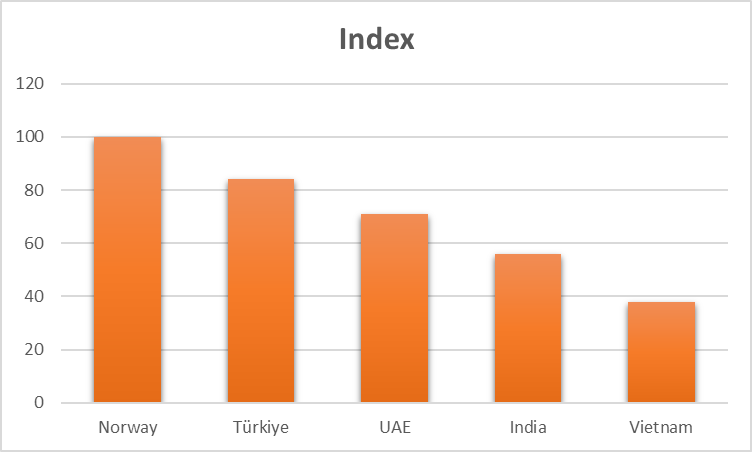
The market composition illustrates an important commercial reality: while established suppliers continue to dominate volume, European procurement teams are actively seeking alternative low-carbon sourcing destinations that reduce geopolitical concentration and improve regulatory compliance. Vietnam has emerged within this diversification strategy because it combines preferential trade access with expanding metallurgical capability.
3.3 Why traditional supply chains are changing
Three developments are reshaping procurement:
Rising Energy Costs
Energy-intensive aluminium production has become increasingly expensive in Europe, encouraging manufacturers to consider competitive external supply.
Carbon Regulation
CBAM means European importers increasingly need emissions information from non-EU suppliers. Carbon intensity is therefore becoming a financial procurement variable.
China+1 Supply-Chain Diversification
Manufacturers are developing additional sourcing bases across Southeast Asia to reduce concentration risk and strengthen supply-chain resilience.
3.4 What European buyers now expect from billet suppliers
The procurement specification issued by many European extrusion manufacturers has evolved beyond alloy chemistry alone. Today, supplier qualification frequently includes technical, environmental, and documentary requirements simultaneously.
Evolution of procurement criteria in the EU aluminum industry
| Traditional purchasing criteria | Current procurement expectations |
| Competitive unit price | Total landed cost including CBAM exposure |
| EN alloy compliance | EN compliance + emissions documentation |
| Delivery schedule | Supply-chain resilience and traceability |
| Mill certificate | Carbon data, quality records, heat traceability |
| Stable alloy chemistry | Stable chemistry plus ESG transparency |
This transition does not eliminate the importance of metallurgy; rather, it elevates transparency to the same level as material quality. Suppliers capable of providing EN-compliant billet, traceable production records, and verified carbon information are significantly better positioned within the evolving European procurement landscape.
3.5 Why Vietnam is entering the European sourcing conversation
Compared with several mature exporting countries, Vietnam offers a distinctive combination of commercial and regulatory advantages:
- Preferential market access through EVFTA
- Growing capability in recycled and low-carbon aluminum production
- Competitive manufacturing economics
- Modern billet casting technology
- Direct maritime connectivity to major Northern European ports
Rather than replacing traditional suppliers, Vietnam can serve as a complementary sourcing destination for European manufacturers seeking cost efficiency, diversification, and improved carbon performance.
4. Six Reasons Why Vietnam Is Emerging as a Strategic Source of Low-Carbon Aluminium Billet for EU Buyers
European supplier selection increasingly depends on customs treatment, carbon emissions, manufacturing capability, supply-chain resilience, and regulatory transparency.
Reason 1: EVFTA Creates a Structural Tariff Advantage for Vietnamese Aluminium
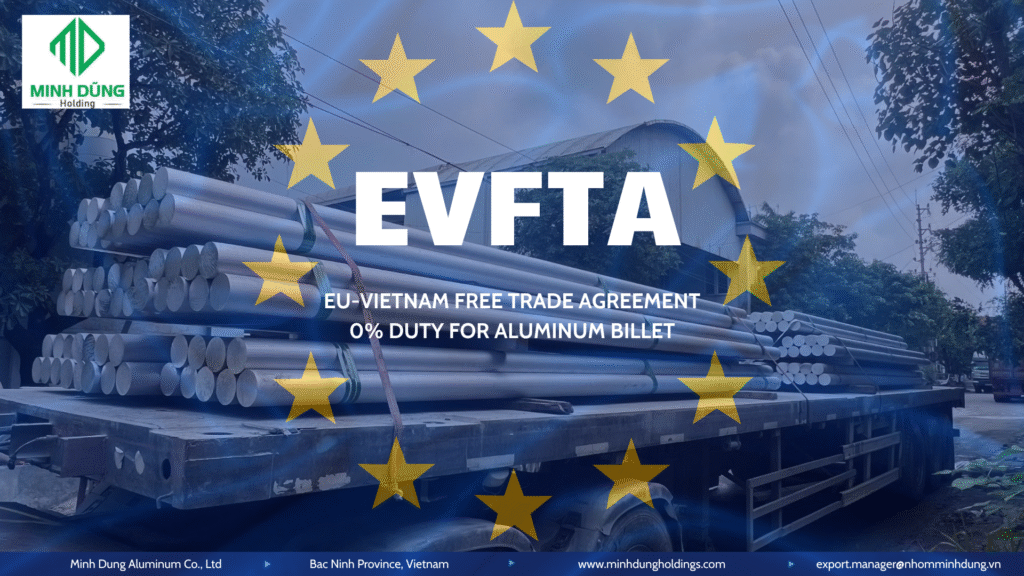
The EU-Vietnam Free Trade Agreement (EVFTA) provides preferential market access for qualifying Vietnamese-origin products.
For relevant aluminium products under HS 7601.20, the applicable preferential tariff can provide a significant advantage compared with standard third-country duties, subject to classification and rules of origin.
For illustration, a 6% duty on a €1 million customs value represents €60,000 in customs cost. A qualifying shipment benefiting from a 0% preferential rate could avoid this component.
However, EVFTA does not eliminate CBAM. European buyers must evaluate tariff eligibility and carbon obligations separately.
Reason 2: Vietnam Offers a Credible Platform for Lower-Carbon Aluminium Production
Vietnam should not automatically be labelled a “low-carbon aluminium” producer. Carbon intensity varies by producer according to raw materials, electricity consumption, production efficiency, and energy sources.
However, the country offers opportunities through:
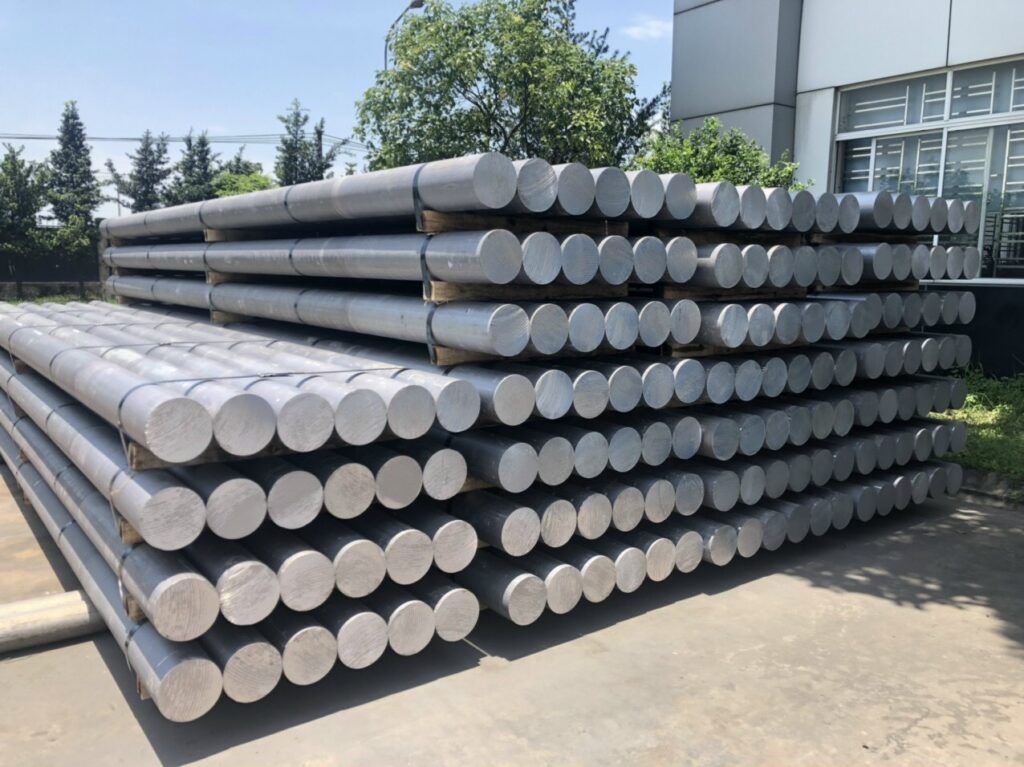
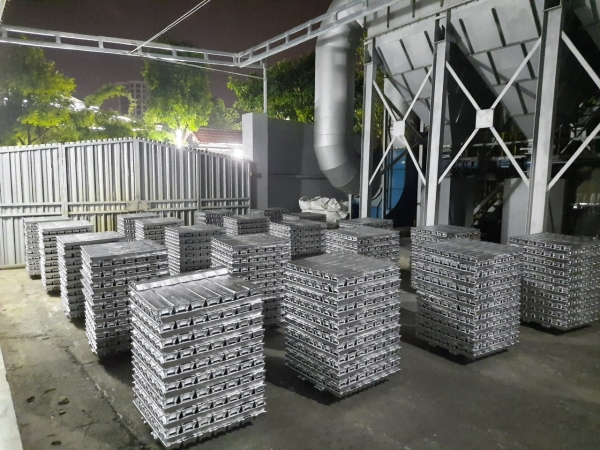
- Increased use of recycled aluminium
- Energy-efficient remelting and casting
- Developing renewable-energy capacity
- Modern production technologies
For EU buyers, the critical requirement is credible, traceable carbon data, rather than a generic green-aluminium claim.
Reason 3: Vietnam Combines Competitive Manufacturing Costs with Increasing Industrial Capability
Cost competitiveness remains an important part of Vietnam’s aluminium proposition, but Vietnam has developed a strong export-oriented manufacturing ecosystem supported by industrial parks, engineering suppliers, metal-processing companies, and logistics infrastructure.
For billet buyers, competitiveness comes from the combination of:
- Operating costs
- Raw-material access
- Manufacturing capability
- Technical workforce
- Export experience
- Regional supply-chain connectivity
The relevant comparison is therefore total procurement cost, including yield, quality, logistics, and carbon exposure, not factory price alone.
Reason 4: Vietnam Strengthens Supply-Chain Diversification Beyond China
European buyers are increasingly looking to reduce geographic concentration.
Vietnam’s role in the broader China+1 strategy makes it relevant as an additional Asian manufacturing and sourcing base.
For an EU extrusion company, a qualified Vietnamese supplier can provide:
- Additional sourcing flexibility
- Reduced concentration risk
- Greater supply-chain resilience
- Alternative logistics channels
- Long-term procurement diversification
Vietnam should therefore be viewed as a complementary sourcing option rather than simply a replacement for China.
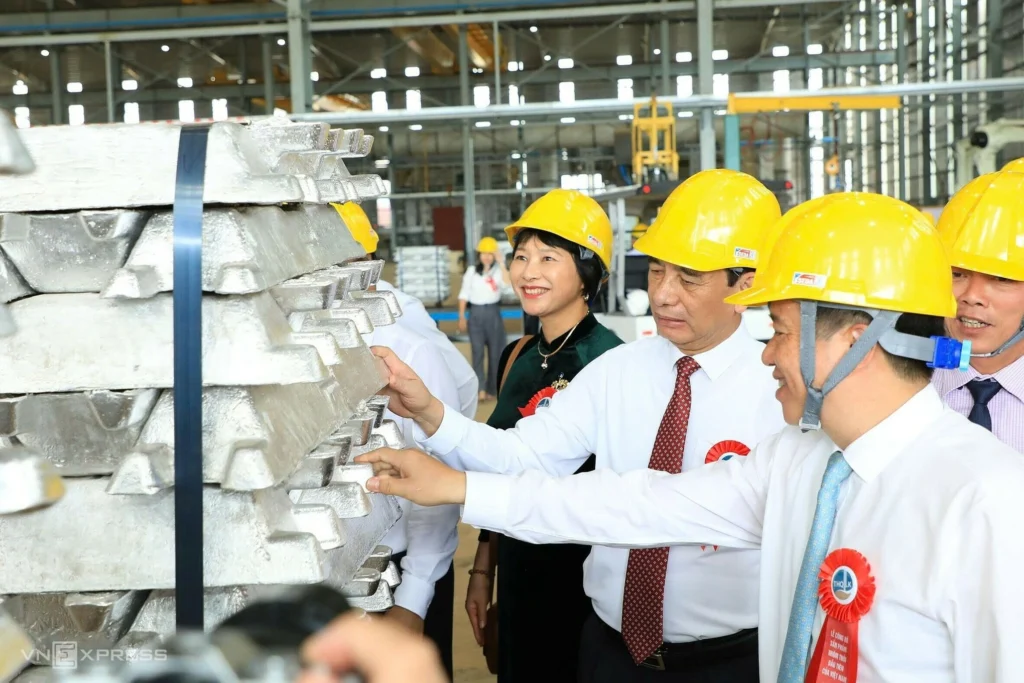
Reason 5: Vietnam’s Aluminium Industry Is Moving Toward More Advanced Metallurgy and Quality Control
Low-carbon billet must still deliver reliable extrusion performance.
European buyers should assess:
- Alloy chemistry
- Melt filtration
- Grain refinement
- Homogenisation
- Surface and internal quality
- Dimensional tolerance
- Heat/batch traceability
- Inspection procedures
The strongest suppliers will increasingly combine metallurgical quality with carbon-data quality.
Reason 6: Flexible Manufacturing Makes Vietnam Particularly Relevant for European Extruders
European extrusion plants have different requirements depending on application and equipment.
A qualified supplier should be able to support:
- 6000-series alloys such as 6063, 6061, and 6005A
- Customer-specific chemical specifications
- Different billet diameters and lengths
- Production according to shipment schedules
- Batch traceability
- Technical documentation
- Carbon-emission information
This flexibility allows suppliers to provide value beyond price per tonne.
5. Data & Industry Research Charts
This section presents benchmark data and technical comparisons relevant to European aluminum procurement. The objective is to support purchasing decisions with measurable indicators rather than marketing claims.
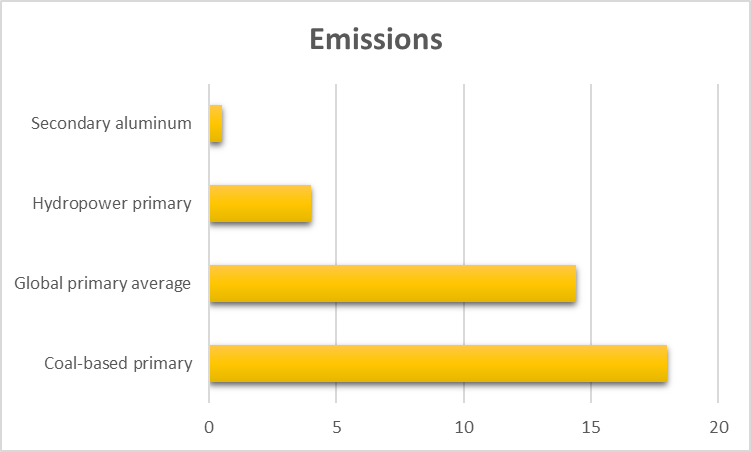
5.1 Carbon Intensity Comparison of Aluminum Production Routes
Embedded carbon emissions have become a key procurement indicator under the EU Carbon Border Adjustment Mechanism (CBAM). According to the International Aluminium Institute (IAI), the production route is the primary determinant of aluminum’s greenhouse gas intensity. Primary aluminum produced with coal-based electricity generates substantially higher emissions than hydropower-based or secondary aluminum production.
Carbon intensity of aluminum production routes
Industry benchmark values expressed as tonnes of CO₂ equivalent per tonne of aluminum.
Source: International Aluminium Institute (2024).
Research insight. The IAI estimates that global primary aluminum averaged 14.4 tCO₂e per tonne in 2024, while secondary aluminum production requires approximately 95% less energy than primary production. Product-specific billet emissions should nevertheless be verified using Life Cycle Assessment (LCA) or CBAM-compliant methodology rather than recycled content alone.
5.2 EVFTA Tariff Advantage and Landed Cost Analysis
For European manufacturers, supplier competitiveness should be evaluated through Total Landed Cost rather than factory price alone. EVFTA preferential tariff treatment reduces customs expenditure for qualifying Vietnamese products, while CBAM remains a separate carbon-related compliance cost.
Illustrative landed procurement cost: MFN vs EVFTA
Methodological model comparing cumulative procurement expenditure under different tariff scenarios.
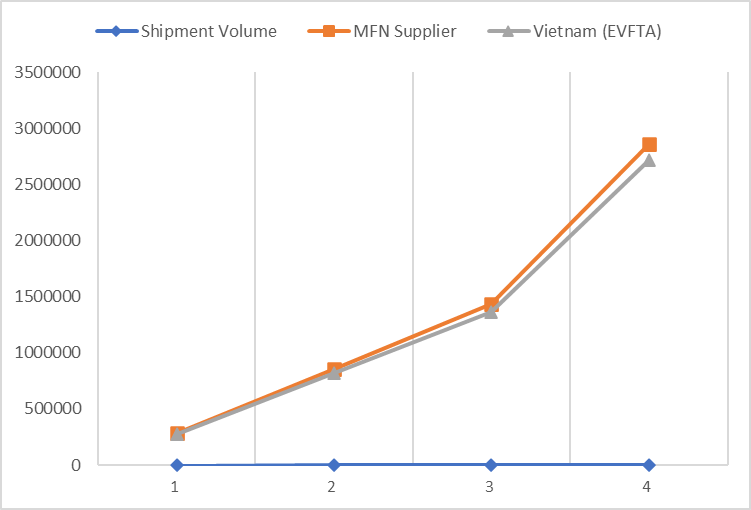
Conceptual comparison of cumulative landed procurement cost under MFN and EVFTA sourcing scenarios.
Methodology. This figure illustrates the procurement calculation framework rather than historical trade statistics. Importers should replace the assumptions with actual HS classification, freight quotations, preferential tariff eligibility, and CBAM obligations.
5.3 Technical Comparison of Common European 6000-Series Billets
The 6000-series aluminum family represents the dominant billet category used by European extrusion manufacturers. The table below summarizes the principal engineering characteristics defined under EN 573-3 and commonly applied within EN 755 extrusion standards.
| Alloy | Alloy System | Typical Tensile Strength (T6) | Primary Applications |
| AA6063 | Al-Mg-Si | 205-245 MPa | Windows, doors, curtain wall, architectural profiles |
| AA6005A | Al-Mg-Si | 250-320 MPa | Solar mounting systems, bridges, transport structures |
| AA6061 | Al-Mg-Si-Cu | 290-340 MPa | Automotive components, machinery, engineering parts |
Comparative engineering characteristics of the most widely used European extrusion billet alloys.
Technical observation. AA6063 prioritizes excellent extrudability and superior surface finish, whereas AA6005A provides higher structural strength. AA6061 is generally selected for load-bearing engineering applications requiring enhanced mechanical performance.
5.4 Supplier Evaluation Matrix for EU Procurement
Procurement criteria within the European aluminum industry have evolved from price-driven purchasing toward risk-adjusted supplier evaluation. Modern buyers increasingly assess technical capability, carbon transparency, and regulatory compliance simultaneously.
| Evaluation Criteria | Conventional Supplier | Low-Carbon Vietnamese Supplier |
| EN 573-3 & EN 755 Compliance | ✓ | ✓ |
| Preferential EU Market Access | Limited | EVFTA Eligible |
| Product Carbon Transparency | Varies | Traceable Emissions Data |
| Heat Number Traceability | Partial | Full Batch Traceability |
| CBAM Documentation Support | Limited | Production & Emissions Records |
Strategic procurement framework for evaluating aluminum billet suppliers serving the European market.
The matrix demonstrates that long-term supplier competitiveness is increasingly determined by quality assurance, traceability, and carbon reporting capability, in addition to conventional manufacturing performance.
6. Conclusion: Why Vietnam Deserves a Place in the EU Low-Carbon Aluminium Supply Chain
The European aluminium market is entering a new procurement phase where price, carbon intensity, regulatory compliance, technical quality, and supply-chain resilience increasingly need to be evaluated together.
CBAM has made embedded carbon a commercial consideration for aluminium importers, while EVFTA provides a preferential trade framework for qualifying Vietnamese-origin products.
At the same time, Vietnam’s expanding manufacturing base, aluminium-processing capabilities, and potential for increased recycled and lower-carbon production make it an increasingly relevant sourcing market.
The strongest Vietnamese suppliers will be those capable of delivering:
- Consistent 6000-series aluminium billet
- EN-compliant technical quality
- Competitive total landed cost
- Reliable export execution
- Production and batch traceability
- Recycled-material information
- Credible carbon-emission data
Vietnam’s opportunity therefore goes beyond being a low-cost alternative. It can become a strategic complementary sourcing base for European extrusion manufacturers seeking cost efficiency, supply diversification, and greater carbon transparency.
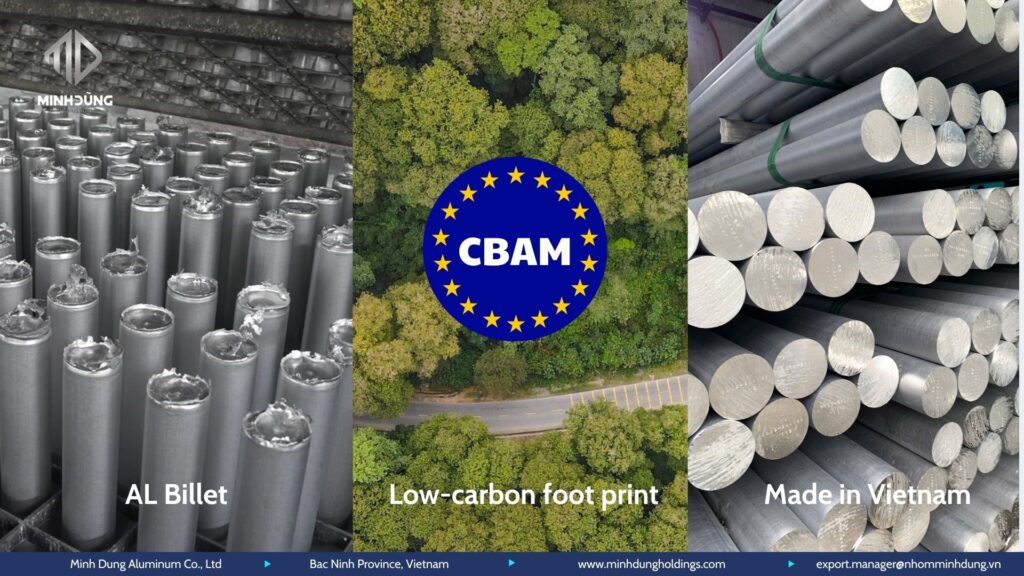
Minh Dung Holdings: Building a More Transparent Aluminium Sourcing Partnership
Minh Dung Holdings supports international extrusion applications with aluminium billet based on four key requirements:
1. Consistent Technical Quality
6000-series billet according to agreed alloy specifications, dimensions, chemical composition, casting quality, and homogenisation requirements.
2. Flexible Manufacturing
Different billet specifications, dimensions, cutting requirements, and quantities can be discussed according to customer needs.
3. Supply Reliability
Production planning, quality inspection, packaging, and export coordination support stable international deliveries.
4. Carbon Transparency
Carbon-related production information can be discussed during supplier qualification to help European customers evaluate CBAM and broader ESG requirements.
Request Billet Specifications and Carbon Data
For an initial supplier evaluation, Minh Dung Holdings can provide:
- 6000-series billet specifications
- Chemical composition
- Available billet dimensions
- Production and quality-control information
- Recycled-material information
- Carbon-footprint data and methodology, where available
- Commercial terms and shipment options